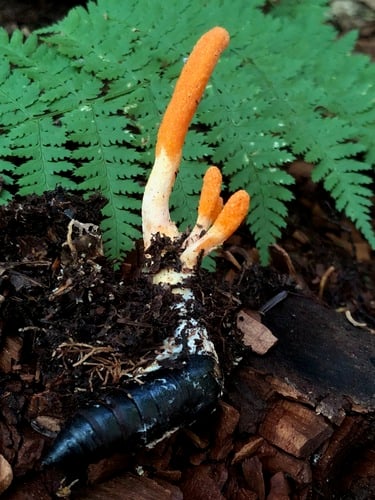
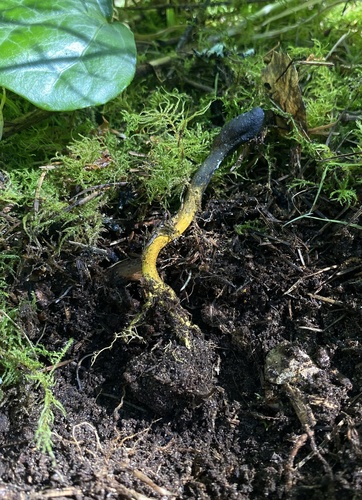
Cordyceps sinensis
(Berkeley) Saccardo
Caterpillar fungus, Winter worm summer-herb
iNaturalist· cc-by-nc
(c) akerwin70, some rights reserved (CC BY-NC)
iNaturalist· cc-by-nc
(c) soraj25, some rights reserved (CC BY-NC)
iNaturalist· cc-by-nc
(c) bronn, some rights reserved (CC BY-NC)
Description
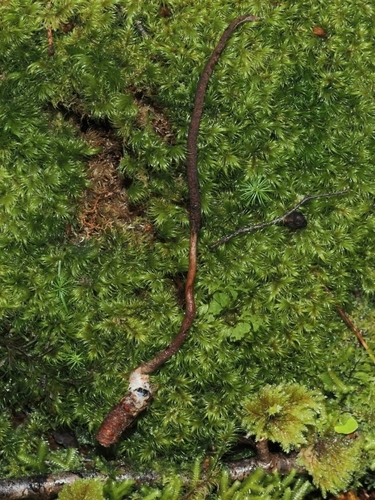
A fungus that parasitizes insect larvae in high-altitude Himalayan grasslands above 3,353 m, producing fruiting bodies that grow on the larval carcass.
Edible Uses
The fungus is cooked with duck, chicken, pork, and fish in soups and stews where it enhances flavour, and is also used in herbal mixtures.
Traditional Uses
It is cooked with duck, chicken, pork and fish in soups and stews. The fungus enhances the flavour. It is also used in herbal mixtures.
This uses section is brief — help expand it
Distribution
It occurs in the Himalayan grassland above 3353 m altitude.
Where It Grows
Asia, China, Himalayas, India, Nepal,
Cultivation
Spores are spread onto a suitable host.
Production
It has to be harvested by trained experts.
Notes
There are about 100 Cordyceps species.
Synonyms
Also Known As
Chongcao, Dong chong cao, Yarsagumba
References (9)
- Boa, E. R., 2004, Wild edible fungi and their importance to people. FAO Non Wood Forest Products Booklet 17
- Brown, D., 2002, The Royal Horticultural Society encyclopedia of Herbs and their uses. DK Books. p 179
- Devkota, S., 2008, Distribution and Status of Highland mushrooms: A study from Dolpa, Nepal. J.Nat.Hist.Mus.Vol.23,2008, 51-59
- Facciola, S., 1998, Cornucopia 2: a Source Book of Edible Plants. Kampong Publications, p 251
- Hu, Shiu-ying, 2005, Food Plants of China. The Chinese University Press. p 262
Show all 9 references Hide references
- Kozarski, M., et al, 2015, Antioxidants in Edible Mushrooms. Molecules 20, 19489-19525
- Kunshan, Shi, Non-wood forest products in Asia. FAO Corporate Document Repository
- Leung, P., et al, 2009, Chemical properties and antioxidant activity of exopolysaccharides from mycelial culture of Cordyceps sinensis fungus Cs-HK1. Food Chemistry 114: 1251-1256
- Semwal, K. C., et al, 2014, Edible mushrooms of the Northwestern Himalaya, India: a study of indigenous knowledge, distribution and diversity. Mycosphere 5(3): 440–461