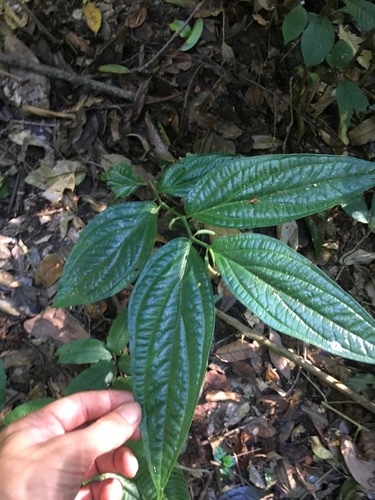
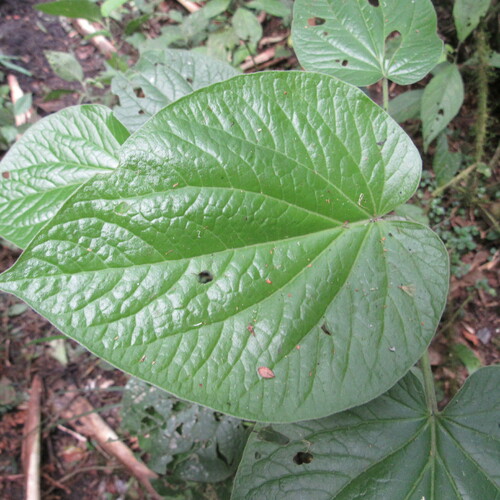
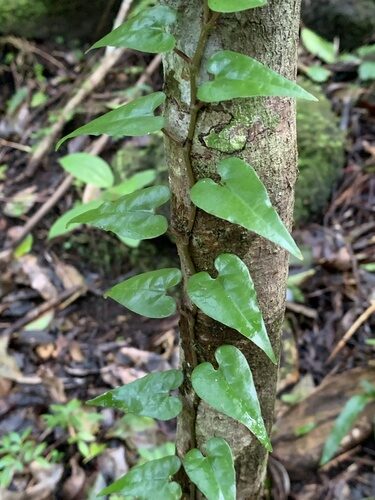
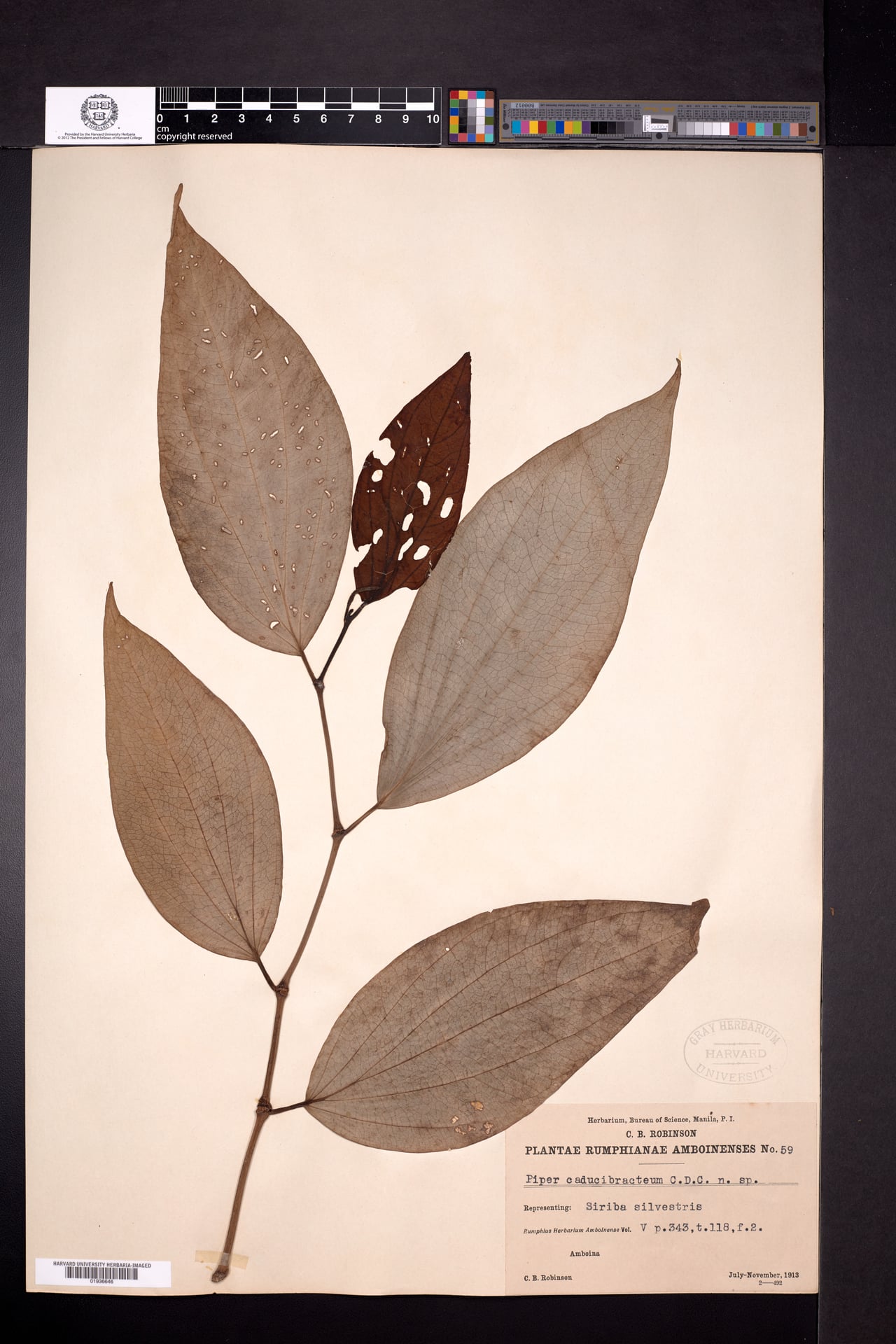
Piper sanctum
(Miq.) Schltdl.
Hierba santa
iNaturalist· cc-by-nc
(c) Judith Areli Nájera, some rights reserved (CC BY-NC)
iNaturalist· cc-by-nc
(c) Judith Areli Nájera, some rights reserved (CC BY-NC)
iNaturalist· cc-by-nc
(c) Judith Areli Nájera, some rights reserved (CC BY-NC)
Description
An evergreen shrub in the Piperaceae family that grows 2–4 m tall, found in tropical wet forests from sea level to 2,500 m elevation.
This description is brief — help expand it
Edible Uses
The leaves are used as a flavoring, wrapped around fish while cooking or added to soups.
Traditional Uses
The leaves are wrapped around fish while cooking to impart flavour. The leaves are also used to flavour soups.
This uses section is brief — help expand it
Medicinal Uses
A decoction of the leaves is used for treating indigestion and abdominal cramps. The plant is a stimulant. The plant contains kava lactones. In popular medicine the plant is used as a stimulant and as a local anaesthetic, and for toothache, stomach affections, and venereal diseases.
Distribution
A tropical plant. It grows in wet forests. It grows from sea level to 2,500 m above sea level.
Where It Grows
Belize, Central America, Costa Rica, Mexico, North America,
Cultivation
Closely related to kava kava (P. Methysticum).
Synonyms
Also Known As
Aceuyo
References (7)
- A. L. P. P. de Candolle, Prodr. 16(1):330. 1869
- Facciola, S., 1998, Cornucopia 2: a Source Book of Edible Plants. Kampong Publications, p 172
- Ferns, Useful Tropical Plants
- Kermath, B. M., et al, 2014, Food Plants in the Americas: A survey of the domesticated, cultivated and wild plants used for Human food in North, Central and South America and the Caribbean. On line draft. p 664
- Uphof,
Show all 7 references Hide references
- Wiersema, J. H. & Leon, B., 2013, World Economic Plants. A Standard Reference CRC Press. 2nd Ed. p 535
- World Checklist of Useful Plant Species 2020. Royal Botanic Gardens, Kew