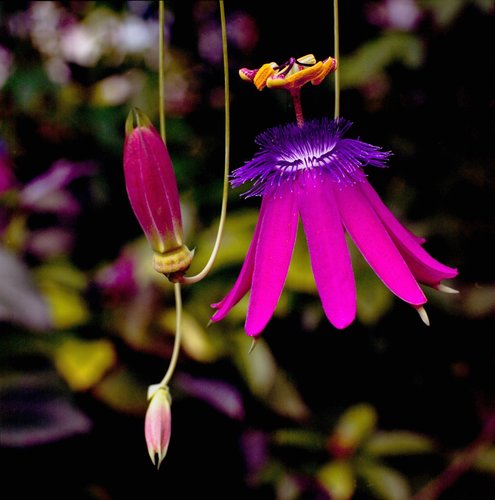
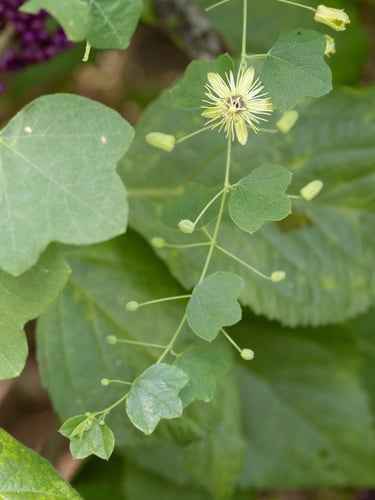
Passiflora organensis
Gardner
Nensi
iNaturalist· cc-by-nc
(c) Maria Silvia Pitman, some rights reserved (CC BY-NC)
iNaturalist· cc-by-nc
(c) Maria Silvia Pitman, some rights reserved (CC BY-NC)
iNaturalist· cc-by-nc
(c) Maria Silvia Pitman, some rights reserved (CC BY-NC)
Description
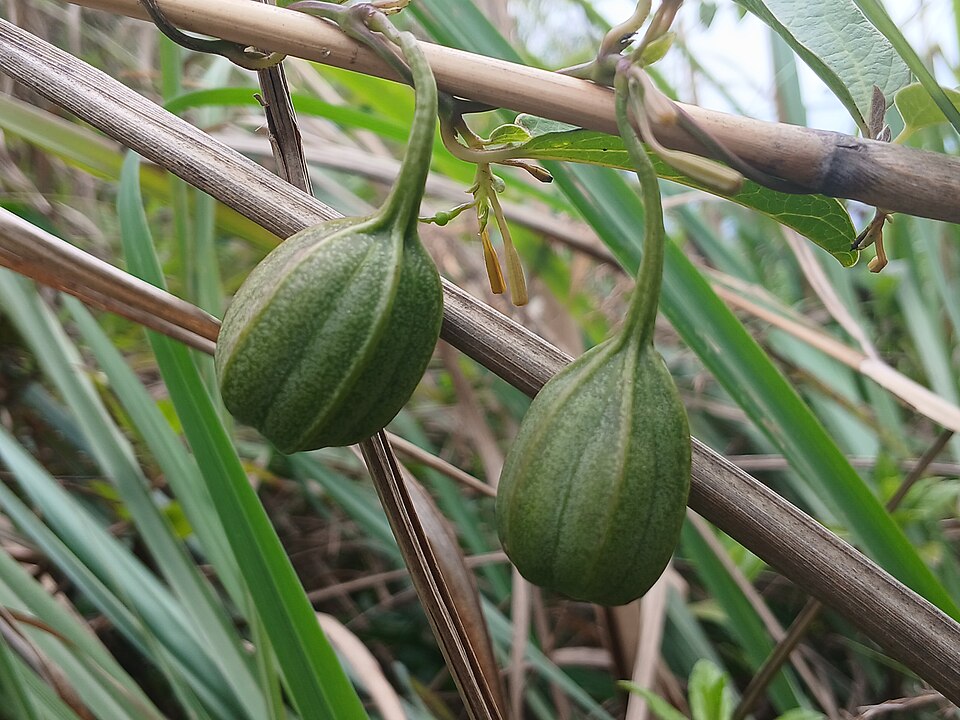
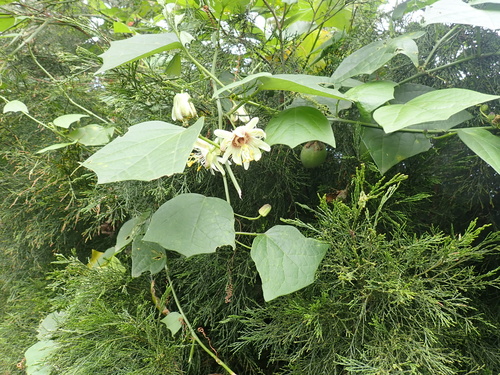
An evergreen climbing shrub. It climbs over a trellis or other plants by coiling tendrils. The fruit are round. They are about 15 mm across. The pulp is yellow.
Edible Uses
The fruit can be eaten raw, used in drinks, or used to flavour pastries.
Traditional Uses
The fruit can be eaten raw. They are also used for drinks. They are also used to flavour pastries.
This uses section is brief — help expand it
Distribution
A tropical plant. It needs a temperature above 10°C and above 16°C at flowering. It needs a moist, humus rich and well-drained soil.
Where It Grows
Brazil, South America,
Cultivation
Plants can be grown from fresh seeds. The pulp helps germination. Stored seeds need to be soaked in warm water for 24 hours and may still take 12 months to germinate. Plants can be grown by cuttings, layering and air-layering. Plants can be cut back and will re-grow.
Synonyms
Also Known As
Maracuja-pintado, Maracujazinho
References (4)
- Facciola, S., 1998, Cornucopia 2: a Source Book of Edible Plants. Kampong Publications, p 167
- Kermath, B. M., et al, 2014, Food Plants in the Americas: A survey of the domesticated, cultivated and wild plants used for Human food in North, Central and South America and the Caribbean. On line draft. p 617
- Martin, F.W., C.W. Campbell and R.M. Ruberté, 1987, Perennial edible fruits of the tropics - An inventory. United States Department of Agriculture, Agricultural Research Service, Agriculture Handbook No. 642. Washington, D.C., USA
- Uphof,