Muscari botryoides
(L.) Mill.
Italian grape-hyacinth
iNaturalist· cc-by-nc
(c) Claire O'Neill, some rights reserved (CC BY-NC)
iNaturalist· cc-by-nc
(c) Claire O'Neill, some rights reserved (CC BY-NC)
iNaturalist· cc-by-nc
(c) Claire O'Neill, some rights reserved (CC BY-NC)
Summary
Source: WikipediaMuscari botryoides is a bulbous perennial plant of the genus Muscari and one of a number of species and genera known as grape hyacinth. It is sometimes grown as an ornamental plant. The flowers are close together, and are almost totally round. The lower fertile flowers point downwards, while upper ones, usually paler and sterile, point upwards. The flowers are bright blue with white lobes at the end in the wild species, but other colours are available, including white. M. botryoides is originally from central and south-eastern Europe, growing in open woodland and mountain meadows. The name botryoides is derived from the appearance of a miniature cluster of grapes. M. botryoides is said to be much less invasive than species such as M. neglectum, nevertheless it is listed as invasive in Tennessee.
Description
A bulbous plant growing to 0.3 m tall and 0.1 m wide at medium rate, hardy to UK zone 3 with no frost tenderness. Flowers in May. Hermaphroditic and self-fertile, insect-pollinated. Adapts to light sandy, medium loamy, and heavy clay soils preferring good drainage, mildly acidic through basic pH levels. Grows in semi-shade or full sun, tolerating both dry and moist soils.
Edible Uses
The flowers and flower buds can be pickled in vinegar.
Traditional Uses
The flowers and flower buds are pickled in vinegar.
This uses section is brief — help expand it
Medicinal Uses
None known
Distribution
It is a temperate plant. It suits hardiness zones 3-8.
Where It Grows
Europe, Hungary, Italy, Mediterranean, North America, Sicily, Slovenia, USA,
Propagation
Sow seed as soon as ripe in a greenhouse, or in early spring. A good proportion typically germinates within 2–3 months. Sow thinly so seedlings can remain undisturbed in the pot for their first year; give an occasional liquid feed during the growing season to prevent nutrient deficiency. When plants go dormant in late summer, pot up the small bulbs, placing 2–3 per pot, and grow on for one or two more years in the greenhouse before planting out when dormant in late summer. Offsets can be divided in July or August after the leaves die down, and this can be done every other year for rapid increase. Larger bulbs can go directly into permanent positions, but smaller bulbs are best potted up and grown on in a cold frame for a year before planting out when dormant in late summer.
Other Uses
Landscape Uses: Border, Container, Massing, Rock garden, Specimen, forest garden. Special Uses Food Forest Scented Plants
Notes
Also put in the family Hyacinthaceae.
Also Known As
Jagodasta hrušica, Szent-gyorgy virag
References (6)
- Crowhurst,
- Denes, A., et al, 2012, Wild plants used for food by Hungarian ethnic groups living in the Carpathian Basin. Acta Societatis Botanicorum Poloniae 81 (4): 381-396
- Facciola, S., 1998, Cornucopia 2: a Source Book of Edible Plants. Kampong Publications, p 144
- Gard. dict. ed. 8: Muscari no. 1. 1768
- http://www.botanic-gardens-ljubljana.com/en/plants
Show all 6 references Hide references
- Licata, M., et al, 2016, A survey of wild plant species for food use in Sicily (Italy) – results of a 3-year study in four Regional Parks. Journal of Ethnobiology and Ethnomedicine 12:12
More from Asparagaceae
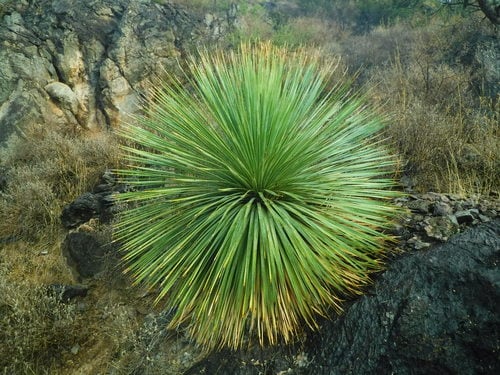
Dasylirion wheeleri
Sotol, Desert-spoon, Cactus-spoon, Spoonplant, Bear-grass, Wheeler sotol

Dichelostemma capitatum subsp. pauciflorum
Bluedick
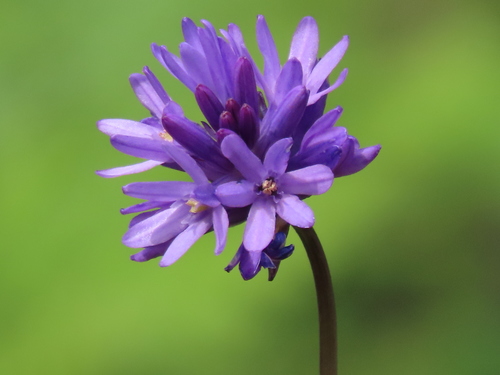
Dichelostemma congestum
Fork-toothed ookow
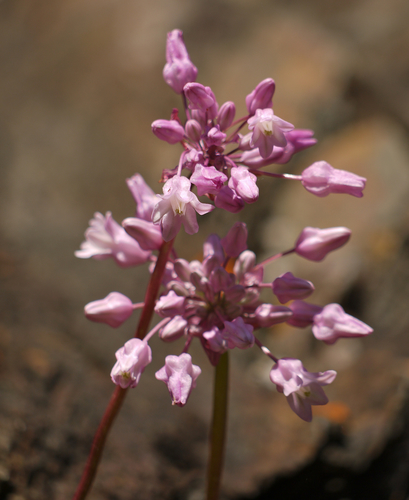
Dichelostemma volubile
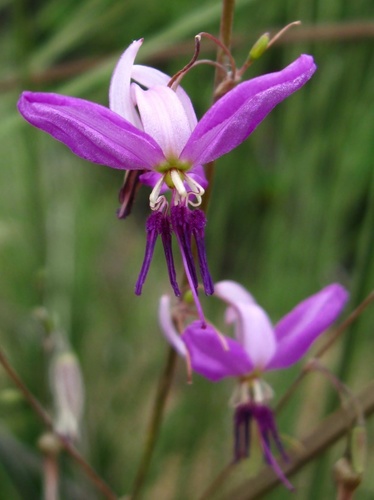
Dichopogon capillipes
Chocolate lily, Purple lily
Dichopogon fimbriatus
Nodding chocolate lily