Bougainvillea spectabilis
Willd.
Purple bougainvillea
iNaturalist· cc-by-sa
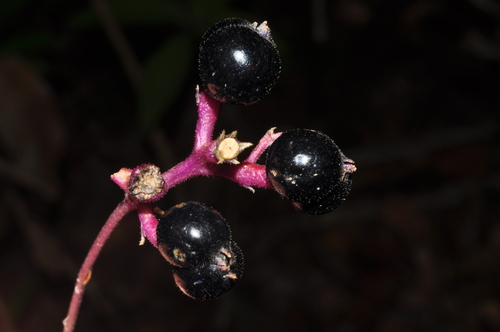
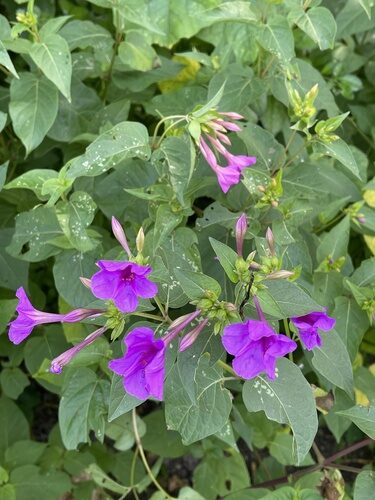
(c) Prenn, some rights reserved (CC BY-SA)
iNaturalist· cc-by-nc
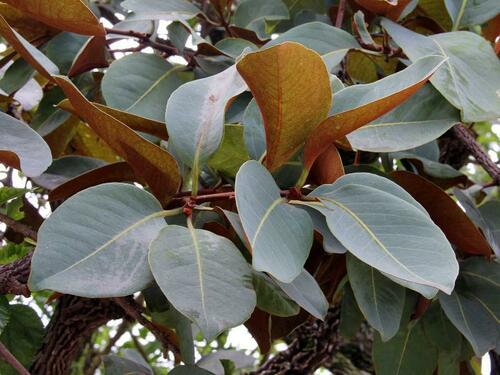
(c) Stargazer, some rights reserved (CC BY-NC), uploaded by Stargazer
iNaturalist· cc-by-nc
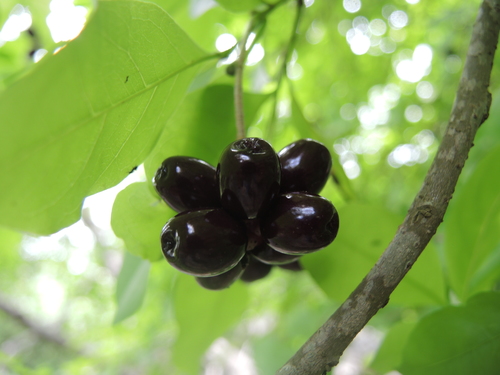
(c) Rujuta Vinod, some rights reserved (CC BY-NC), uploaded by Rujuta Vinod
Summary
Source: WikipediaBougainvillea spectabilis, also known as great bougainvillea, is a species of flowering plant. It is native to Brazil, Bolivia, Peru, and Argentina's Chubut Province. It is widely grown as an ornamental plant.
Description
A climber. As a shrub it can grow 5 m tall and 6 m wide. It has curved thorns. Plants branched often. The leaves are large and oval or round. They are hairy underneath. The flower bracts are rusty red and purple. The flowers are cream and have long hairy tubes.
Edible Uses
The flower bracts are used for making an attractive, violet-coloured drink, known as 'Agua de Buganvilia'. It is said to have a refreshingly delicate taste.
Traditional Uses
The flower bracts are used in salads and for a drink. CAUTION The correct type of bougainvillea must be used.
This uses section is brief — help expand it
Medicinal Uses
The Yanadi tribe of Chittoor district, Andhra Pradesh, India, once used the leaves of Bougainvillea spectabilis to heal diabetes.
Known Hazards
The correct type of bougainvillea must be used; not all species are suitable for consumption.
Distribution
A tropical plant. It does best with sunlight and warmth. It is best with a night temperature of 18-20°C and a day temperature of 24-32°C. It cannot stand frost. It is best in a fertile, well drained soil. It cannot stand waterlogging. It suits slightly acidic soils of pH 5.5-6.
Where It Grows
Africa, Asia, Australia, Bahamas, Bangladesh, Bolivia, Brazil*, Burkina Faso, Cameroon, Caribbean, China, Congo DR, Cook Islands, Cuba, Dominican Republic, Easter Island, French Guiana, Gambia, Guianas, Haiti, Hawaii, Himalayas, India, Indochina, Indonesia, Kiribati, Madagascar, Maldives, Marshall Islands, Mauritius, Mexico, Micronesia, Myanmar, Nepal, Niue, North America, Pacific, Papua New Guinea, PNG, Peru, Philippines, Puerto Rico, Rotuma, Samoa, Sao Tome and Principe, SE Asia, South America, Suriname, Timor-Leste, Triniada-Tobago, USA, Vanuatu, Venezuela, Vietnam, West Indies,
Cultivation
Plants can be grown from cuttings. They can also be grown by air-layering. It can be grown as a hedge.
Propagation
Seed - Cuttings - they can be placed directly into their permanent position so long as it is not too exposed or excessively sunny and arid. Air layering.
Notes
There are 14-18 Bougainvillea species.
Synonyms
Also Known As
Bagam beli, Boaganvilla, Bugenvil putih, Laingomena, Te akanta
References (10)
- Cundall, P., (ed.), 2004, Gardening Australia: flora: the gardener's bible. ABC Books. p 245 (Genus) (As Bougainvillea brasiliensis)
- Facciola, S., 1998, Cornucopia 2: a Source Book of Edible Plants. Kampong Publications, p 161 (As Bougainvillea brasiliensis)
- Flora of China @ efloras.org Volume 5
- Kew Plants of the World Online
- Petrova, I., et al, 2016, Five Edible Flowers – Valuable Source of Antioxidants in Human Nutrition. International Journal of Pharmacognosy and Phytochemical Research 2016; 8(4); 604-610
Show all 10 references Hide references
- Sujanapal, P., & Sankaran, K. V., 2016, Common Plants of Maldives. FAO & Kerala FRI, p 58
- Sukarya, D. G., (Ed.) 2013, 3,500 Plant Species of the Botanic Gardens of Indonesia. LIPI p 907
- Thaman, R. R., 1987, Plants of Kiribati: A Listing and Analysis of Vernacular Names. Smithsonian Institution.
- Wijayakusuma, H.M.H., et al, 1996, Tanaman Berkhasiat Obat Di Indonesia. Pustaka Kartini. p 36 (Bougainvillea glabra used in Medicine in Indonesia. )
- Zizka, G., 1991, Flowering Plants of Easter Island. Palmarum Hortus Francofurtensis