Boerhavia erecta
L.
Hogweed, Pigweed
iNaturalist· cc0
no rights reserved, uploaded by S.MORE
iNaturalist· cc-by-nc
(c) Dale Lee Denham-Logsdon, some rights reserved (CC BY-NC), uploaded by Dale Lee Denham-Logsdon
iNaturalist· cc-by
(c) chiuluan, some rights reserved (CC BY), uploaded by chiuluan
Summary
Source: WikipediaBoerhavia erecta, commonly known as the erect spiderling or the erect boerhavia, is one of more than 100 species in the genus Boerhavia. It is native to the United States, Mexico, Central America, Angola and western South America, but now is cosmopolitan in tropical and subtropical regions. In Africa its distribution extends from West Africa, eastwards to Somalia and down to South Africa. It has recently been found in parts of Madagascar and Réunion. In Asia, it occurs in India, Java, Malaysia, the Philippines, China and the Ryukyu Islands. As an adventive species Boerhavia erecta is not widely regarded as a serious weed or invasive threat; in fact its physical and pharmacological attributes suggest that it is potentially useful.
Description
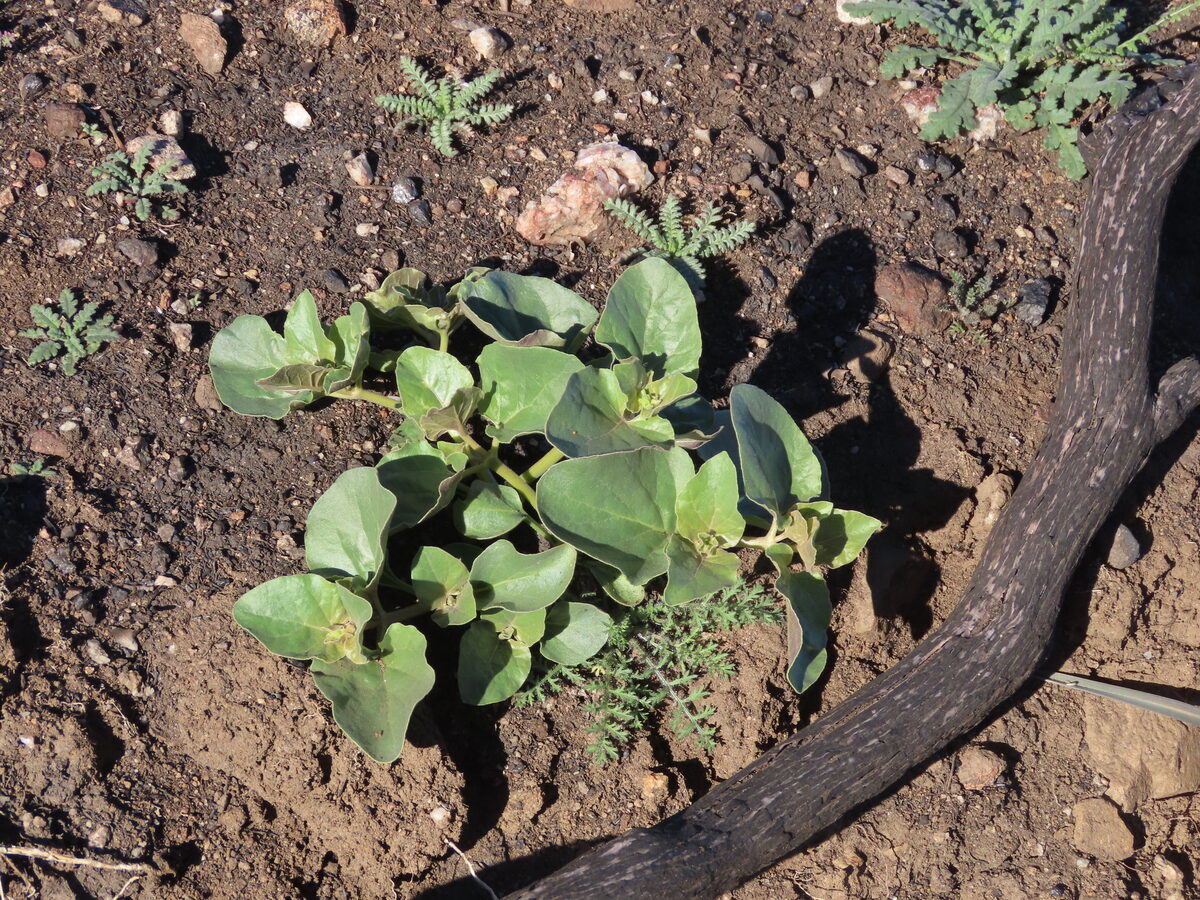
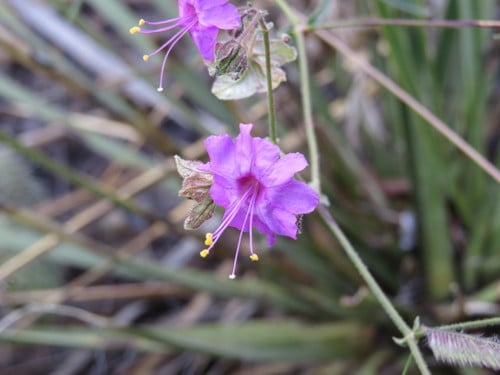
A herb. It becomes a perennial weed. It can be 1 m tall and either upright or lying over. The leaf stalk is 1.5-4 cm long. The leaves are stalked, opposite, and variable in shape and size. They are 1.5-3.5 cm long by 1-2.5 cm wide. They are white-grey underneath. The flowers are produced in the axils of leaves. The fruit is cone shaped. It is about 3 mm across.
Edible Uses
The young tops are eaten and used in the preparation of sauces. The tuberous roots have been recorded as edible in earlier times, though use may have been medicinal.
Traditional Uses
The young tops are eaten. They are used in the preparation of sauces. The tuberous root has been recorded as being used in earlier times. (Its use may have been for medicine.)
Medicinal Uses
Boerhavia erecta is used in traditional medicine and as a food. In West and East Africa, the leaves are eaten as a vegetable and in sauces. In the Sahel, cattle graze on its leaves.
Known Hazards
Neonatal tetanus is relatively prevalent in parts of Sudan and this plant is suspected of being a vehicle for the infection.
Distribution
A tropical plant. It mostly occurs in the coastal areas below 700 m altitude. It grows in dry, open places. It is more common in regions of seasonal rainfall. In China it grows in open sandy places.
Where It Grows
Africa, Anguilla, Asia, Bahamas, Benin, Botswana, Burkina Faso, Caribbean, Central America*, China, Dominican Republic, East Africa, Eswatini, Ethiopia, Ghana, Guinea, Guinée, Guinea-Bissau, Haiti, India, Indochina, Indonesia, Jamaica, Laos, Lesser Antilles*, Malaysia, Maldives, Mali, Mexico*, Mozambique, North America, Pacific, Papua New Guinea, PNG, Puerto Rico, SE Asia, Senegal, Singapore, Solomon Islands, South Africa, Southern Africa, South America*, South Sudan, Swaziland, Taiwan, Thailand, Vietnam, West Africa, West Indies*, Zambia, Zimbabwe,
Cultivation
A weed of tropical areas, where it can be found at elevations up to 2,500 metres, growing mainly in areas with seasonal rainfall. Prefers a sunny position. The plant can become a serious weed of cultivated crops. It is a common weed in several annual and perennial crops, but causes little damage.
Other Information
Leaves are sold in markets.
Notes
There are about 40 Boerhavia species. They are mostly in the tropics and subtropics.
Also Known As
Burandha filaa, Cumara-sabi, Fendala, Kolo fara ni, Kuthucharana, Ndoro ni, Sabi-cura, Zhi li huang xi xin
References (22)
- Achigan-Dako, E, et al (Eds), 2009, Catalogue of Traditional Vegetables in Benin. International Foundation for Science.
- Arinathan, V., et al, 2007, Wild edibles used by Palliyars of the western Ghats, Tamil Nadu. Indian Journal of Traditional Knowledge. 6(1) pp 163-168
- Burkill, H. M., 1985, The useful plants of west tropical Africa, Vol. 4. Kew.
- Catarino, L. et al, 2019, Edible Leafy Vegetables from West Africa (Guinea-Bissau): Consumption, Trade and Food Potential. Foods 2019, 8, 493
- Flora of China @ efloras.org Volume 5
Show all 22 references Hide references
- Flora of Solomon Islands
- Fowler, D. G., 2007, Zambian Plants: Their Vernacular Names and Uses. Kew. p 50
- French, B.R., 1986, Food Plants of Papua New Guinea, A Compendium. Asia Pacific Science Foundation p 319
- Gallagher, D. E., 2010, Farming beyond the escarpment: Society, Environment, and Mobility in Precolonial Southeastern Burkina Faso. PhD University of Michigan.
- Grivetti, L. E., 1980, Agricultural development: present and potential role of edible wild plants. Part 2: Sub-Saharan Africa, Report to the Department of State Agency for International Development. p 30
- Henty, E.E., & Pritchard, G.S., 1973, Weeds of New Guinea and their control. Botany Bulletin No 7, Division of Botany, Lae, PNG. p 129
- Lu De-quan, Nyctaginaceae. Flora of China
- Pham-Hoang Ho, 1999, An Illustrated Flora of Vietnam. Nha Xuat Ban Tre. p 717
- Plants of Haiti Smithsonian Institute http://botany.si.edu/antilles/West Indies
- Sarvalingam, A., et al, 2014, Wild edible plant resources used by the Irulas of the Maruthamalai Hills, Southern Western Ghats, Coimbatore, Tamil Nadu. Indian Journal of Natural Products and Resources 5(2):198-201
- Seidemann J., 2005, World Spice Plants. Economic Usage, Botany, Taxonomy. Springer. p 67
- Sp. pl. 1:3. 1753
- Sujanapal, P., & Sankaran, K. V., 2016, Common Plants of Maldives. FAO & Kerala FRI, p 57
- Swaziland's Flora Database http://www.sntc.org.sz/flora
- World Checklist of Useful Plant Species 2020. Royal Botanic Gardens, Kew
- www.efloras.org Flora of China
- Yimer, A., et al, 2021, Ethnobotanical study of wild edible plants used by Meinit Ethnic Community at Bench-Maji Zone, Southwest Ethiopia. Research Square. p 6