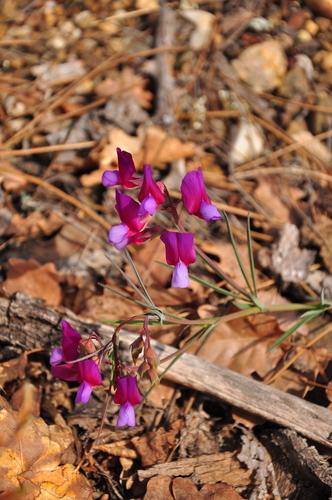
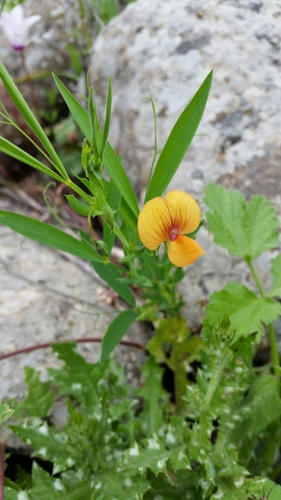
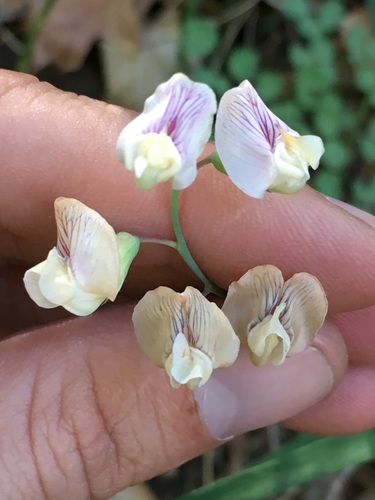
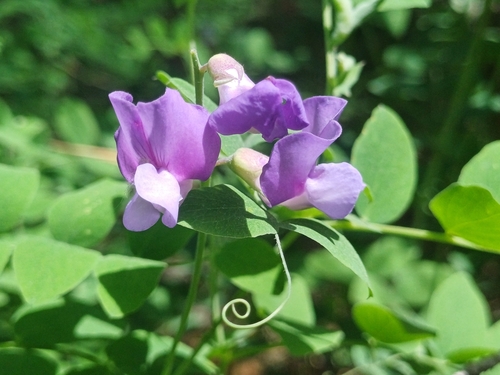
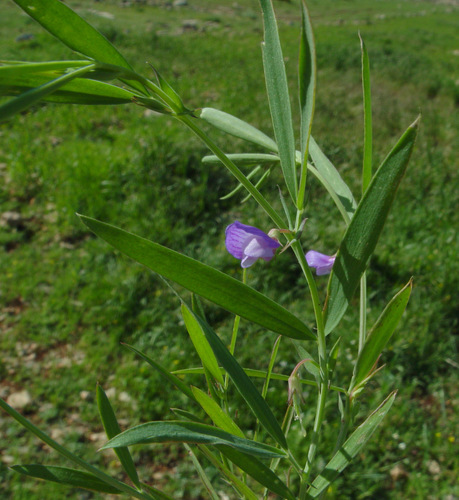
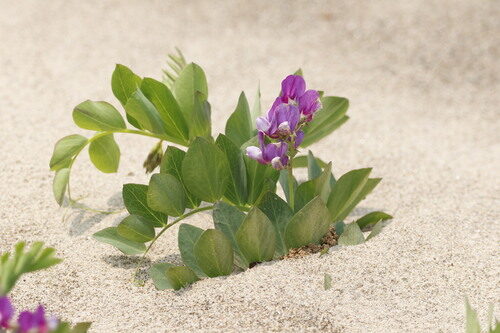
Phaseolus acutifolius var. latifolius
G. F. Freedman
Wild tepary bean, Willow-leaf tepary
gbif· cc-by-nc
Arizona State University Vascular Plant Herbarium (ASU-Plants)
gbif· cc-by-nc
Arizona State University Vascular Plant Herbarium (ASU-Plants)
gbif· cc-by-nc
Arizona State University Vascular Plant Herbarium (ASU-Plants)
Summary
Source: WikipediaPhaseolus acutifolius, also known as the tepary bean, is a legume native to the southwestern United States and Mexico and has been grown there by the native peoples since pre-Columbian times. It is more drought-resistant than the common bean (Phaseolus vulgaris) and is grown in desert and semi-desert conditions from Arizona through Mexico to Costa Rica. The water requirements are low. The crop will grow in areas where annual rainfall is less than 400 mm (16 in).
Description
A climbing vine of the bean family (Fabaceae) that grows up to 3 m long and can climb desert shrubs. It is a temperate plant adapted to arid conditions.
Edible Uses
The seeds are cooked and eaten.
Traditional Uses
The seeds are cooked and eaten.
This uses section is brief — help expand it
Medicinal Uses
Research in the United States and Mexico suggests that lectin toxins and other compounds from tepary beans may be useful in chemotherapy for treating cancer. However, further research is needed.
Distribution
It is a temperate plant.
Where It Grows
North America, USA,
Synonyms
References (3)
- Facciola, S., 1998, Cornucopia 2: a Source Book of Edible Plants. Kampong Publications, p 109 (As Phaseolus acutifolius var. tenuifolius)
- Moerman, D. F., 2010, Native American Ethnobotany. Timber Press. p 390
- Pl. wright. 2:33. 1853 (Smithsonian Contr. Knowl. 5, Art. 6) (As Phaseolus acutifolius var. tenuifolius)