Chamaescilla corymbosa
(R. Br.) F. Muell. ex Benth.
Blue stars, Blue squill
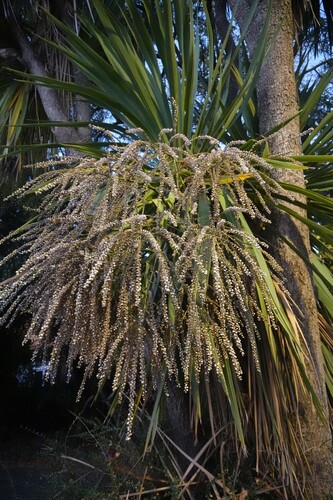
iNaturalist· cc-by-nc
(c) Ruby E Stephens, some rights reserved (CC BY-NC), uploaded by Ruby E Stephens
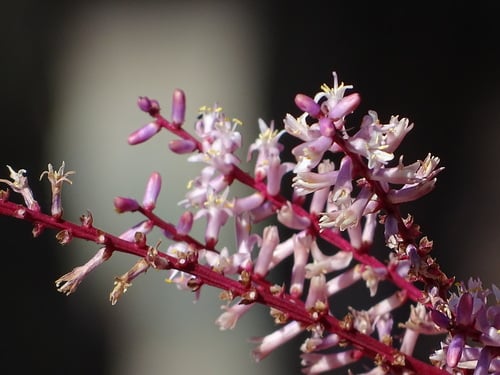
iNaturalist· cc-by
(c) Eamonn Culhane, some rights reserved (CC BY), uploaded by Eamonn Culhane
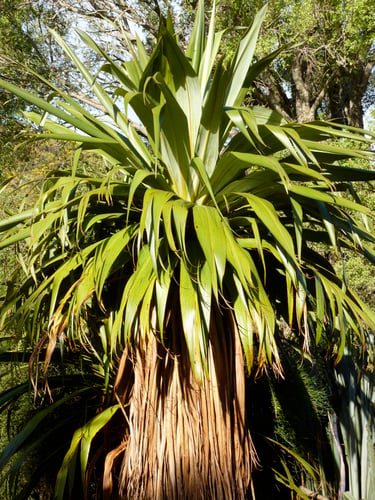
iNaturalist· cc-by
(c) Nina Kerr, some rights reserved (CC BY), uploaded by Nina Kerr
Summary
Source: WikipediaChamaescilla corymbosa, commonly known as blue stars, blue squill or mudrurt, is a tuberous perennial herb species in the genus Chamaescilla. It is endemic to southern Australia. Plants are 10 to 15 cm high and have grass-like basal leaves The bright blue flowers have 6 petals (each with three nerves) and 6 stamens. These appear in groups of two or more are produced from August to October in the species' native range. The seed capsules contain black, glossy seeds. There are two currently recognised varieties: C. corymbosa (R.Br.) F.Muell. ex Benth. var. corymbosa C. corymbosa var. paradoxa (Endl.) R.J.F.Hend. The species occurs in Western Australia, South Australia, Victoria and Tasmania.
Description
A herb that keeps growing from year to year. It has tuberous roots. These can be 1-7 cm long. The leaves are narrow and in groups of 2-6. They are 5-13 cm long and 1.5-5 mm wide. There can be fine hairs along the edge. The flowering stalk is 25 cm long. There are 1-6 flowers on a stalk. The fruit is a capsule 8 mm across.
Edible Uses
The tubers are eaten raw or cooked.
Traditional Uses
The tubers are eaten raw or cooked.
This uses section is brief — help expand it
Distribution
It is a temperate plant. It grows in damp sandy or peaty soils. It is often in heath or under light forest cover. It is resistant to frost but affected by drought. In Tasmania it grows from sea level to 200 m altitude.
Where It Grows
Australia*, Tasmania*,
Cultivation
Plants can be grown by division of the tubers or by seed.
Notes
Also put in the family Liliaceae.
Synonyms
Also Known As
Mudrurt
References (10)
- Bodkin, F., 1991, Encyclopedia Botanica. Cornstalk publishing, p 242
- Clarke, P. A., 2013, The Aboriginal Ethnobotany of the Adelaide Region, South Australia. Transactions of the Royal Society of South Australia. (2013), 137(1): 97-126
- Curtis, W.M., & Morris, D.I., 1994, The Student's Flora of Tasmania. Part 4B St David's Park Publishing, Tasmania, p 387
- De Angelis, D., 2005, Aboriginal Plant Use of the Greater Melbourne Area. La Trobe University Environment Collective
- Gilfedder, L et al, 2003, The Nature of the Midlands. Midlands Bushweb. PO Box 156 Longford, Tasmania. p 67
Show all 10 references Hide references
- Fragm. 7:68. 1870
- Hastings Advance Community College, 2017, Uses for Native Plants of the Mornington Peninsula. 86pp. p 32
- Lim, T. K., 2015, Edible Medicinal and Non Medicinal Plants. Volume 9, Modified Stems, Roots, Bulbs. Springer p 23
- www.fsd.monash.edu.au/files/bethgottpamphley_po.pdf
- Zola, N., & Gott, B., 1992, Koorie Plants Koorie People. Koorie Heritage Trust. p 45