Phyllostachys nigra var. henonis
(Mitford) Stapf ex Rendle
Henon bamboo, Golden bamboo
gbif· cc-by-nc
JimsWildLife
gbif· cc-by-nc
cronulla
gbif· cc-by-nc
JimsWildLife
Summary
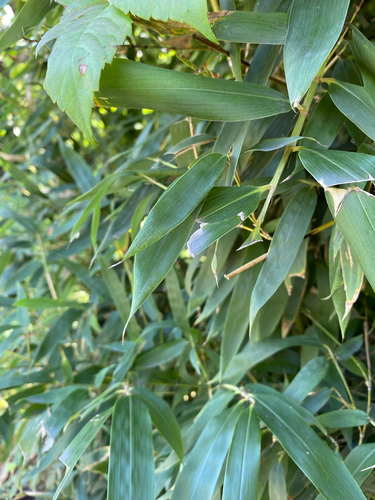
Source: WikipediaPhyllostachys nigra, commonly known as black bamboo or purple bamboo (Chinese: 紫竹), is a species of bamboo, native to Hunan Province of China, and is widely cultivated elsewhere. Growing up to 35 feet tall by 2 inches wide, it forms clumps of slender arching canes which turn black after two or three seasons. The abundant lance-shaped leaves are 4–13 cm (2–5 in) long. Numerous forms and cultivars are available for garden use. The species and the form P. nigra f. henonis have both gained the Royal Horticultural Society's Award of Garden Merit. The form henonis is also known as Henon bamboo and as cultivar 'Henon'.
Description
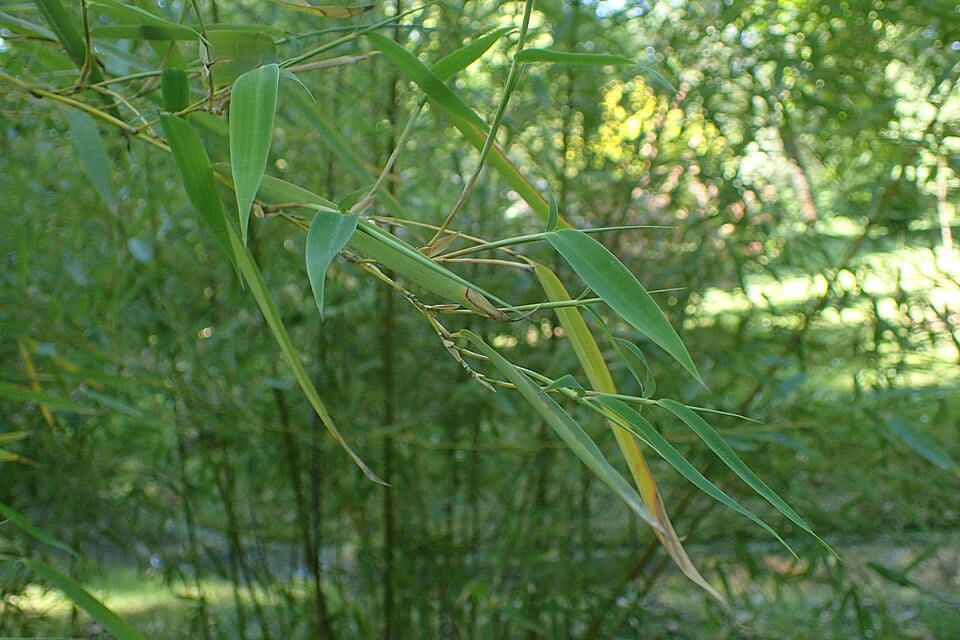
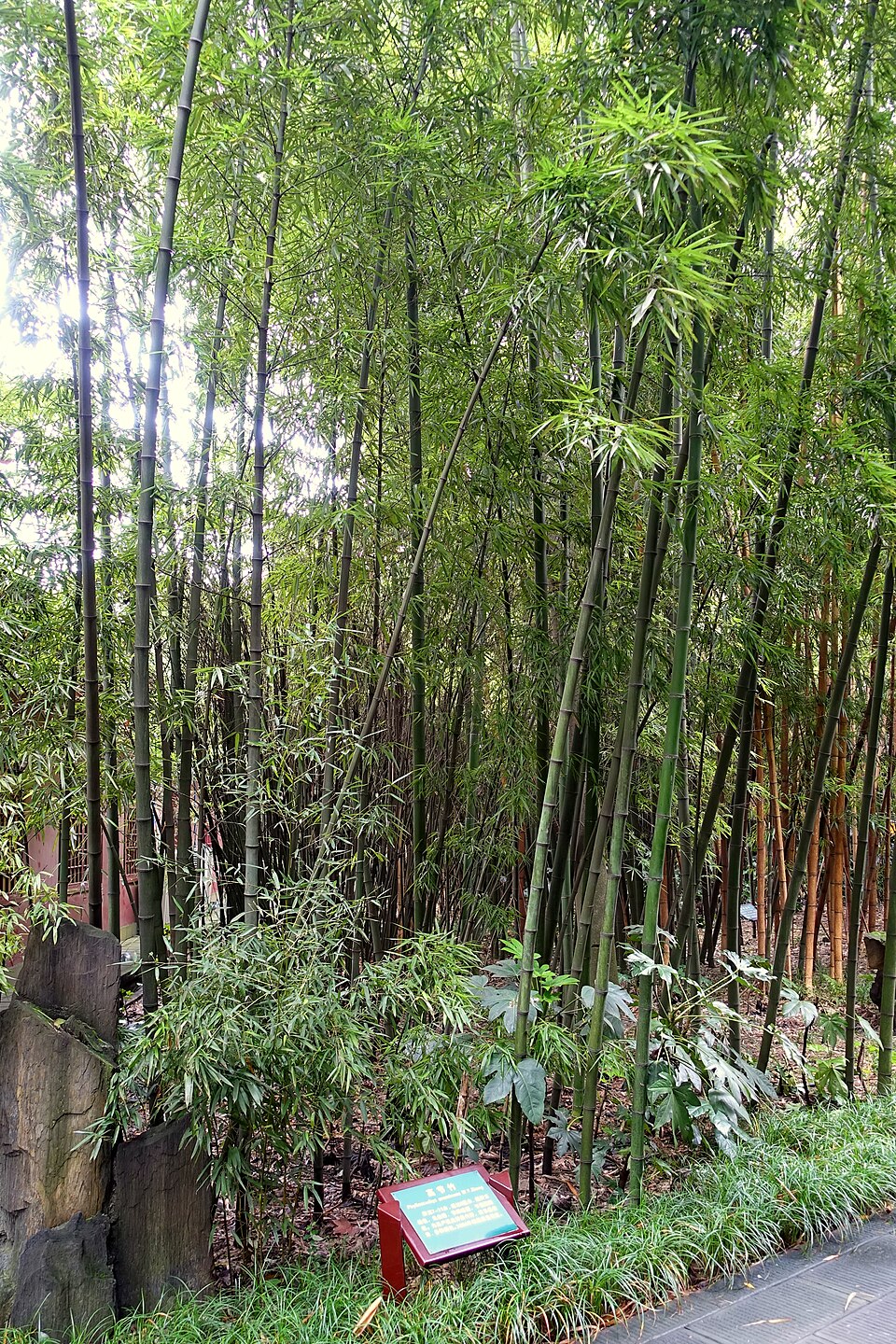
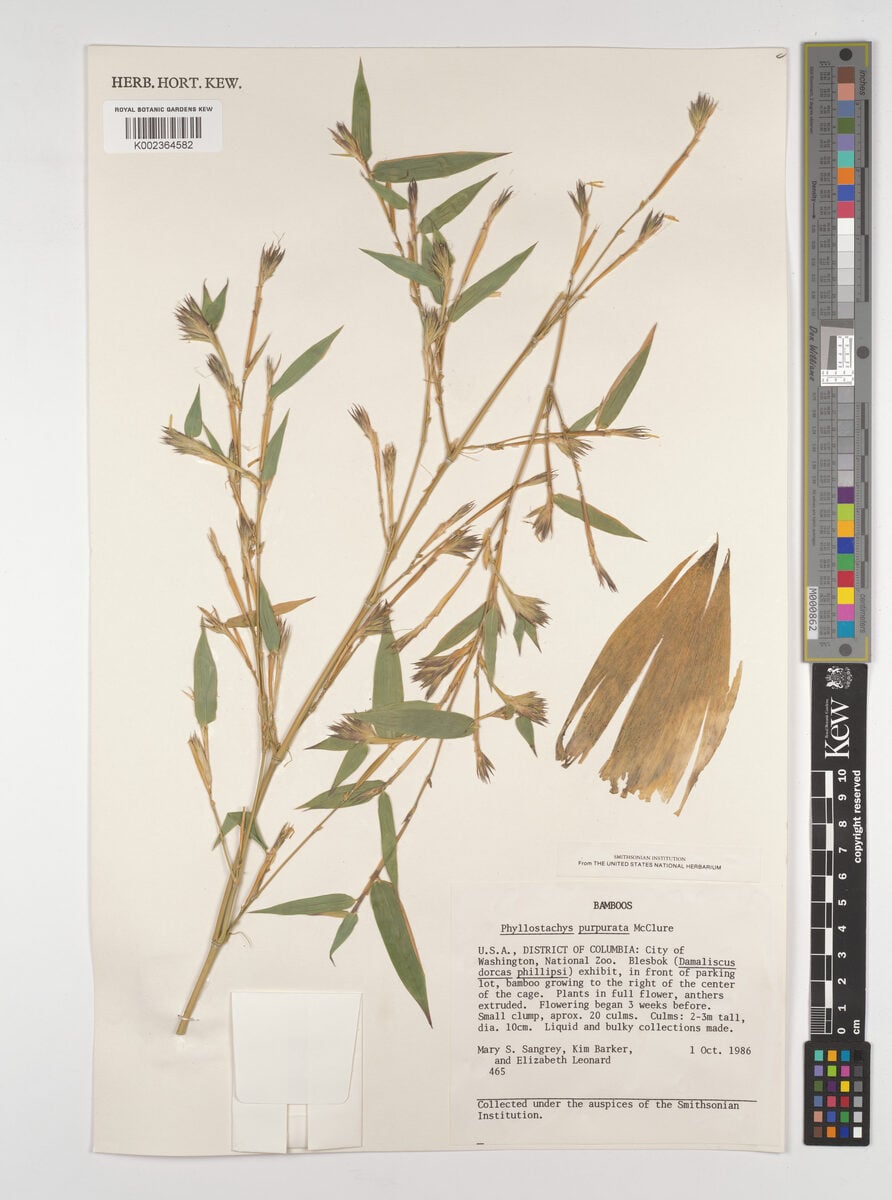
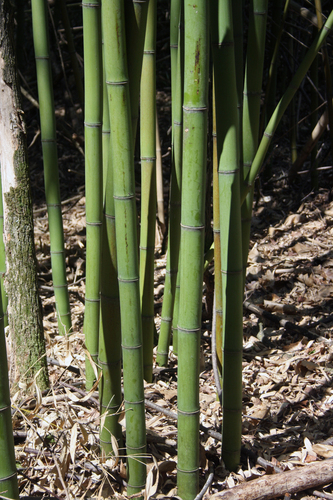
A bamboo. It grows 10-14 m high. The middle internodes are 34 cm long. They are green.
This description is brief — help expand it
Edible Uses
It is used for lumber (timber), food, and musical instruments, among other things, in areas of China where it is native and also worldwide.
Traditional Uses
The shoots are cooked and eaten. The cooking water is changed.
This uses section is brief — help expand it
Medicinal Uses
A 2008 study from Zhejiang University, in China, isolated several flavone C-glycosides on black bamboo leaves, including orientin, homoorientin, vitexin and isovitexin.
Distribution
It is a temperate plant. In central China it is cultivated on hillsides below 1,400 m. In Sichuan and Yunnan.
Where It Grows
Asia, China*, Europe, India, Japan, Korea, North America, Philippines, SE Asia, Tibet, Vietnam,
Production
In China the shoots are harvested in May. The shoots weigh between 0.5-2 kg.
Other Information
It is cultivated.
Synonyms
Also Known As
A mao a bo, Dan zhu, Ha-chiku
References (9)
- Facciola, S., 1998, Cornucopia 2: a Source Book of Edible Plants. Kampong Publications, p 47
- http://www.plantnames.unimelb.edu.au/sorting/Bamboos_Edible.html
- Hu, Shiu-ying, 2005, Food Plants of China. The Chinese University Press. p 295
- J. Linn. Soc., Bot. 36:443. 1904
- Luo, B., et al, 2019, Wild edible plants collected by Hani from terraced rice paddy agroecosystem in Honghe Prefecture, Yunnan, China. Journal of Ethnobiology and Ethnomedicine 15:56
Show all 9 references Hide references
- Tanaka,
- Young, 1961,
- Yang, Y., et al, A review of bamboo resources in Yunnan, China www.bioversityinternational.org
- Zeven, A. C. & de West, J. M. J., 1982, Dictionary of cultivated plants and their regions of diversity. Wageningen. p 38