Plumeria rubra f. acutifolia
(Poir.) Woodson
Pagoda tree
iNaturalist· cc-by-sa
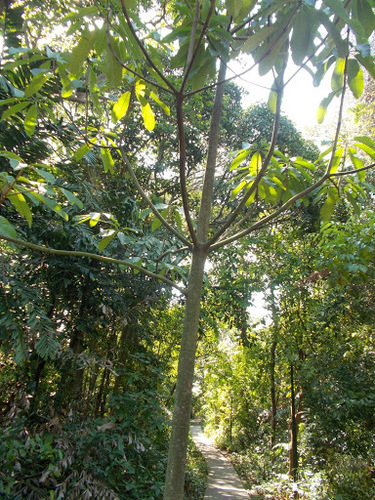
(c) Cabanillas Lopez Jesus Miguel, some rights reserved (CC BY-SA), uploaded by Cabanillas Lopez Jesus Miguel
iNaturalist· cc-by
(c) Francisco Farriols Sarabia, some rights reserved (CC BY), uploaded by Francisco Farriols Sarabia
iNaturalist· cc-by
(c) Bill Levine, some rights reserved (CC BY), uploaded by Bill Levine
Summary
Source: WikipediaPlumeria rubra is a deciduous plant species belonging to the genus Plumeria. Originally native to Mexico, Central America, Colombia and Venezuela, it has been widely cultivated in subtropical and tropical climates worldwide and is a popular garden and park plant, as well as being used in temples and cemeteries. It grows as a spreading tree to 7–8 m (23–26 ft) high and wide, and is flushed with fragrant flowers of shades of pink, white and yellow over the summer and autumn. Its common names include frangipani, red paucipan, red-jasmine, red frangipani, common frangipani, temple tree, calachuchi, or simply plumeria. Despite its common name, the species is not a "true jasmine" and not of the genus Jasminum.
Description
A tropical tree in the Apocynaceae family, found in Yunnan, with dried flowers and other parts used for culinary purposes.
This description is brief — help expand it
Edible Uses
The flowers are eaten as a vegetable or dried to brew as tea.
Medicinal Uses
The USDA Forestry Service lists Plumeria rubra as a poisonous plant and warns against touching or eating any part of the plant. In Cambodia, as with other Plumeria species, P. rubra flowers is used for necklaces, as offerings to deities or as decoration for coffins. The leaves of this species are used in the care of sores and made into soothing infusions. The flowers and bark of it are also used in traditional Chinese medicine in the treatment of fever, bacillary dysentery, pertussis and so on. Chinese herbal teas such as Wang Lao Ji also contain P. rubra. P. rubra possesses fulvoplumierin, an antibiotic that inhibits the growth of Mycobacterium tuberculosis. The plant has also been shown to be an antifungal, antiviral, analgesic, antispasmodic, and hypoglycemic. P. rubra is also reported to contain agoniadin, plumierid, plumeric acid, cerotinic acid, and lupeol, and the stem possesses an alkaloid called triterpinoid. The plant has been known to promote digestion and excretion, along with respiratory and immune functions. The sap of the plant is used as a laxative and is a remedy for bloating and stomachaches. The bark is said to be purgative and is also used for venereal sores. The flowers can be boiled in water or juice and made into a salad to promote bowel movement, urine flow, and to control gas and phlegm. The flowers are also used in the treatment of asthma. On the Molokai island in the Hawaiian archipelago, P. rubra is cultivated in order to produce neck garlands (leis). They are also used to make a scented oil in many Pacific islands that include Hawaii. The flowers are used to scent coconut oil. The bark contains faint purplish streaks and the wood is hard and compact with a very fine texture. The wood takes a high polish.
Distribution
A tropical plant. In Yunnan.
Where It Grows
America, Asia, Central America, China,
Also Known As
Chi-tan-hua, Guonuozhanbadi
References (5)
- Ann. Missouri Bot. Gard. 25:211. 1938
- Facciola, S., 1998, Cornucopia 2: a Source Book of Edible Plants. Kampong Publications, p 23
- Liu, Yi-tao, & Long, Chun-Lin, 2002, Studies on Edible Flowers Consumed by Ethnic Groups in Yunnan. Acta Botanica Yunnanica. 24(1):41-56
- Tanaka,
- Xu, You-Kai, et al, 2004, Wild Vegetable Resources and Market Survey in Xishuangbanna, Southwest China. Economic Botany. 58(4): 647-667.