Ammi majus
L.
Bishop's weed, Queen Anne's lace
iNaturalist· cc-by
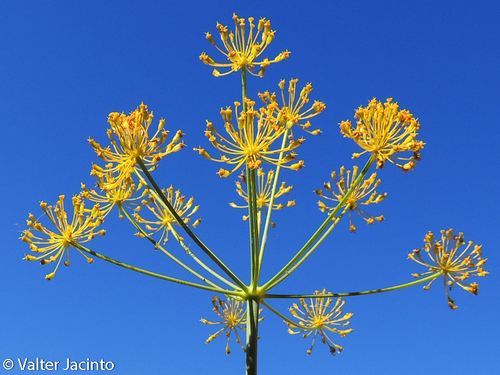
(c) Eleftherios Katsillis, some rights reserved (CC BY), uploaded by Eleftherios Katsillis
iNaturalist· cc-by-nc
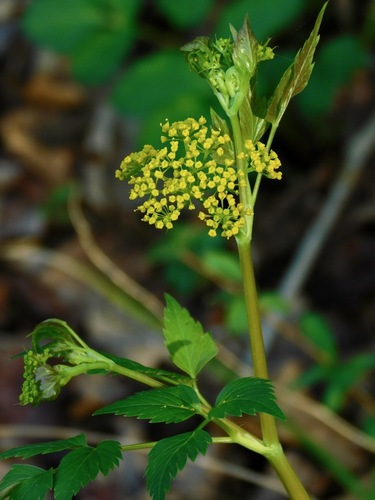
(c) Ron Frumkin, some rights reserved (CC BY-NC), uploaded by Ron Frumkin
iNaturalist· cc-by-nc
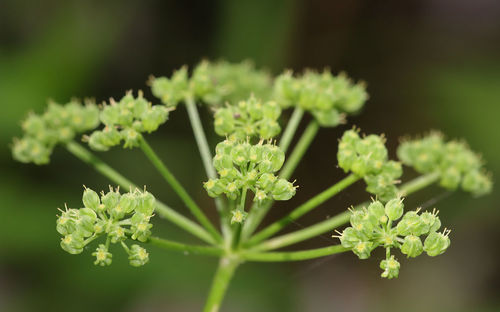
(c) Dan Johnson, some rights reserved (CC BY-NC), uploaded by Dan Johnson
Summary
Source: WikipediaAmmi majus, commonly called bishop's flower, false bishop's weed, laceflower, bullwort, etc., is a member of the carrot family Apiaceae. The plant, which has white lace-like flower clusters, has a large distribution through Southern Europe, North Africa and West and Central Asia, though it is hypothesized to be native to the Nile River Valley.
Description
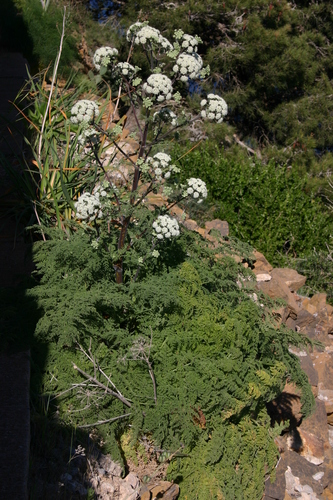
A small annual herb. It is slender and upright. It grows 1.5 m high and spreads 1 m wide. The leaves are light green and are divided 2 or 3 times. They are 15-20 cm long and divided into many finely toothed sword shaped leaflets. The flowers occur in large sprays and are white.
Edible Uses
The seed is used as a condiment.
Traditional Uses
The seeds are used as a spice or flavouring. They are used with meat and taste like thyme. The young stems are eaten boiled, fried or raw in salads. The basal leaves are mixed with Lavatera cretica (Malva multiflora) to make a vegetable dish.
Medicinal Uses
The seed is contraceptive, diuretic, and tonic. An infusion is used to calm the digestive system and is also used in the treatment of asthma and angina. A decoction of ground seed, eaten after intercourse, appears able to prevent implantation of a fertilized ovum in the uterus. This same decoction is used as a gargle for toothache. The seed contains furanocoumarins, including bergapten, which stimulate pigment production in skin exposed to bright sunlight. The plant is widely cultivated in India for these furanocoumarins, which are applied in the treatment of vitiligo and psoriasis.
Known Hazards
In Egypt around 2000 BC, the juice of Ammi majus was rubbed on patches of vitiligo after which patients were encouraged to lie in the sun. In the 13th century, vitiligo was treated with a tincture of honey and the powdered seeds of a plant called "aatrillal," which was abundant in the Nile River Valley. The plant has since been identified as A. majus, but the trade name Aatrillal is still used today to refer to the yellowish-brown powder made from its seeds. Ammi majus contains significant amounts of furanocoumarins bergapten and xanthotoxin (also known as methoxsalen), two psoralen derivatives well known for their photosensitizing effects. Indeed, A. majus may well be the world's major source of methoxsalen. The practice of using Ammi majus to treat vitiligo implicitly acknowledges the hyperpigmentation effects caused by exposure to a photosensitizing agent (such as methoxsalen) followed by ultraviolet radiation. An excess of either the photosensitizing agent or subsequent UV exposure can lead to phytophotodermatitis, a serious skin inflammation. Despite this danger, A. majus is cultivated for its furanocoumarins, which are still used for the treatment of skin disease, particularly the furanocoumarin xanthotoxin also known as "ammoidin" and by the brand name "Oxsoralen".
Distribution
It is a temperate plant. It suits hardiness zones 6-10. It is a hardy plant and grows in the sun.
Where It Grows
Africa, Albania, Argentina, Asia, Australia, Bahamas, Belgium, Brazil, Caucasus, Central Asia, Chile, China, Cuba, Cyprus, Dominican Republic, Europe*, Greece, Haiti, India, Iran, Iraq, Italy, Jordan, Libya, Mediterranean*, Middle East, Morocco, New Zealand, North Africa, North America, Pakistan, Saudi Arabia, Sicily, Slovenia, South America, Switzerland, Tajikistan, Tasmania, Turkey, Türkiye, Uruguay, USA, West Indies,
Cultivation
Prefers a well-drained soil in a sunny position, succeeding in ordinary garden soil. This species is often cultivated for its attractive flowering stems which are often sold in markets. It is cultivated in India as a medicinal herb.
Propagation
Sow seed in spring or autumn in situ.
Other Uses
The root is chewed to provide protection from strong sunlight; it contains 8-methoxypsoralen, which stimulates pigment production in skin exposed to UV light. Caution is advised as it can cause side effects. Some sources indicate it is the seeds rather than the root that are used for this purpose.
Other Information
It is cultivated.
Notes
There are 10 Ammi species.
Synonyms
Also Known As
Ameo mayor, Ammey, Apio cimarrln, Baznaybuke, Berro cimmarln, Bisnaguinha-do-campo, Cicuta negra, Encaje, Anniri, Falsa biznaga, Sannirieh, Sberra, Sprovle, Tlaylan, Traylal, Velika peščenica, Wild celery
References (22)
- Al-Qura'n, S. A., 2010, Ethnobotanical and Ecological Studies of Wild Edible Plants in Jordan. Libyan Agriculture Research Center Journal International 1(4):231-243
- Bircher, A. G. & Bircher, W. H., 2000, Encyclopedia of Fruit Trees and Edible Flowering Plants in Egypt and the Subtropics. AUC Press. p 23
- Biscotti, N. & Pieroni, A., 2015, The hidden Mediterranean diet: wild vegetables traditionally gathered and consumed in the Gargano area, Apulia, SE Italy. Acta Societatis Botanicorum Poloniae 84 (3): 327-338
- Biscotti, N. et al, 2018, The traditional food use of wild vegetables in Apulia (Italy) in the light of Italian ethnobotanical literature. Italian Botanist 5:1-24
- Brown, D., 2002, The Royal Horticultural Society encyclopedia of Herbs and their uses. DK Books. p 118
Show all 22 references Hide references
- Della, A., et al, 2006, An ethnobotanical survey of wild edible plants of Paphos and Larnaca countryside of Cyprus. J. Ethnobiol. Ethnomed. 2:34
- Facciola, S., 1998, Cornucopia 2: a Source Book of Edible Plants. Kampong Publications, p 14
- Galalaey, A. M. K., et al, 2021, Ethnobotanical study of some wild edible plants in Hujran Bason, Kurdistan Region of Iraq. ZANCO Journal of Pure and Applied Sciences. Salahaddin University-Erbil p 25
- Geraci, A., et al, 2018, The wild taxa utilized as vegetables in Sicily (Italy): a traditional component of the Mediterranean diet. Journal of Ethnobiology and Ethnomedicine (2018) 14:14
- Hadjichambis, A. C., et al, 2007, Wild and semi-domesticated food plant consumption in seven circum-Mediterranean areas. International Journal of Food Sciences and Nutrition. 2007, 1-32.
- Licata, M., et al, 2016, A survey of wild plant species for food use in Sicily (Italy) – results of a 3-year study in four Regional Parks. Journal of Ethnobiology and Ethnomedicine 12:12
- Mahklouf, M. H., 2019, Ethnobotanical Study of Edible Wild Plants in Libya. European Journal of Ecology. 5(2): 30-40
- Malezas Comestibles del Cono Sur, INTA, 2009, Buernos Aires
- Nassif, F., & Tanji, A., 2013, Gathered food plants in Morocco: The long forgotten species in Ethnobotanical Research. Life Science Leaflets 3:17-54
- Pasta, S., et al, 2020, An Updated Checklist of the Sicilian Native Edible Plants: Preserving the Traditional Ecological Knowledge of Century-Old Agro-Pastoral Landscapes. Frontiers in Plant Science. Volume 11|Article 388
- Plants of Haiti Smithsonian Institute http://botany.si.edu
- Seidemann J., 2005, World Spice Plants. Economic Usage, Botany, Taxonomy. Springer. p 33
- Sp. pl. 1:243. 1753
- Tasmanian Herbarium Vascular Plants list p 3
- Tbatou, M, et al, 2016, Wild Edible Plants traditionally used in the countryside of El Jadida, Coastal Area in the Center of Morocco. Life Sciences Leaflets 75:28-48
- Youssef, R. S. A., 2013, Medicinal and non-medicinal uses of some plants found in the middle region of Saudi Arabia. Journal of Medicinal Plants Research. Vol. 7(34), pp. 2501-2517
- Zeven, A. C. & de West, J. M. J., 1982, Dictionary of cultivated plants and their regions of diversity. Wageningen. p 118