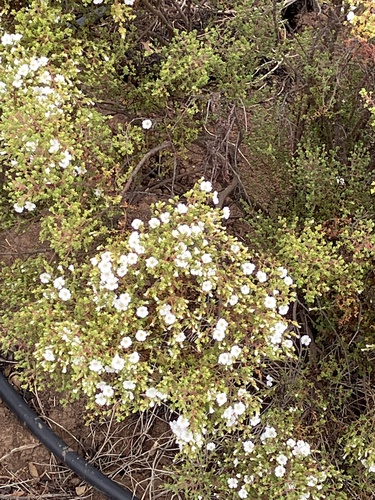
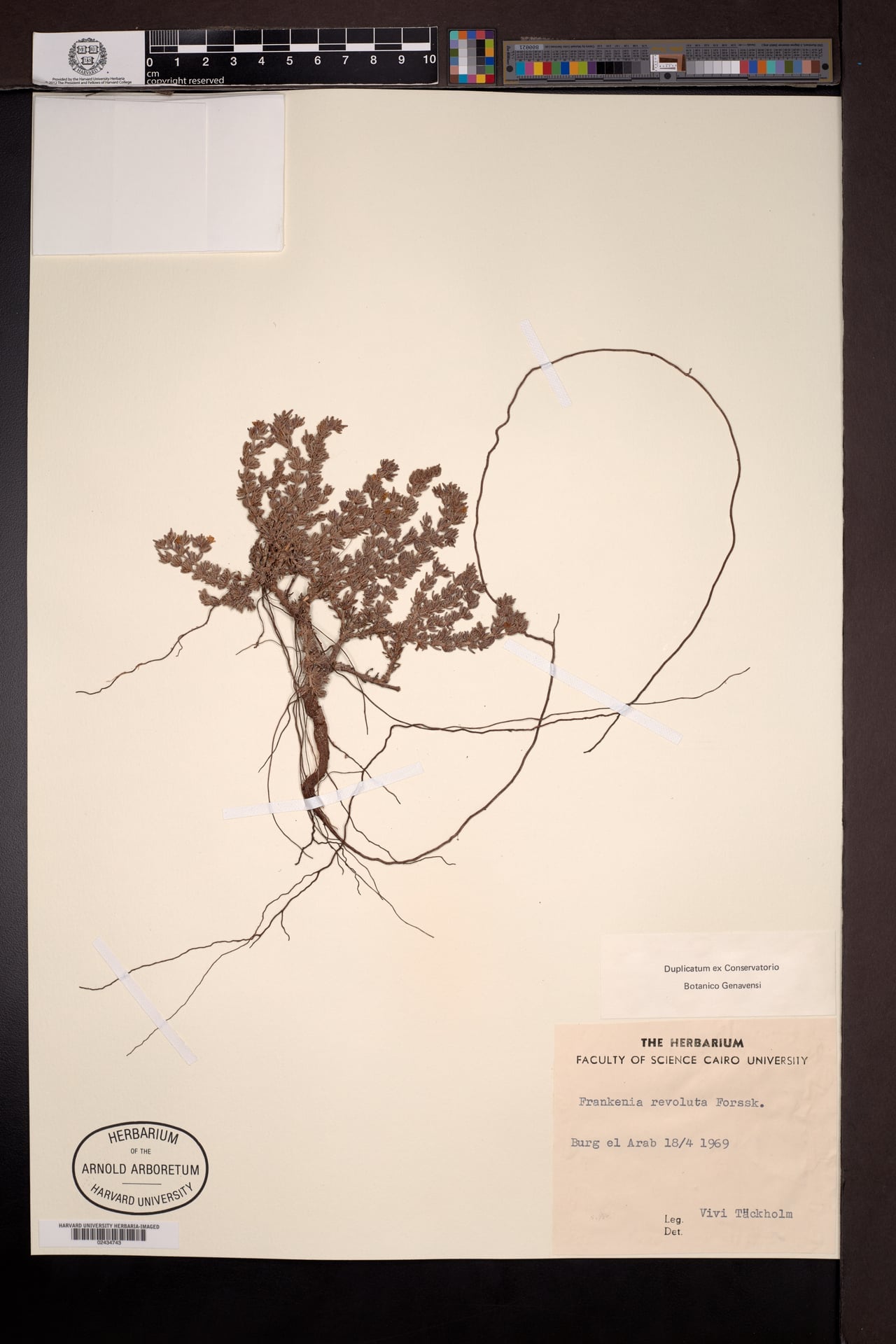
Frankenia salina
(Molina) I. M. Johnst.
Alkali heath, Alkali seaheath
iNaturalist· cc-by-nc
(c) Fred Melgert / Carla Hoegen, some rights reserved (CC BY-NC), uploaded by Fred Melgert / Carla Hoegen
iNaturalist· cc-by-nc
(c) Fred Melgert / Carla Hoegen, some rights reserved (CC BY-NC), uploaded by Fred Melgert / Carla Hoegen
iNaturalist· cc-by-nc-nd
(c) danielaperezorellana, some rights reserved (CC BY-NC-ND)
Summary
Source: WikipediaFrankenia salina, often called alkali heath or alkali seaheath, is a perennial herb native to California, Nevada, Mexico and Chile. It is uncommon even in the region where it is most likely to be found, just north of the San Francisco Bay Area. It is a squat flowering bush that forms a twiggy thicket near beaches and coastal salt marshes. Its common name refers to its preference for alkaline soils as a halophyte. It has the ability to excrete salt as an adaptation for living in saline habitats. The flowers are pink or fuchsia in color.
Description
A small shrub reaching 30 cm tall with oval, stalkless leaves. It grows in tropical coastal salt marshes as part of the Frankeniaceae family.
This description is brief — help expand it
Edible Uses
The leaves serve as a flavoring, and the plant is burnt to produce salt from its ashes.
Traditional Uses
The plant is burnt to produce salt.
This uses section is brief — help expand it
Distribution
It is a tropical plant. It grows in coastal salt marshes.
Where It Grows
Chile, North America, South America, USA,
Cultivation
It can be grown from rhizomes. It can be grown from seeds.
Notes
There are about 70 Frankenia species.
Synonyms
References (3)
- Cordero, S. E., Abello, L. A., & Galvez, F. L., 2017, Plantas silvestres comestibles y medicinales de Chile y otras partes del mundo. CORMA p 65
- Heywood, V.H., Brummitt, R.K., Culham, A., and Seberg, O. 2007, Flowering Plant Families of the World. Royal Botanical Gardens, Kew. p 151 (As Frankenia berteroana)
- Leon-Lobos, P., et al, 2022, Patterns of Traditional and Modern Uses of Wild Edible Native Plants of Chile: Challenges and Future Perspectives. Plants (Basel) v 11 (6) Table S1