Frankenia portulacifolia
Spreng.
Sea heath, St Helena tea
iNaturalist· cc0
no rights reserved
iNaturalist· cc0
no rights reserved, uploaded by davidroy
iNaturalist· pd
anonymous, no known copyright restrictions (public domain)
Summary
Source: WikipediaFrankenia portulacifolia, also called Saint Helena tea or tea plant, is a species of salt-tolerant plant in the Frankeniaceae family. It is endemic to the islands of Saint Helena, Ascension and Tristan da Cunha. Its natural habitats are inhospitable, dry and rocky areas and rocky shores, often on weathered volcanic ash. As its total population has been estimated at only around 3,500 individuals, it is currently classified as Critically Endangered by the IUCN.
Description
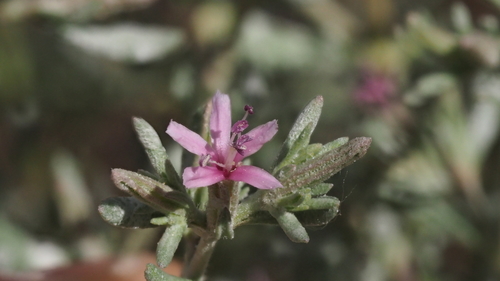
A small shrub. It probably has 5 partly fused sepals and 5 separate petals. The fruit is a small capsule.
This description is brief — help expand it
Edible Uses
The leaves are used as a substitute for tea.
Traditional Uses
The leaves have been used as a substitute for tea.
This uses section is brief — help expand it
Known Hazards
The plant may now be extinct.
Distribution
It is a tropical plant. It probably grows in coastal salty habitats.
Where It Grows
Atlantic, St Helena*,
Cultivation
Requires a sunny position and a well-drained, light sandy soil on the dry side.
Notes
The plant may now be extinct. There are 73 Frankenia species.
Synonyms
References (1)
- Hedrick, U.P., 1919, (Ed.), Sturtevant's edible plants of the world. p 319