Opuntia schumannii
F.A.C. Weber ex A. Berger
Paddle cactus
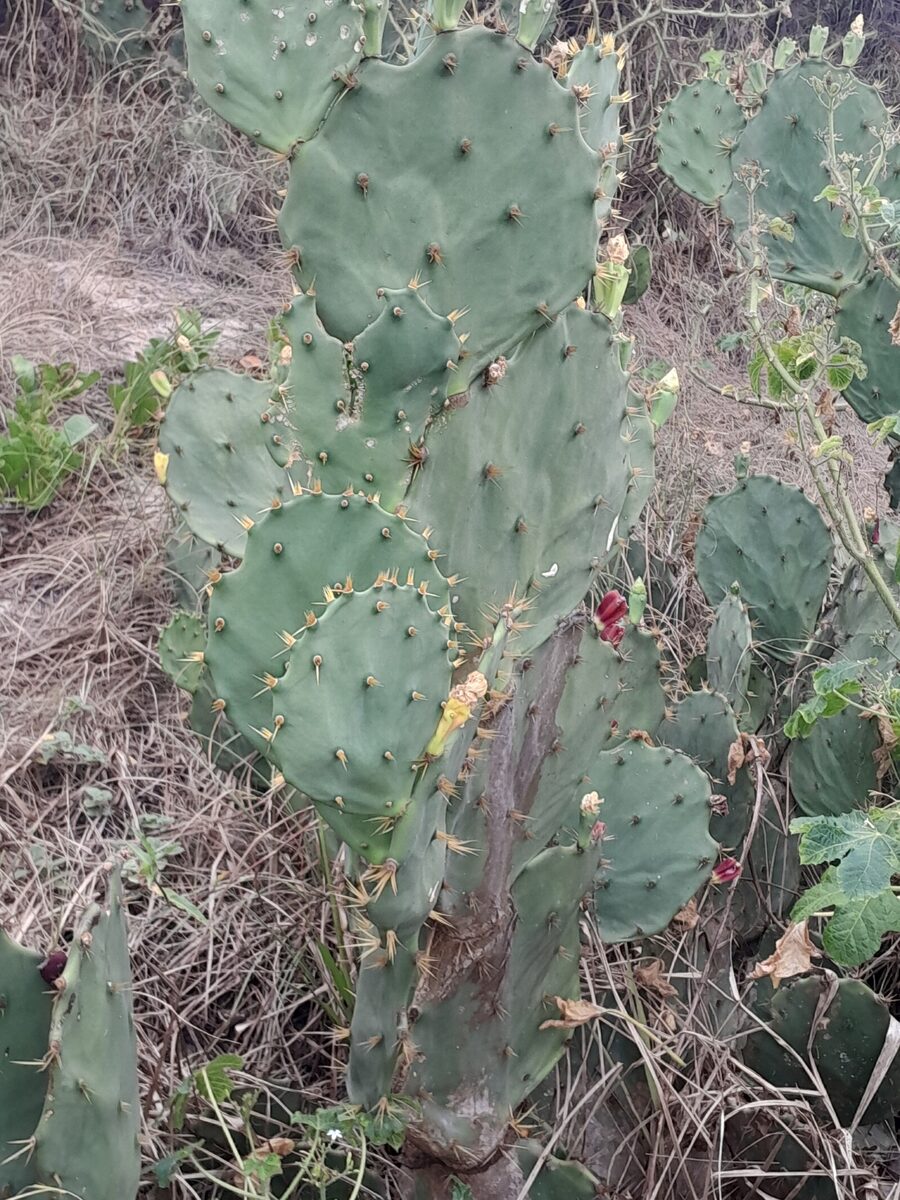
iNaturalist· cc-by-nc
(c) Entomolab, some rights reserved (CC BY-NC), uploaded by Entomolab
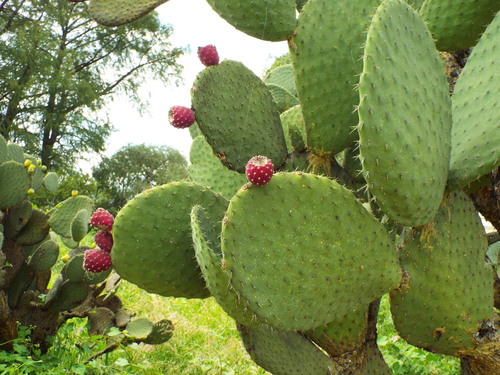
iNaturalist· cc-by-nc
(c) Apipa, some rights reserved (CC BY-NC)
iNaturalist· cc-by-nc
(c) Apipa, some rights reserved (CC BY-NC)
Description
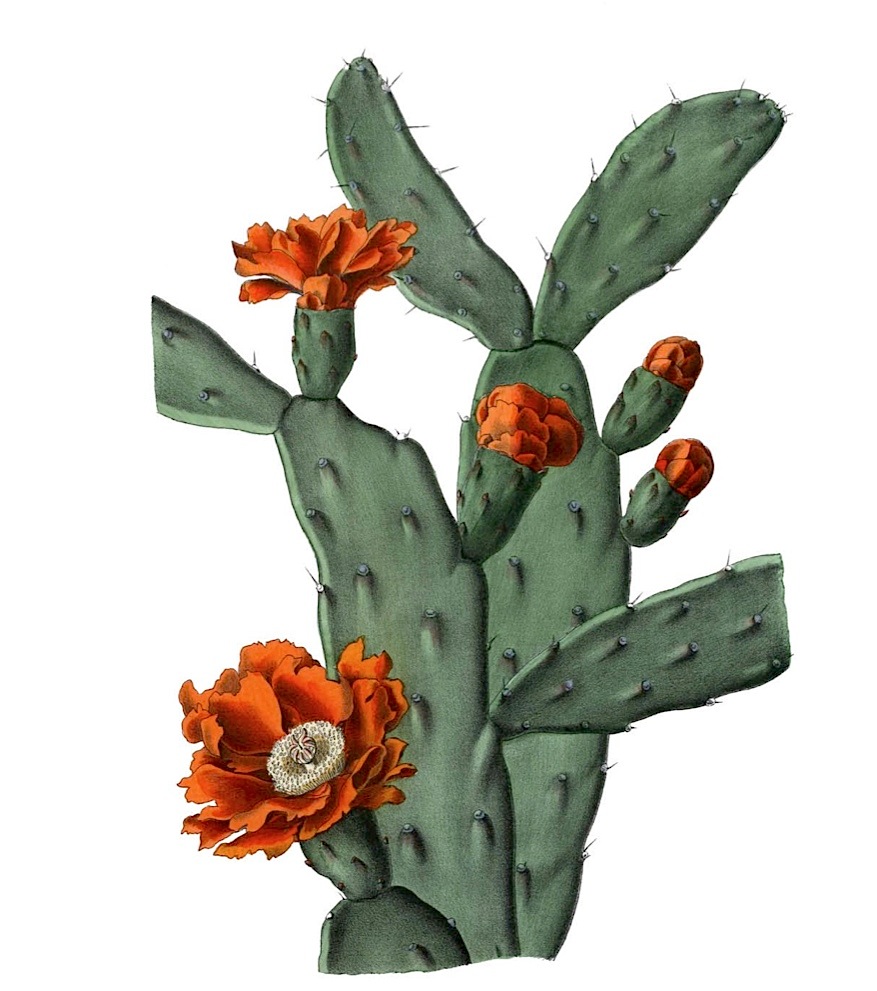
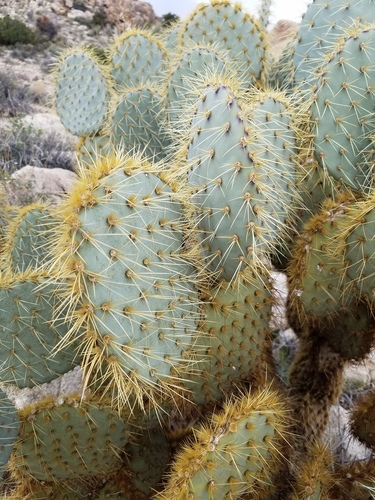
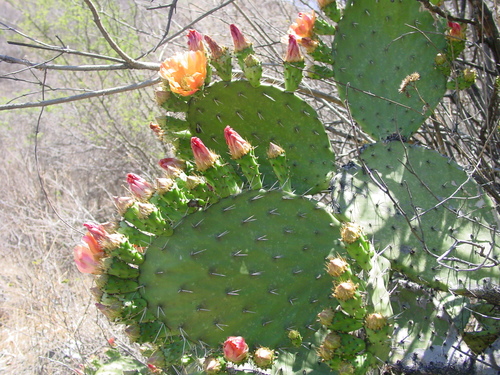
A cactus. It is a shrubby plant. It forms clumps 1-2 m high. The stem segments are oblong. They are dull green and have irregular and wavy edges. They are 25 cm long. There are 2-10 spines in a group. They are unequal and twisted. The are spreading and 4.5 cm long. The flowers are yellow, orange or red. They are 6 cm long. The fruit are oval and dark purple. They are fleshy and 5 cm long.
Edible Uses
Extracts from the fruit are used as a red food colouring in ice creams, juices etc. The oval, dark purple, fleshy fruit is up to 5cm long. The tender young stem segments of various species are often cooked as a vegetable. Known as ‘nopals’ in Mexico, where they are a common ingredient in numerous dishes, they can be eaten raw or cooked, used in marmalades, soups, stews and salads. The most commonly used species are Opuntia ficus-indica or Opuntia hyptiacantha (syn Opuntia matudae), although the stems of almost all Opuntia species are edible.
Traditional Uses
The fruit are used as food colouring.
This uses section is brief — help expand it
Medicinal Uses
The fruit are used as food colouring.
Known Hazards
The plant has numerous minutely barbed glochids - these are barbed spines that are usually small to minute and are very sharp and brittle. The glochids are very easily dislodged when the plant is touched and can penetrate the skin where, because of their barbs, they become stuck and are very difficult to see and remove. They can cause considerable irritation and discomfort. Opuntia species can contain quite high levels of oxalic acid, especially in older parts of the plant. Perfectly alright in small quantities, foods containing oxalic acid should not be eaten in large amounts since it can lock-up other nutrients in the food, especially calcium, thus causing mineral deficiencies. The oxalic acid content will be reduced if the plant is cooked. People with a tendency to rheumatism, arthritis, gout, kidney stones or hyperacidity should take especial caution if including this plant in their diet since it can aggravate their condition.
Distribution
A tropical plant. It grows along shores and in openareas.
Where It Grows
Africa, Asia, Colombia*, Indonesia, SE Asia, South Africa, South America, Southern Africa, Venezuela*,
Cultivation
Plants can be grown from seeds or cuttings.
Also Known As
Kaktus dayung
References (5)
- Anderson, E.F., 2001, The Cactus Family, Timber Press. p 519
- Gard. Chron. ser. 3, 35:34. 1904
- Ruiters-Welcome, A. K., 2019, Food plants of southern Africa. Ph.D. thesis. Univ. of Johannesburg p 41
- Sukarya, D. G., (Ed.) 2013, 3,500 Plant Species of the Botanic Gardens of Indonesia. LIPI p 1037
- Welcome, A. K. & Van Wyk, B.-E., 2019, An inventory and analysis of the food plants of southern Africa. South African Journal of Botany 122 (2019) 136–179