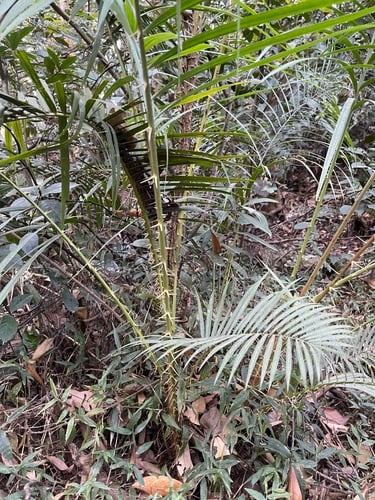
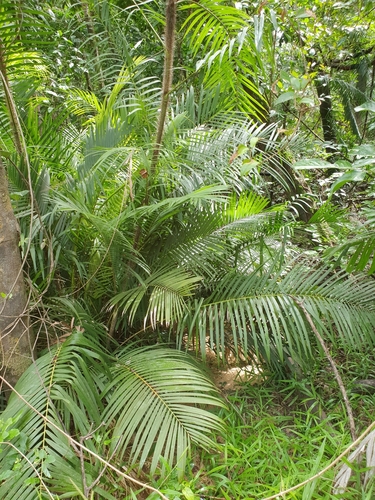
Copernicia tectorum
(Kunth) Mart.
iNaturalist· cc-by-sa
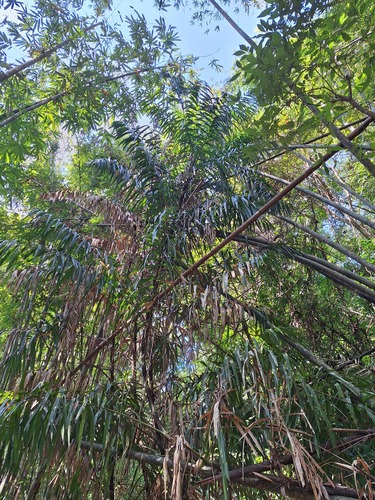
(c) Photo by David J. Stang, some rights reserved (CC BY-SA)
iNaturalist· cc-by-nc
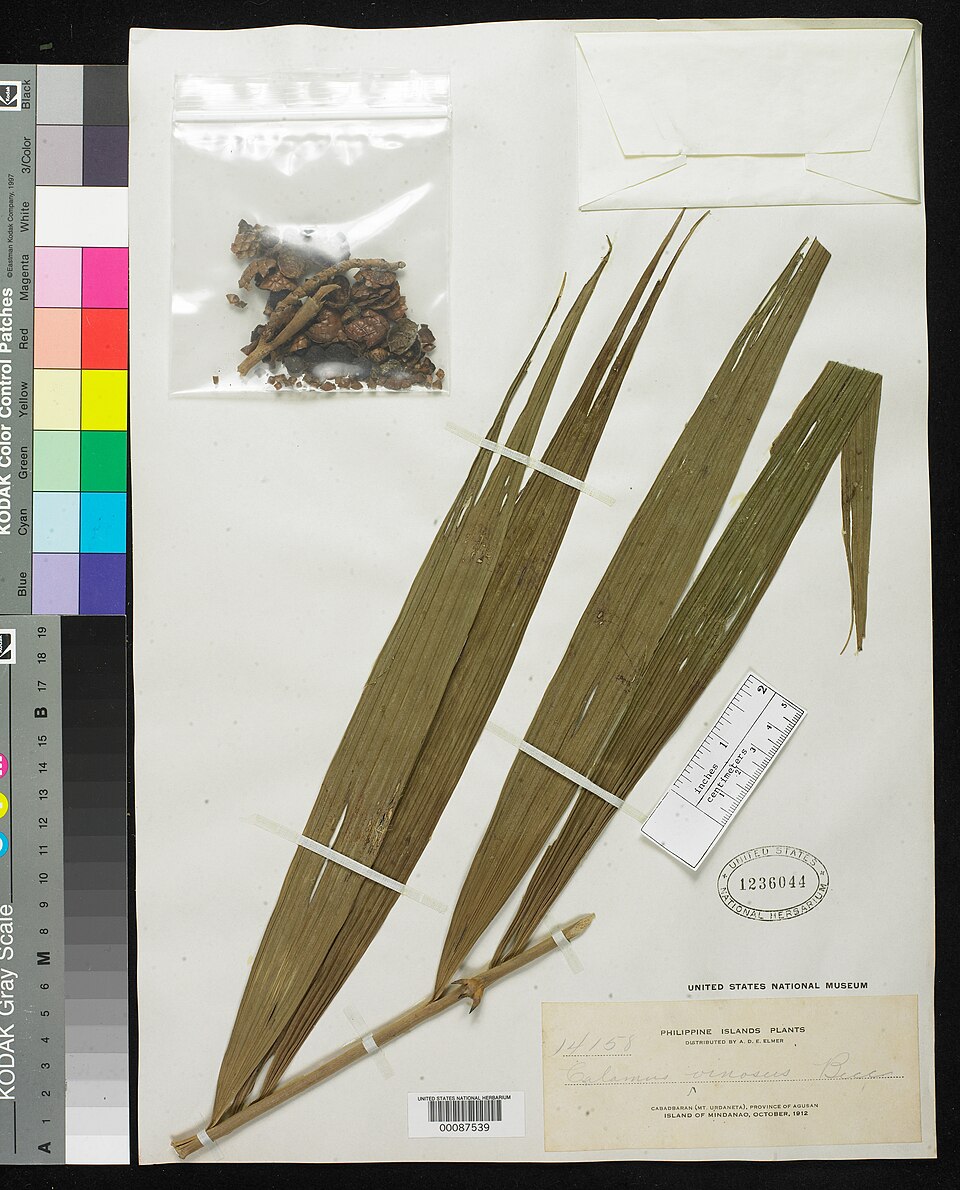
(c) Jason J. Dombroskie, some rights reserved (CC BY-NC)
iNaturalist· cc-by-nc
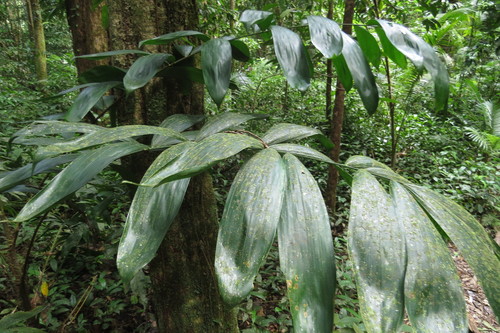
(c) Quinlan Cijntje, some rights reserved (CC BY-NC)
Summary
Source: WikipediaCopernicia tectorum is a palm which is native to Colombia and northern Venezuela, where it is known as palma llanera.
Description
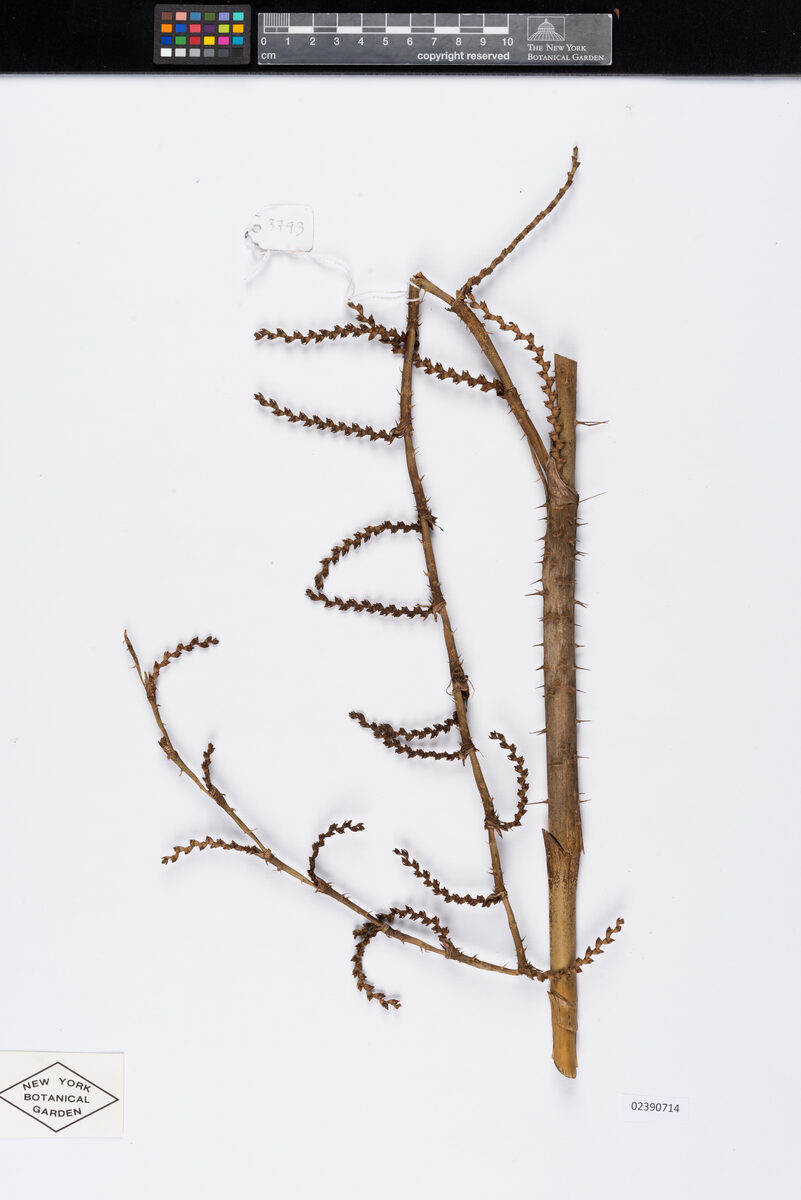
A palm. It has stems 8-10 m tall. They are 25-30 cm across. Young palms have the leaf bases remaining on the trunk. The leaves are spreading. The leaf blade is round in outline. It is green on the lower surface. It does not have thorns on the edges. The flowering stalk is just longer than the leaves. The flowering branches are up to 17 cm long. They are 1-2 mm across and have small bristle like bracts. The fruit are oval and 2.5-3 cm long and 1.5-2 cm wide. They are brown.
Edible Uses
The fruits are eaten.
Distribution
A tropical plant. It grows in seasonally flooded savannah areas. It can withstand long droughts and long floods.
Where It Grows
Colombia, South America, Venezuela,
Cultivation
Tolerant of full sun from an early age. The plant is able to tolerate seasonal inundation of the soil as well as long periods of drought.
Other Uses
The leaves are used for weaving hats, baskets etc. The leaves are used for thatching. The trunk is durable, It is used for the beams of houses.
Synonyms
Also Known As
Palma sara, Palmiche
References (4)
- Balick, M.J. and Beck, H.T., (Ed.), 1990, Useful palms of the World. A Synoptic Bibliography. Colombia p 497
- Henderson, A., Galeano, G and Bernal, R., 1995, Field Guide to the Palms of the Americas. Princeton. p 61
- Hist. nat. palm. 3:243. 1838
- Roa, J. A. G. & Boada, D. S. G., 2018, Fundación para el Fortalecimiento de la Fruticultura y Plantas Alimenticias no Convencionales en Colombia.