Crocus cartwrightianus
Herb.
Wild saffron crocus
iNaturalist· cc-by-nc
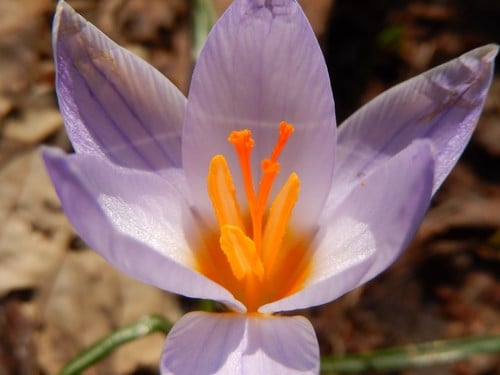
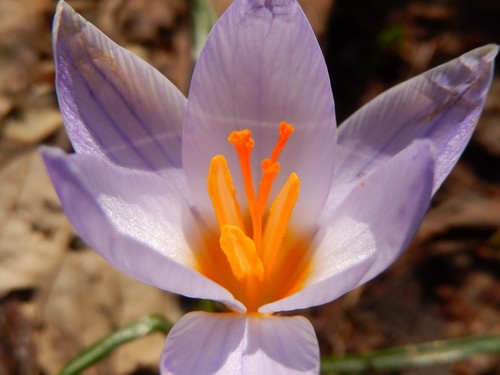
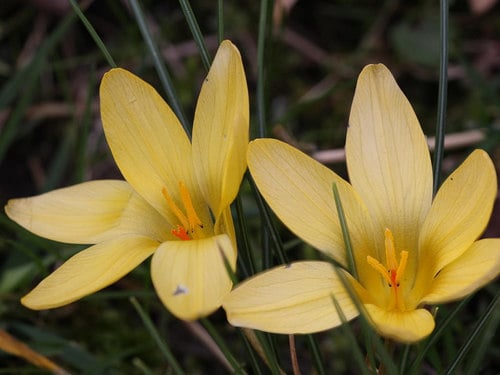
(c) Σάββας Ζαφειρίου (Savvas Zafeiriou), some rights reserved (CC BY-NC), uploaded by Σάββας Ζαφειρίου (Savvas Zafeiriou)
iNaturalist· cc-by-nc
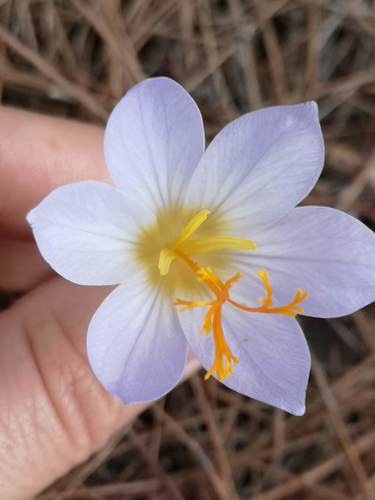
(c) Nicolas Lagière, some rights reserved (CC BY-NC)
iNaturalist· cc-by-nc
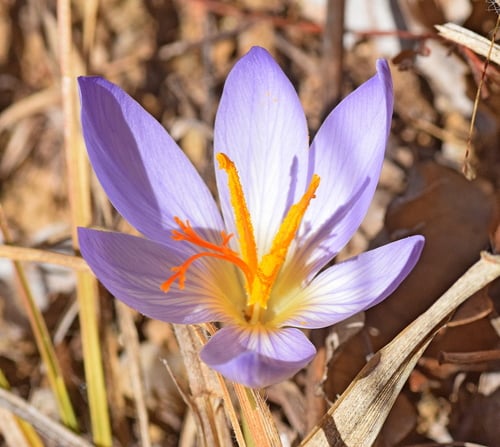
(c) Nicolas Lagière, some rights reserved (CC BY-NC)
Summary
Source: WikipediaCrocus cartwrightianus is a species of flowering plant in the family Iridaceae. It is native to mainland Greece, Euboea, Crete, Skyros and some islands of the Cyclades. It is a cormous perennial growing to 5 cm (2 in). The flowers, in shades of lilac or white with purple veins and prominent red stigmas, appear with the leaves in autumn and winter.
Description
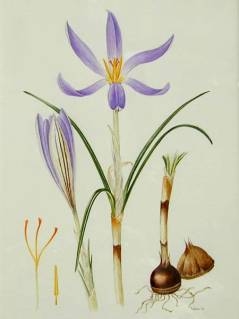
A low plant which forms corms. It keeps growing from year to year. There are 5-11 leaves and these are grey-green. They are 0.5-1.5 mm wide. The flowers are pale or deep lilac-purple. They are strongly veined on the outside. They can be a darker colour towards the base. The stamen have yellow anthers and a white or purple stalk. The style is divided into 3 very long and deep red branches. They are flared at the tip. Each is 15-27 mm long.
Edible Uses
The flower styles and stigmas are collected for saffron; flowers can also be used as a spice.
Traditional Uses
The flower styles are sometimes collected for saffron.
This uses section is brief — help expand it
Medicinal Uses
The flower styles are traditionally collected for saffron.
Distribution
It grows on rocky hillsides and in grassy places.
Where It Grows
Australia, Europe, Greece, Mediterranean,
Also Known As
Cartwright saffron
References (3)
- Blamey, M and Grey-Wilson, C., 2005, Wild flowers of the Mediterranean. A & C Black London. p 498
- Edward's Bot. Reg. 29: misc. 82. 1843
- Seidemann J., 2005, World Spice Plants. Economic Usage, Botany, Taxonomy. Springer. p 121