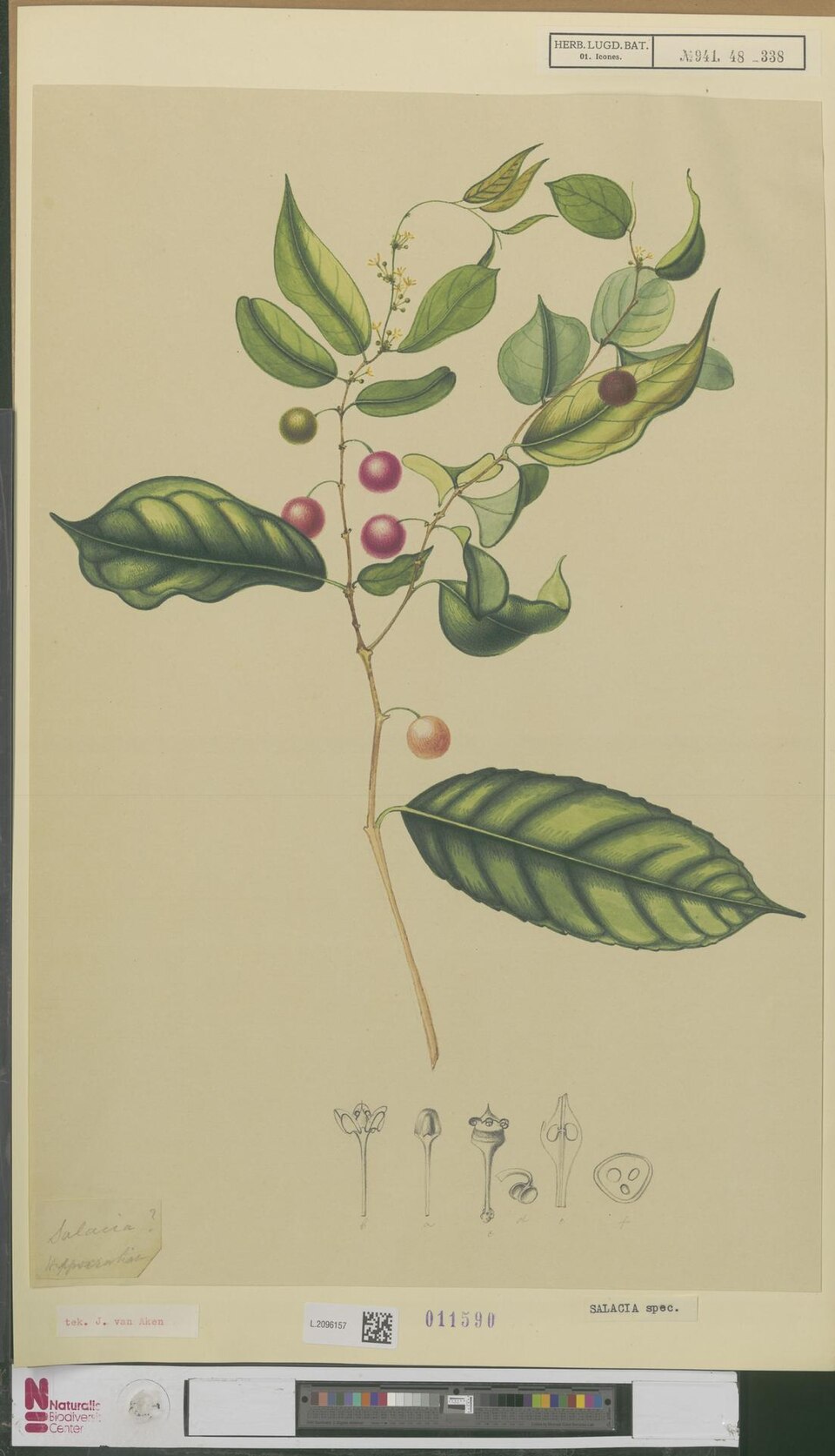
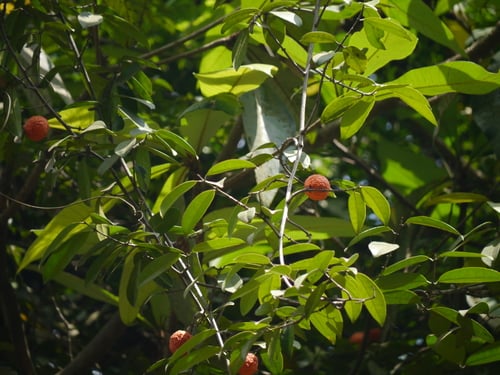
Elaeodendron transvaalense
(Burtt Davy) R. H. Archer
Transvaal saffronwood, Three-petalled cassine
iNaturalist· cc-by-nc
(c) Duncan McKenzie, some rights reserved (CC BY-NC), uploaded by Duncan McKenzie
iNaturalist· cc-by-nc
(c) brianrode, some rights reserved (CC BY-NC)
Summary
Source: WikipediaElaeodendron transvaalense (Burtt Davy) R.H.Archer (bushveld saffron, Afrikaans: Bosveld-saffraan, Lepelhout, or Oupitjie, Tsonga: Monomane, Venda: Mulumanamana, Zulu: Ingwavuma) is a species of flowering plant in the family Celastraceae. It is a protected tree in South Africa. It also occurs in other Southern African countries like Angola, Namibia, Botswana, Zambia, Zimbabwe, Eswatini and Mozambique.
Description
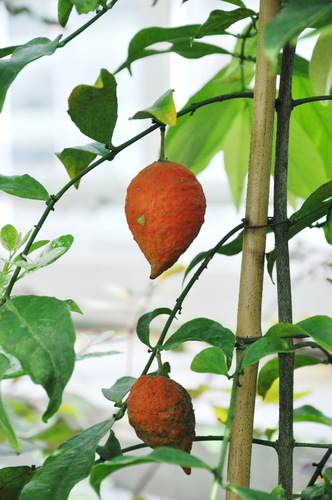
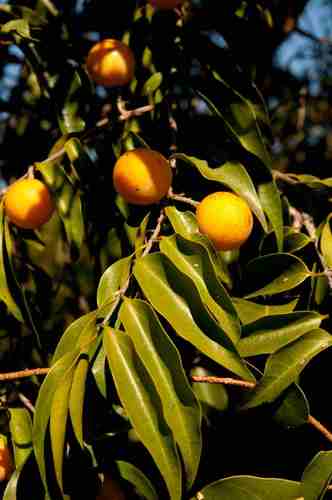
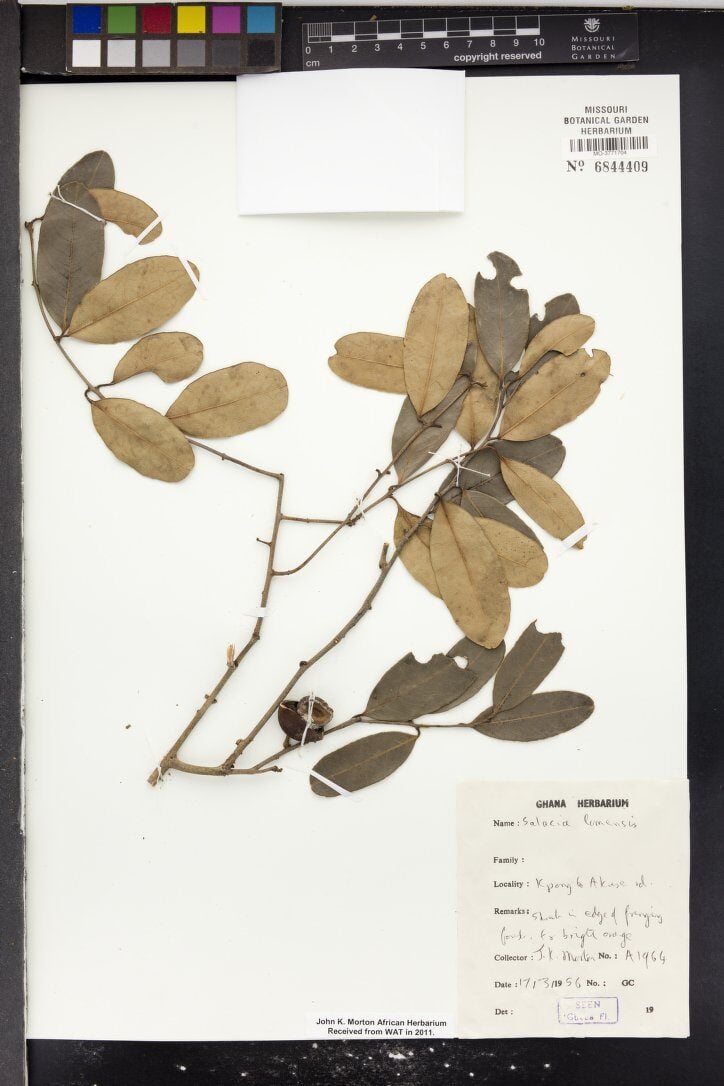
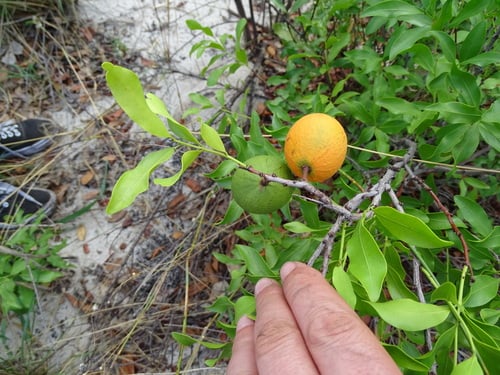
A shrub or small bushy tree. It has several stems. It grows 4-5 m tall. It can reach 10-15 m. Bark is pale grey. It loses many leaves during the year. The trunk is short and often crooked. The crown is round. The leaves are alternate and often clustered on small shoots. They are narrow and oval. They are 2-7 cm long by 1-3 cm wide. They have net-veining on both surfaces. They are leathery and greyish-green. The flowers are in clusters in the axils of leaves. They occur as 20-30 flowered heads about 2 cm long. They are small and greenish-white. They have 3 petals. The fruit is fleshy with a stone inside. The fruit are berry like. They are round or oval and taper to both ends. They are 2.5 cm long by 1.8 cm wide. They are yellow to reddish-brown.
Edible Uses
Fruit - raw. The somewhat elongated yellow fruits are up to 20mm long, broadly tapering to each end. The bark has a faint aromatic scent and is said to brew tea with a pleasant flavour. This tea is drunk as an appetizer.
Traditional Uses
The fruit are eaten raw.
This uses section is brief — help expand it
Medicinal Uses
Bark infusions and decoctions are a favoured local medicine, taken either as a drink or as an enema, for the treatment of stomach complaints and fevers. They are also used as a drink in the treament of venereal diseases, kidney and bladder complaints, skin diseases, swellings, haemorrhoids, and to improve the appetite. Root extracts are sometimes used for similar complaints. Leaves are chewed to treat throat problems, and a leaf decoction is drunk against poisoning. Extracts showed in-vitro activity against Trichomonas vaginalis, an important cause of urogenital infections.
Known Hazards
No hazards listed in the data.
Distribution
A tropical and subtropical plant. It grows in the bushveld often on termite mounds. It grows at medium to low altitude in open woodland. It grows along streams. In Zimbabwe it grows up to 1,520 m above sea level. It grows in areas with a rainfall about 150 mm per year. It grows in areas with a marked dry season. It can tolerate drought. It grows on soils over limestone. It can grow in slightly salty soils. It grows between 200-1,700 m above sea level. It can grow in arid places.
Where It Grows
Africa, Angola, Botswana, Central Africa, East Africa, Eswatini, Mozambique, Namibia, South Africa, Southern Africa, Swaziland, Zambia, Zimbabwe,
Cultivation
It can be cut back and will re-grow.
Propagation
Seed - germinates easily if the sead coat is first broken (being careful not to damage the seed), otherwise it can take 12 months or more. For effective germination, soak the seeds overnight in warm water to soften the seed coat prior to removing it. Otherwise the coat can also be removed by lightly rubbing the seeds with sandpaper. Sow the seeds in a container in a shaded position, only just covering them. Cuttings are difficult to root.
Other Uses
The bark contains more than 13% tannins and has been used for tanning. The pale whitish wood is brittle. It has been used to make cattle troughs, spoons, ladles, headrests and tobacco pipes.
Production
It grows slowly.
Notes
This was a Cassine. There are 80 Cassine species. Most are in Africa. The Celastraceae are mostly in the tropics and subtropics.
Synonyms
Also Known As
Anthill saffron, Bushveld saffron, Chimapana, Chimpana, Dikulukhazi, Ingulutane, Ingwavuna, Kakere, Koen, M'utice, Mcabango, Mgungulutane, Mkimgultuane, Monomani, Mukundadivhu, Ngcotfo, Soohais, Transvaal saffron, Transvaalsaffraan, Umcabango, Umgugutu
References (11)
- Fowler, D. G., 2007, Zambian Plants: Their Vernacular Names and Uses. Kew. p 78
- Long, C., 2005, Swaziland's Flora - siSwati names and Uses http://www.sntc.org.sz/flora/
- Magwede, K., van Wyk, B.-E., & van Wyk, A. E., 2019, An inventory of Vhavenḓa useful plants. South African Journal of Botany 122 (2019) 57–89
- Palgrave, K.C., 1996, Trees of Southern Africa. Struik Publishers. p 513 (As Cassine transvaalensis)
- Peters, C. R., O'Brien, E. M., and Drummond, R.B., 1992, Edible Wild plants of Sub-saharan Africa. Kew. p 80 (As Cassine transvaalensis)
Show all 11 references Hide references
- Roodt, V., 1998, Trees & Shrubs of the Okavango Delta. Medicinal Uses and Nutritional value. The Shell Field Guide Series: Part 1. Shell Botswana. p 194 (As Cassine transvaalensis)
- Royal Botanic Gardens, Kew (1999). Survey of Economic Plants for Arid and Semi-Arid Lands (SEPASAL) database. Published on the Internet; http://www.rbgkew.org.uk/ceb/sepasal/internet [Accessed 7th April 2011] (As Crocoxylon transvaalense)
- Schmidt, E., Lotter, M., & McCleland, W., 2007, Trees and shrubs of Mpumalanga and Kruger National Park. Jacana Media p 334
- Swaziland's Flora Database http://www.sntc.org.sz/flora
- van Wyk, B, van Wyk, P, and van Wyk B., 2000, Photographic guide to Trees of Southern Africa. Briza. p 128
- World Checklist of Useful Plant Species 2020. Royal Botanic Gardens, Kew