Neowerdermannia vorwerkii
Fric
Achacana
Wikipedia· cc-by-sa
Wikimedia Commons - Neowerdermannia_vorwerkii_VZ176.jpg
iNaturalist· cc-by
(c) Claudio Laura Daza, some rights reserved (CC BY)
iNaturalist· cc-by
(c) Claudio Laura Daza, some rights reserved (CC BY)
Summary
Source: WikipediaNeowerdermannia vorwerkii, also known as achakana (Aymara and Quechua), is a species of cactus from high altitudes in Bolivia and northern Argentina.
Description
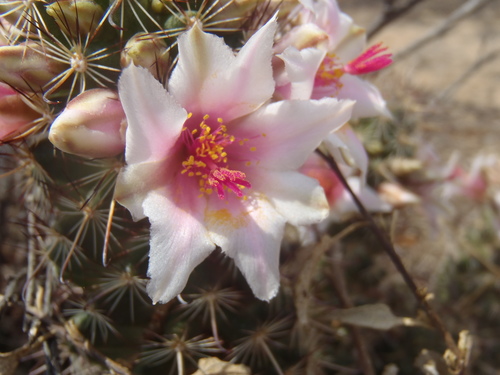
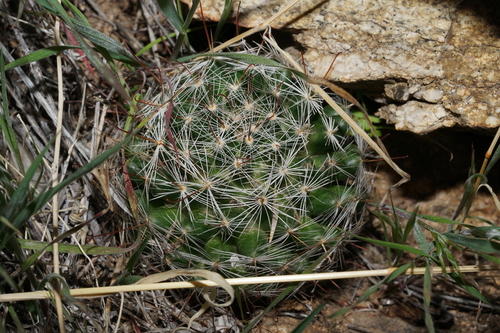
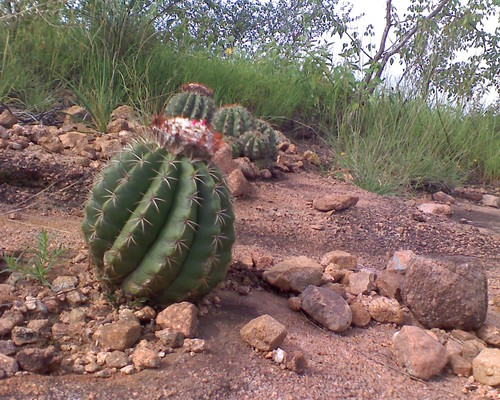
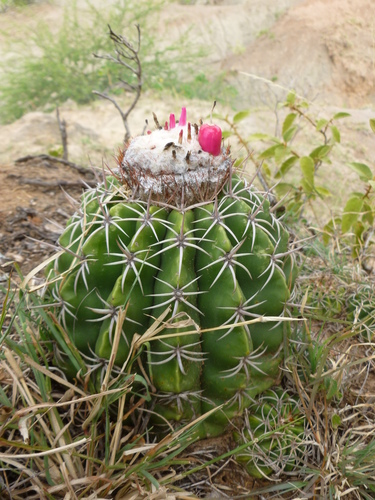
A small spherical cactus. It is dark grey-green. It grows 6-10 cm wide. There are 16 or more ribs. They are divided into distinct triangle shaped lumps. The spine buds are below these and have 1-3 spines in the centre and about 10 spines around. They are curved. The flowers are white or pink. They are 18-20 mm long and across.
Edible Uses
In the cities of Oruro and Potosí in Bolivia, this cactus known as achakana is part of the population's diet, being consumed for its medicinal properties, and also as part of the traditional dish ají de achakana, characteristic of the All Saints Festival in Bolivia. The cactus and its complete root are sold cooked and with the thorns removed for consumption in the city of Oruro. In Jujuy, Argentina, this cactus is consumed as a potato substitute. In particular, it is used to prepare special dishes for the celebration of certain festivities.
Traditional Uses
The root of the cactus is peeled, cooked and eaten like potatoes.
This uses section is brief — help expand it
Medicinal Uses
The plant is febrifuge and laxative. The pulp is also a remedy for stomach ailments and is made into a drink to treat kidney and liver disease.
Distribution
A tropical plant. It grows in Bolivia between 3,000-4,000 m altitude. In Argentina it grows between 3,500-4,000 m above sea level.
Where It Grows
Argentina, Bolivia, South America*,
Cultivation
Up to 30,000 plants of this species are harvested each year for consumption during the festive season.
Notes
It is an at risk species.
Synonyms
References (6)
- Anderson, E.F., 2001, The Cactus Family, Timber Press. p 58, 483
- Kaktusar 1:85. 1930
- Lim, T. K., 2015, Edible Medicinal and Non Medicinal Plants. Volume 9, Modified Stems, Roots, Bulbs. Springer p 57
- Plant Ecology - Reviews of Research. 1955, Arid Zone Research VI. UNESCO p 97
- Wiersema, J. H. & Leon, B., 2013, World Economic Plants. A Standard Reference CRC Press. 2nd Ed. p 465
Show all 6 references Hide references
- World Checklist of Useful Plant Species 2020. Royal Botanic Gardens, Kew