Stenocereus pruinosus
(Otto) Buxbaum
Pitaya, Pitayo
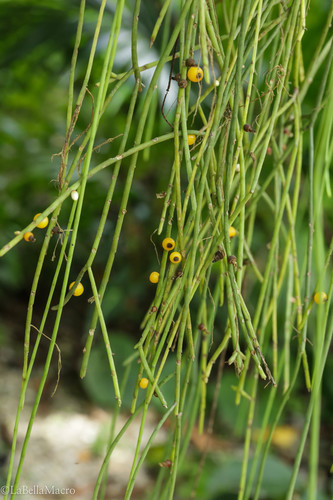
iNaturalist· cc-by-nc
(c) Socorro Garcia Méndez, some rights reserved (CC BY-NC)
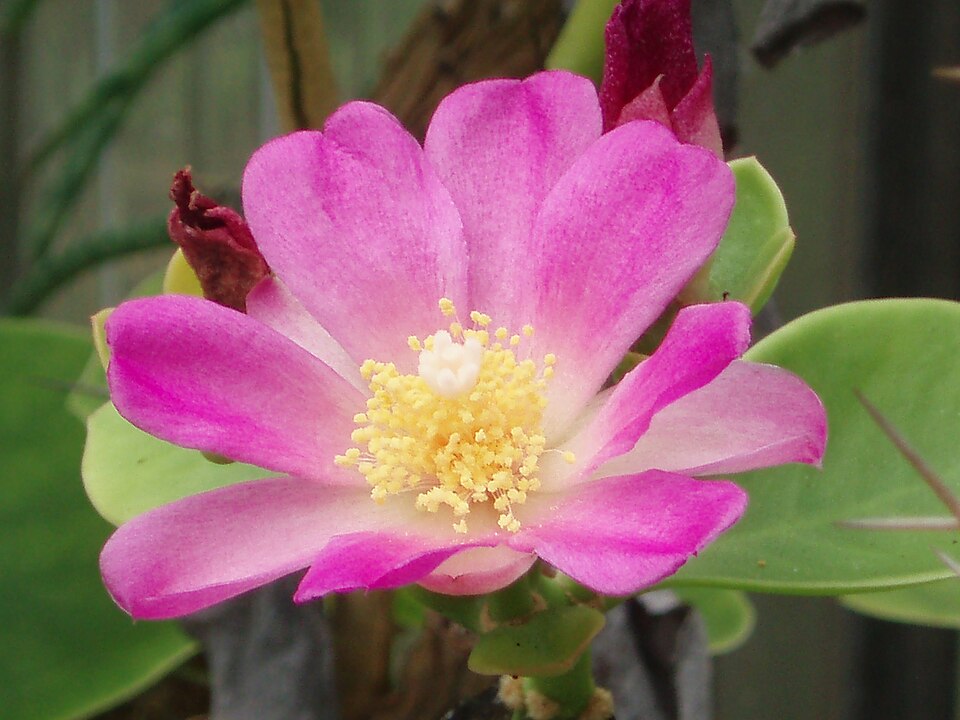
iNaturalist· cc-by-nc
(c) Anneke Jonker, some rights reserved (CC BY-NC)
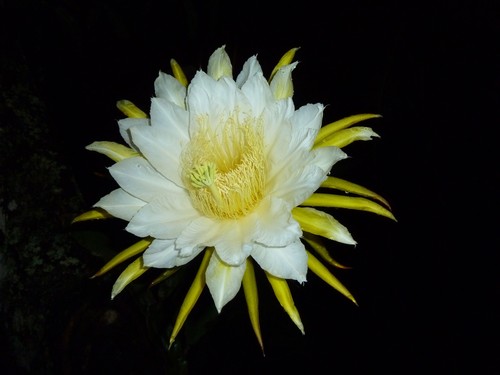
iNaturalist· cc-by-nc
(c) Anneke Jonker, some rights reserved (CC BY-NC)
Summary
Source: WikipediaStenocereus pruinosus is a species of cactus. It is endemic to Mexico and occurs in the states of Veracruz, Puebla, and Oaxaca.
Description
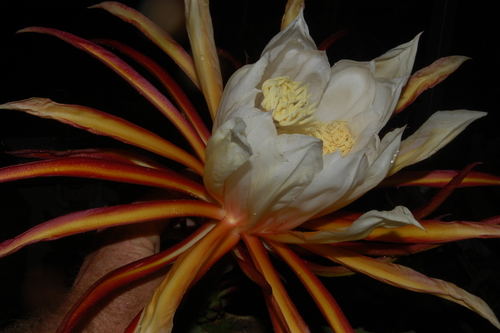
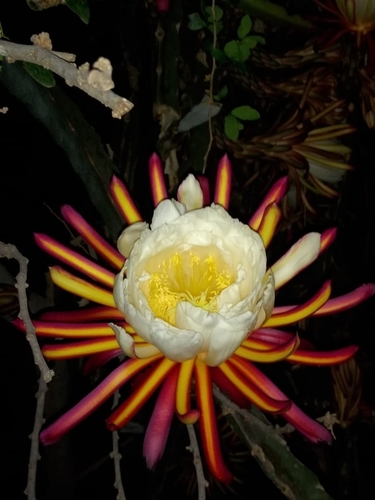
A cactus. It is treelike with a few branches. It grows 4-5 m high. It has a distinct trunk and dark green stems. These are 8-12 cm across and have 5-8 ribs. These are high and have wavy edges. There are 1-4 central spines and these are 2-3 cm long. There are 5-8 spines around these and they spread out and are 1-2 cm long. The flowers open during the day and night. They are funnel shaped and white. They are 9 cm long.
Edible Uses
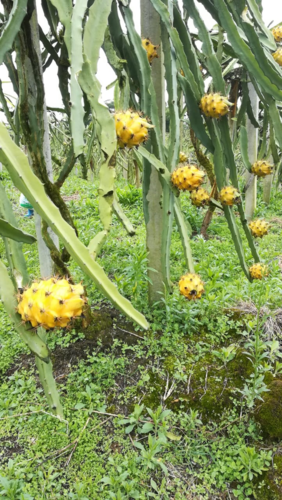
Because of its edible fruit, this species is a valuable food source in its native range, Mexico, being harvested and sold in many rural markets.
Traditional Uses
The fruit are eaten raw and used for juice and ice cream.
This uses section is brief — help expand it
Distribution
It is a subtropical plant.
Where It Grows
Mexico, North America, USA,
Cultivation
It is used as a hedge.
Other Uses
The plant is grown as a living fence in order to exclude grazing aminals and mark boundaries.
Production
Plants fruit after 5-10 years.
Other Information
It is cultivated for its fruit.
Synonyms
Also Known As
Pitayo de Octubre
References (9)
- Anderson, E.F., 2001, The Cactus Family, Timber Press. p 55, 647
- Arellanes, Y., et al, 2013, Influence of traditional markets on plant management in the Tehuacan Valley. Journal of Ethnobiology and Ethnomedicine 9:38
- Casas, A., et al, 2016, Evolutionary Ethnobotanical Studies of Incipient Domestication of Plants in Mesoamerica. In Lira, R., et al, (eds.) Ethnobotany of Mexico, Ethnobiology. Springer p 266
- Flores, M. P., et al, 2007, Estudio Etnobotanico De Zapotitlan Salinas, Puebla, Acta Botanica Mexicana, Mexico. p 22
- Gonzalez-Insuasti, M. S. and Caballero, J., 2007, Managing Plants Resources: How Intensive Can it be? Human Ecology, 35:303-314
Show all 9 references Hide references
- Gonzalez-Insuasti, M. S., et al, 2011, Intra-cultural Differences in the Importance of Plant Resources and Their Impact on Management Intensificaton in the Tehuacan Vallet, Mexico. Human Ecology 39:191-202
- Hellmuth, N. M., 2011, Maya Ethnobotany. Complete Inventory of plants. Associacion FLAAR Mesoamerica. Tenth edition.
- Perez-Negron, E., et al, 2014, Use of columnar cacti in the Tehuacan Valley, Mexico: perspectives for sustainable management of non-timber forest products. Journal of Ethnobotany and Ethnomedicine, 10:79
- World Checklist of Useful Plant Species 2020. Royal Botanic Gardens, Kew