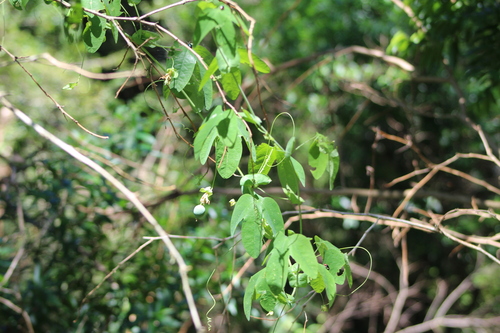
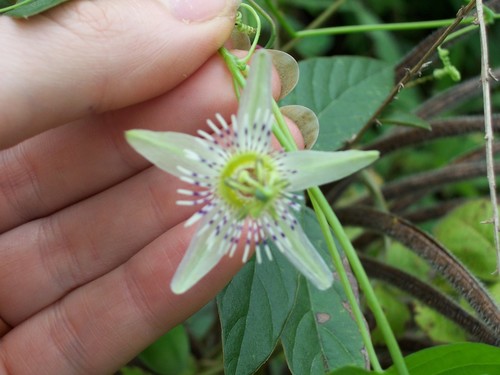
Turnera ulmifolia
L.
Yellow alder, Buttercup bush
iNaturalist· cc0
no rights reserved, uploaded by 葉子
iNaturalist· cc-by-nc
(c) ivory79, some rights reserved (CC BY-NC)
iNaturalist· cc-by
(c) Sabarni Sarker, some rights reserved (CC BY)
Summary
Source: WikipediaTurnera ulmifolia, the ramgoat dashalong or yellow alder, is a species of plant of family Passifloraceae, native to Mexico and the West Indies.
Description
An small evergreen shrub. It keeps growing from year to year. It grows 1 m tall. The leaves are oval and 10 cm long. They are glossy and dark green. They are softly hairy. The edges have teeth. The flowers are funnel shaped and 5 cm across. The petals are yellow. They have teeth along the edge.
Edible Uses
The leaves are used to make a stimulant tea drink and for flavouring.
Traditional Uses
The leaves are used for a stimulant tea drink. They are also used for flavouring.
This uses section is brief — help expand it
Medicinal Uses
Phytochemical studies of Turnera ulmifolia have identified several classes of compounds including flavonoids, alkaloids, tannins, and other phenolic compounds. These compounds are thought to contribute to the plant's reported antioxidant and anti-inflammatory properties. The plant has been used in traditional medicine in parts of South America and the Caribbean. In Brazil it is known as chanana, and infusions made from the leaves are used in folk medicine to treat gastrointestinal disorders and ulcers. Experimental studies have shown that extracts of the plant may reduce gastric lesions in animal models. Other reported traditional uses include treatment of inflammation, coughs, and respiratory conditions.
Distribution
It is a tropical plant. It needs moderate moisture. It can grow in an average, well-drained soil. It needs full sun. It suits hardiness zones 10-12. At MARDI.
Where It Grows
Argentina, Asia, Australia, Bahamas, British Indian Ocean Terr., BIOT, Caribbean, Central America*, Christmas Island, Cuba, Dominican Republic, Fiji, Haiti, Hawaii, Jamaica, Lesser Antilles, Malaysia, Maldives, Marquesas, Mexico*, Myanmar, North America, Pacific, SE Asia, South America, Tuvalu, USA, Virgin Islands, West Indies*,
Cultivation
It self seeds easily.
Propagation
Seed - Cuttings Division
Notes
Also put in the family Turneraceae.
Synonyms
Also Known As
Albina, Bakarinukaa, Banker's flower, Marilopez, Reendhoomaa, Shit-nar-yi-pan
References (12)
- Facciola, S., 1998, Cornucopia 2: a Source Book of Edible Plants. Kampong Publications, p 242
- Franklin, J., Keppel, G., & Whistler, W., 2008, The vegetation and flora of Lakeba, Nayau and Aiwa Islands, Central Lau Group, Fiji. Micronesica 40(1/2): 169–225, 2008
- http://www.botanic-gardens-ljubljana.com/en/plants
- Kermath, B. M., et al, 2014, Food Plants in the Americas: A survey of the domesticated, cultivated and wild plants used for Human food in North, Central and South America and the Caribbean. On line draft. p 884
- Kunkel,
Show all 12 references Hide references
- Llamas, K.A., 2003, Tropical Flowering Plants. Timber Press. p 357
- Paczkowska, G . & Chapman, A.R., 2000, The Western Australian Flora. A Descriptive Calatogue. Western Australian Herbarium. p 565
- Plants of Haiti Smithsonian Institute http://botany.si.edu/antilles/West Indies
- Sp. pl. 1:271. 1753
- Sujanapal, P., & Sankaran, K. V., 2016, Common Plants of Maldives. FAO & Kerala FRI, p 280
- Thaman, R. R, 2016, The flora of Tuvalu. Atoll Research Bulletin No. 611. Smithsonian Institute p 117
- Topp, J. M. W., 1988, An Annotated Check List of the Flora of Diego Garcia, British Ocean Territory. Atoll Research Bulletin No. 313