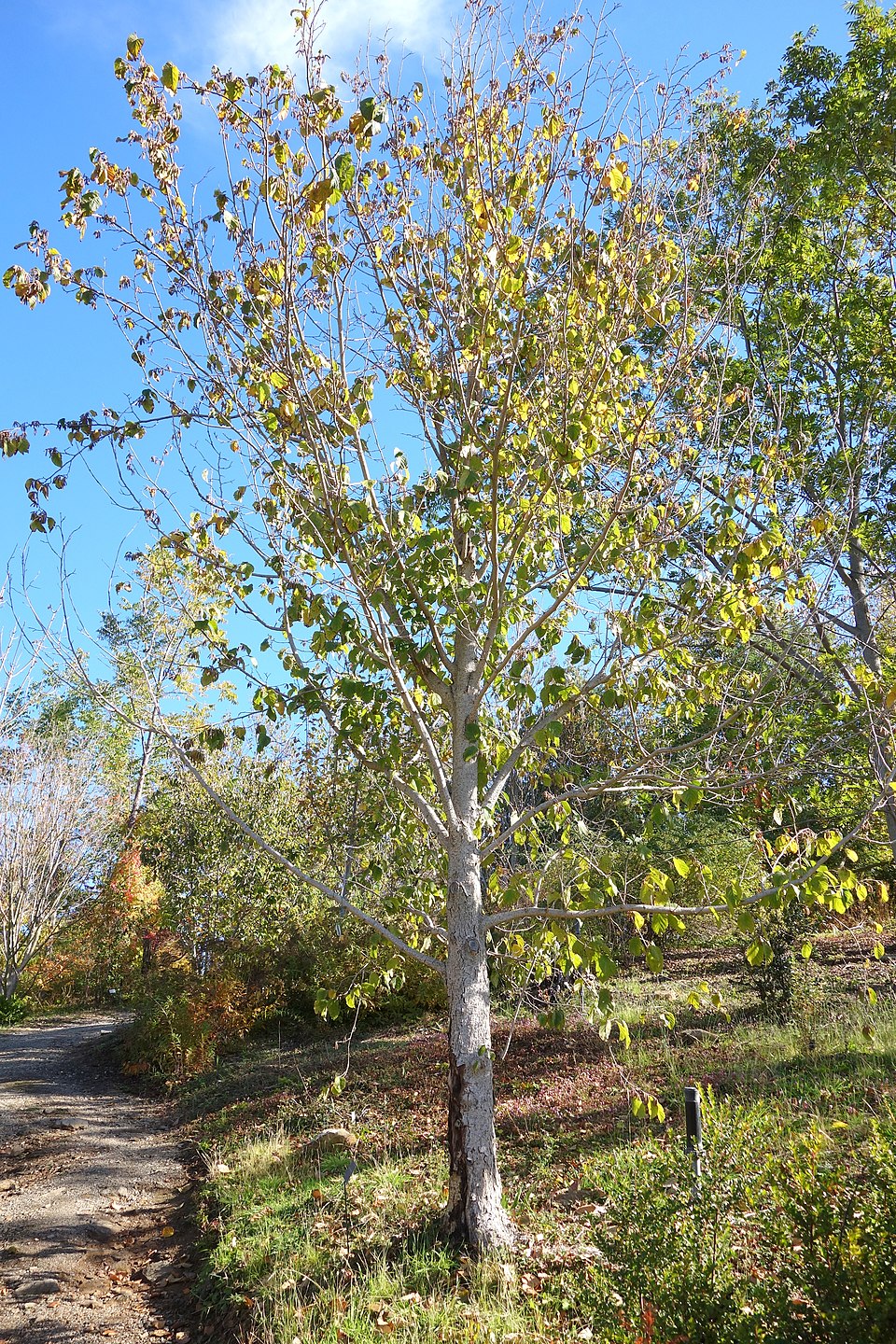
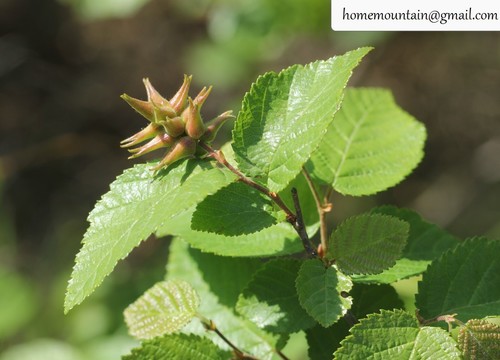
Betula papyrifera
Marshall
Paper birch, Canoe Birch, White birch
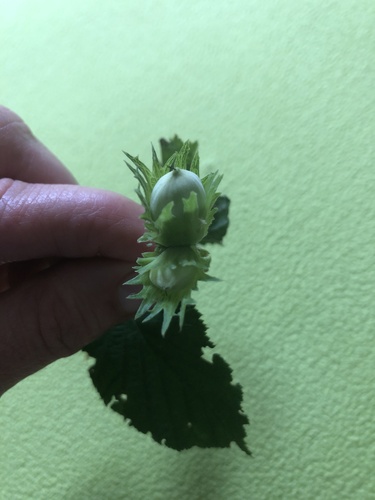
iNaturalist· cc-by-nc
(c) Peter Jessen, some rights reserved (CC BY-NC), uploaded by Peter Jessen
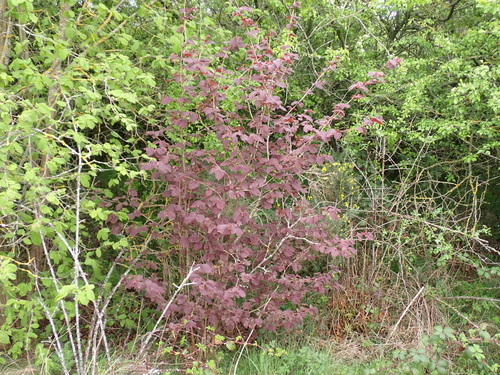
iNaturalist· cc0
no rights reserved, uploaded by Dezene Huber
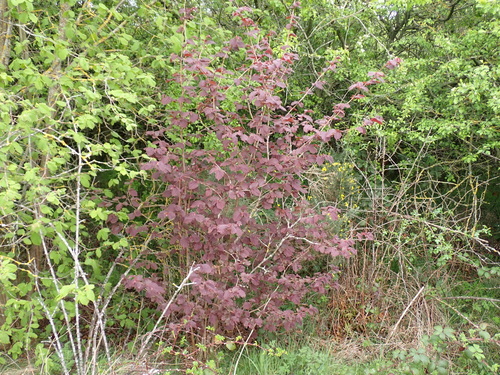
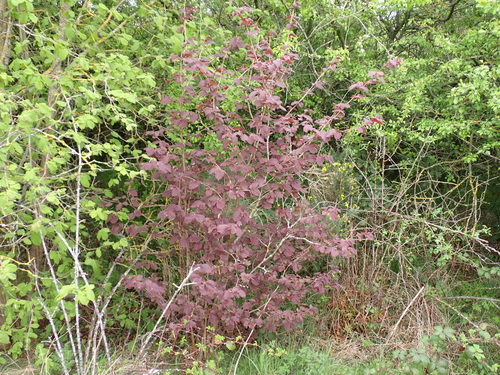
iNaturalist· cc-by-sa
(c) Joshua Mayer, some rights reserved (CC BY-SA)
Summary
Source: WikipediaBetula papyrifera (paper birch, also known as (American) white birch and canoe birch) is a short-lived species of birch native to northern North America. Paper birch is named after the tree's thin white bark, which often peels in paper-like layers from the trunk. Paper birch is often one of the first species to colonize a burned area within the northern latitudes, and is an important species for moose browsing. Primary commercial uses for paper birch wood are as boltwood and sawlogs, while secondary products include firewood and pulpwood. It is the provincial tree of Saskatchewan and the state tree of New Hampshire.
Description
A tree. It grows 18-25 m high. The trunk can be 40 cm across. It has tough papery bark. It is white and peels off in thin curling layers. (Some forms have orange white bark.) It has a sparse crown. The leaves are oval or triangle shaped. They are 5-10 cm long. The tip is pointed and the base is wedge shaped. Leaves have double teeth. The leaves are dull green above and paler underneath. The flowers are separately male and female. The male or pollen flowers are in catkins 1-3 cm long. These occur in clusters of 1-3. The seed catkins are erect and 1-2 cm long. The fruit are nutlets 1.5-2.5 mm long. These hang in the mature catkins. The brown samaras are edible.
Edible Uses
Edible Parts: Flowers Inner bark Leaves Sap Shoots Edible Uses: Sweetener Tea Inner bark - raw or cooked. Best in the spring. The inner bark can also be dried and ground into a meal and used as a thickener in soups or be added to flour and used in making bread, biscuits etc. Inner bark is generally only seen as a famine food, used when other forms of starch are not available or are in short supply. Sap - raw or cooked. A sweet flavour. Harvested in early spring, before the leaves unfurl, by tapping the trunk. The flow is best on warm sunny days following a hard frost. The sap usually runs freely, but the sugar content is lower than in the sugar maples. A pleasant sweet drink, it can also be concentrated into a syrup or sugar by boiling off much of the water[183, K]. The sap can also be fermented to make birch beer or vinegar. An old English recipe for the beer is as follows:- "To every Gallon of Birch-water put a quart of Honey, well stirr'd together; then boil it almost an hour with a few Cloves, and a little Limon-peel, keeping it well scumm'd. When it is sufficiently boil'd, and become cold, add to it three or four Spoonfuls of good Ale to make it work...and when the Test begins to settle, bottle it up . . . it is gentle, and very harmless in operation within the body, and exceedingly sharpens the Appetite, being drunk ante pastum.". Very young leaves, shoots and catkins - raw or cooked. A tea is made from the young leaves and also from the root bark.
Traditional Uses
The very young leaves, shoots and catkins can be eaten in salads or stir-fried dishes. The sap is used for a drink and can be boiled down to syrup or sugar. It can be used to make birch beer or vinegar. Birch syrup is used for ice cream, pancakes and in cocoa and coffee drinks. The young leaves are used for tea.
Medicinal Uses
Antirheumatic Antiseborrheic Astringent Dysentery Febrifuge Miscellany Sedative Skin Urinary Paper birch was often employed medicinally by many native North American Indian tribes who used it especially to treat skin problems. It is little used in modern herbalism. The bark is antirheumatic, astringent, lithontripic, salve and sedative. The dried and powdered bark has been used to treat nappy rash in babies and various other skin rashes. A poultice of the thin outer bark has been used as a bandage on burns. A decoction of the inner bark has been used as a wash on rashes and other skin sores. Taken internally, the decoction has been used to treat dysentery and various diseases of the blood. The bark has been used to make casts for broken limbs. A soft material such as a cloth is placed next to the skin over the broken bone. Birch bark is then tied over the cloth and is gently heated until it shrinks to fit the limb. A decoction of the wood has been used to induce sweating and to ensure an adequate supply of milk in a nursing mother. A decoction of both the wood and the bark has been used to treat female ailments. The German Commission E Monographs, a therapeutic guide to herbal medicine, approve Betula species for infections of the urinary tract, kidney and bladder stones, rheumatism (see for critics of commission E).
Known Hazards
The aromatic and aliphatic hydrocarbons in birch tar are irritating to the skin. Do not use in patients with oedema or with poor kidney or heart functions.
Distribution
It is a temperate plant. It is very cold hardy. It grows on forest edges and lake shores. It will grow on a variety of soils. It cannot tolerate shade. It suits hardiness zones 2-8. Arboretum Tasmania.
Where It Grows
Alaska, Australia, Canada, Greenland, North America, Tasmania, USA,
Cultivation
Succeeds in a well-drained loamy soil in a sunny position. Tolerates most soils including poor soils and heavy clays. Fairly wind tolerant. This species is very unhappy on our windy site in Cornwall. A fast-growing but short-lived species. It is often a pioneer species of areas ravaged by fire. The trunk and branches are easily killed by fire, though the tree usually regenerates from the roots. It hybridizes freely with other members of this genus. This species was an exceedingly important tree for the Indians - they utilized it for a very wide range of applications and it was a central item in their economy. A good plant to grow near the compost heap, aiding the fermentation process. Trees are notably susceptible to honey fungus.
Propagation
Seed - best sown as soon as it is ripe in a light position in a cold frame. Only just cover the seed and place the pot in a sunny position. Spring sown seed should be surface sown in a sunny position in a cold frame. If the germination is poor, raising the temperature by covering the seed with glass can help. When they are large enough to handle, prick the seedlings out into individual pots and grow them on in a cold frame for at least their first winter. Plant them out into their permanent positions in late spring or early summer, after the last expected frosts. If you have sufficient seed, it can be sown in an outdoor seedbed, either as soon as it is ripe or in the early spring - do not cover the spring sown seed. Grow the plants on in the seedbed for 2 years before planting them out into their permanent positions in the winter.
Other Uses
Dye Fuel Hair Miscellany Paper Pioneer Waterproofing Wood The thin outer bark is used to make drinking vessels, canoe skins, roofing tiles, buckets etc. This material was very widely used by various native North American Indian tribes, it is waterproof, durable, tough and resinous. Only the thin outer bark is removed, this does not kill the tree. It is most easily removed in late spring to early summer. The outer bark has also been used as emergency sun-glasses in order to prevent snow-blindness. A strip of bark 4 - 5cm wide is placed over the eyes, the natural openings (lenticels) in the bark serving as apertures for the eyes. A brown to red dye can be made from the inner bark. A pioneer species, it rapidly invades deforested areas (such as after a forest fire or logging) and creates suitable conditions for other woodland trees to follow. Because it cannot grow or reproduce very successfully in the shade it is eventually out-competed by the other woodland trees. The tree has an extensive root system and can be planted to control banks from erosion. The bark is a good tinder. An infusion of the leaves is used as a hair shampoo, it is effective against dandruff. The thin outer bark can be used as a paper substitute. It is carefully peeled off the tree and used as it is. A fibre is obtained from the inner bark and another from the heartwood, these are used in making paper. The heartwood fibre is 0.8 - 2.7mm long, that from the bark is probably longer. The branches of the tree can be harvested in spring or summer, the leaves and outer bark are removed, the branches are steamed and the fibres stripped off. Wood - strong, hard, light, very close grained, elastic, not durable. It weighs 37lb per cubic foot and is used for turnery, veneer, pulp etc. It is also used as a fuel. It splits easily and gives off considerable heat even when green, but tends to quickly coat chimneys with a layer of tar. Special Uses Dynamic accumulator
Production
Trees live for 120 years. Sap flow is best on sunny days after a frost.
Other Information
Birch syrup is produced commercially in Alaska.
Notes
There are about 60 Betula species. They grow in cool north temperate climates. The bark has high levels of betulinic acid and may have anti-cancer properties.
Synonyms
References (19)
- Arbust. amer. 19. 1785
- Bircher, A. G. & Bircher, W. H., 2000, Encyclopedia of Fruit Trees and Edible Flowering Plants in Egypt and the Subtropics. AUC Press. p 59
- Bodkin, F., 1991, Encyclopedia Botanica. Cornstalk publishing, p 145
- Bowser, M., 2017, Handout on Edible Plants of the Kenai Peninsula. USFWS Kenai National Wildlife Refuge p 10
- Coombes, A.J., 2000, Trees. Dorling Kindersley Handbooks. p 123
Show all 19 references Hide references
- Cundall, P., (ed.), 2004, Gardening Australia: flora: the gardener's bible. ABC Books. p 236
- Etkin, N.L. (Ed.), 1994, Eating on the Wild Side, Univ. of Arizona. p 69
- Hibbert, M., 2002, The Aussie Plant Finder 2002, Florilegium. p 43
- Facciola, S., 1998, Cornucopia 2: a Source Book of Edible Plants. Kampong Publications, p 49
- Farrar, J.L., 1995, Trees of the Northern United States and Canada. Iowa State University press/Ames p 284
- Grandtner, M. M., 2008, World Dictionary of Trees. Wood and Forest Science Department. Laval University, Quebec, Qc Canada. (Internet database http://www.WDT.QC.ca)
- http://en.hortipedia.com
- Little, E.L., 1980, National Audubon Society Field Guide to North American Trees. Alfred A. Knopf. p 368
- Lord, E.E., & Willis, J.H., 1999, Shrubs and Trees for Australian gardens. Lothian. p 48
- Lyle, S., 2006, Discovering fruit and nuts. Land Links. p 93
- MacKinnon, A., et al, 2009, Edible & Medicinal Plants of Canada. Lone Pine. p 53
- Plants for a Future database, The Field, Penpol, Lostwithiel, Cornwall, PL22 0NG, UK. http://www.scs.leeds.ac.uk/pfaf/
- Tozer, F., 2007, The Uses of Wild Plants. Green Man Publishing. p 47
- Young, J., (Ed.), 2001, Botanica's Pocket Trees and Shrubs. Random House. p 138