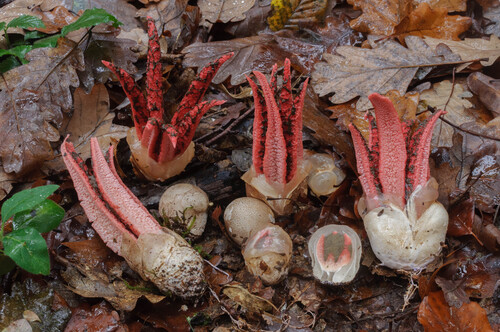
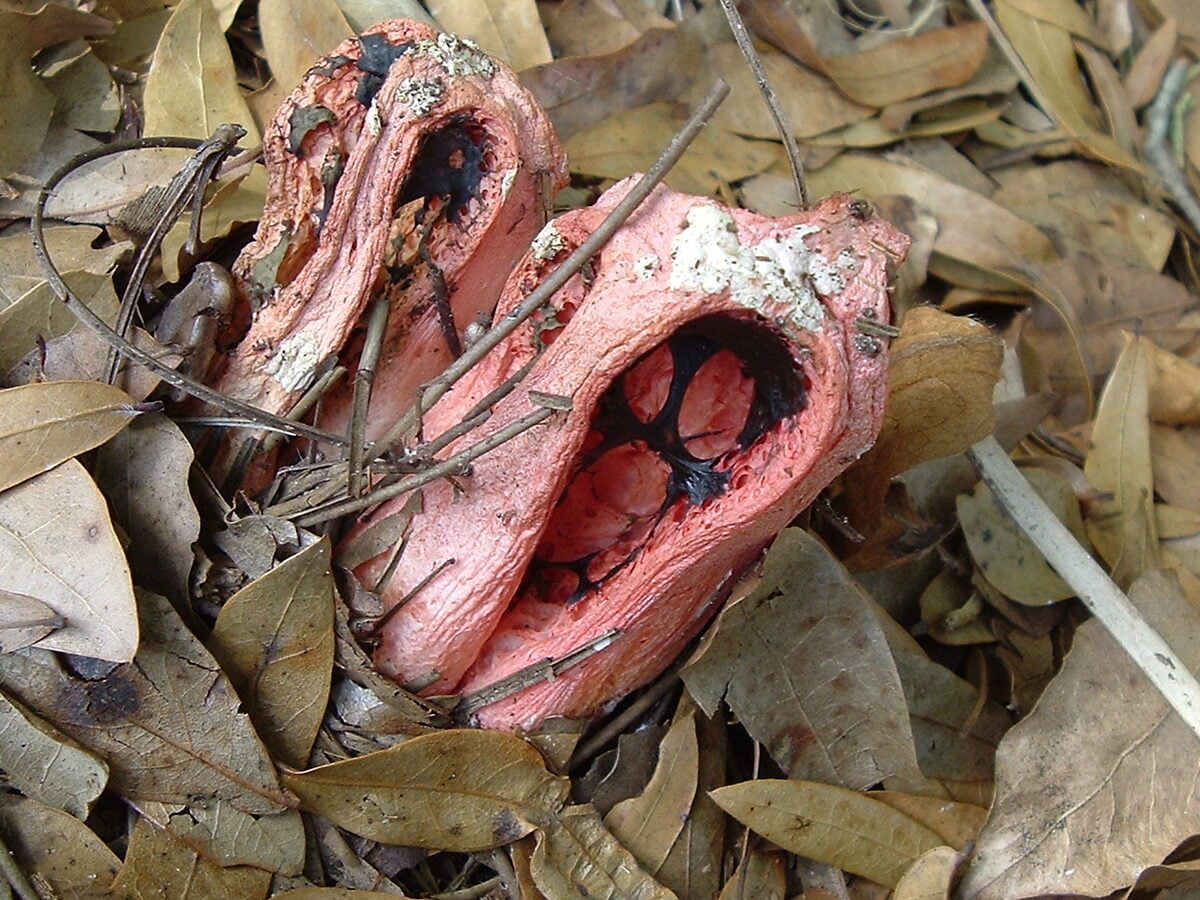
Clathrus cancellatus
L.
Red cage fungus
iNaturalist· cc-by-nc
(c) tinkerbalm, some rights reserved (CC BY-NC)
iNaturalist· cc-by-nc
(c) tinkerbalm, some rights reserved (CC BY-NC)
iNaturalist· cc-by-nc
(c) tinkerbalm, some rights reserved (CC BY-NC)
Description
A fungus in the Clathraceae family that produces a distinctive cage-like fruiting body.
This description is brief — help expand it
Edible Uses
Only the very young, egg-like stage of the fruiting body can be eaten; older parts develop an unpleasant odor.
Traditional Uses
Only the very young egg like cap can be eaten. Older parts have a very abd odour.
This uses section is brief — help expand it
Known Hazards
Although edibility for C. ruber has not been officially documented, its foul smell would dissuade most people from eating it. In general, stinkhorn mushrooms are considered edible when still in the egg stage, and are even considered delicacies in some parts of Europe and Asia, where they are pickled raw and sold in markets as "devil's eggs". An 1854 report provides a cautionary tale to those considering consuming the mature fruit body. Dr. F. Peyre Porcher, of Charleston, South Carolina, described an account of poisoning caused by the mushroom: A young person having eaten a bit of it, after six hours suffered from a painful tension of the lower stomach, and violent convulsions. He lost the use of his speech, and fell into a state of stupor, which lasted for forty-eight hours. After taking an emetic he threw up a fragment of the mushroom, with two worms, and mucus, tinged with blood. Milk, oil, and emollient fomentations, were then employed with success. C. ruber is generally listed as inedible or poisonous in many British mushroom publications from 1974 to 2008. British mycologist Donald Dring, in his 1980 monograph on the family Clathraceae, wrote that C. ruber was not regarded highly in southern European folklore. He mentions a case of poisoning following its ingestion, reported by Barla in 1858, and notes that Ciro Pollini reported finding it growing on a human skull in a tomb in a deserted church. According to John Ramsbottom, Gascons consider the mushroom a cause of cancer; they will usually bury specimens they find. In other parts of France it has been reputed to produce skin rashes or cause convulsions.
References (1)
- Kaufmann, B. et al, 1999, The Great Encyclopedia of Mushrooms. Konemann. p 191 (As Clathrus cancellatus)