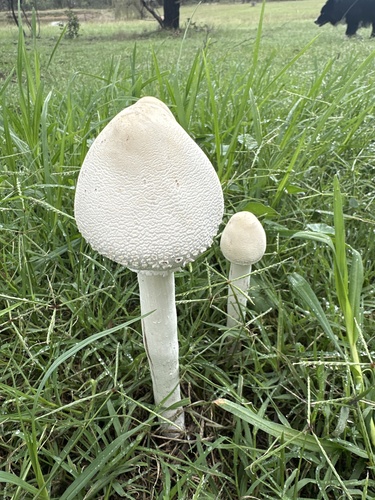
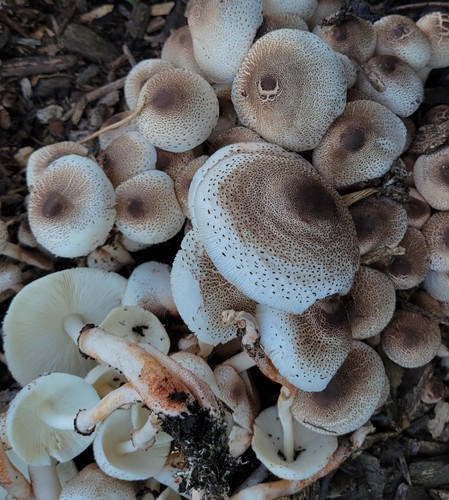
Agaricus essettei
Bon
Large-bulbed mushroom
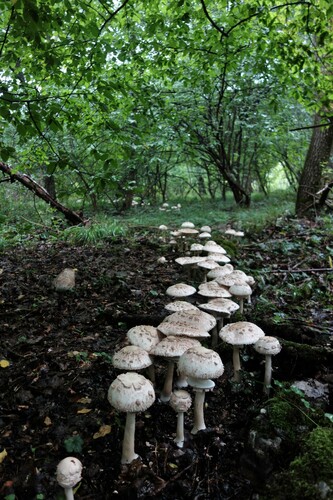
iNaturalist· cc-by-nc
(c) David Renoult, some rights reserved (CC BY-NC), uploaded by David Renoult
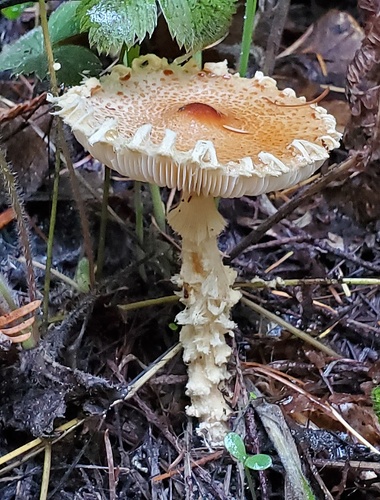
iNaturalist· cc-by-nc
(c) Horváth Levente, some rights reserved (CC BY-NC)
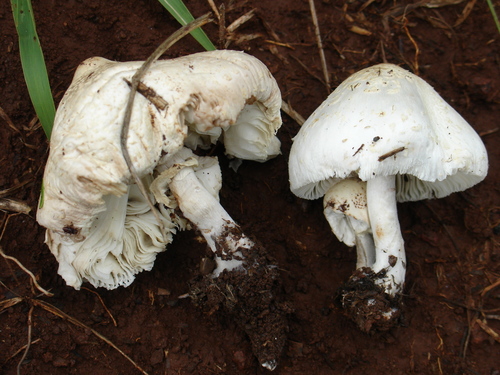
iNaturalist· cc-by-nc
(c) Horváth Levente, some rights reserved (CC BY-NC)
Description
A temperate mushroom in the Agaricaceae family, one of approximately 300 Agaricus species.
This description is brief — help expand it
Edible Uses
The genus contains the most widely consumed and best-known mushroom today, A. bisporus. Other well-known and highly regarded species include A. arvensis, A. augustus, and A. campestris. Agaricus porphyrocephalus is a choice edible when young, while A. subrufescens may be edible in some cases. Many other species are of culinary value, especially within sections Agaricus, Arvense, Duploannulatae and Sanguinolenti.
Known Hazards
A notable group of poisonous Agaricus is the clade around the yellow-staining mushroom, A. xanthodermus. One species reported from Africa, A. aurantioviolaceus, is reportedly deadly poisonous. Far more dangerous is the fact that Agaricus, when still young and most valuable for eating, are easily confused with several deadly species of Amanita (in particular the species collectively called "destroying angels", as well as the white form of the appropriately-named "death cap" Amanita phalloides), as well as some other highly poisonous fungi. An easy way to recognize Amanita is the gills, which remain whitish at all times in that genus. In Agaricus, by contrast, the gills are only initially white, turning dull pink as they mature, and eventually the typical chocolate-brown as the spores are released. Even so, Agaricus should generally be avoided by inexperienced collectors, since other harmful species are not as easily recognized, and clearly recognizable mature Agaricus are often too soft and maggot-infested for eating. When collecting Agaricus for food, it is important to identify every individual specimen with certainty, since eating just one Amanita mushroom cap can cause serious illness. Reacting to some distributors marketing dried agaricus or agaricus extract to cancer patients, it has been identified by the U.S. Food and Drug Administration as a "fake cancer 'cure'". The species most often sold as such quack cures is A. subrufescens, which is often referred to by the erroneous name "Agaricus Blazei" and advertised by fanciful trade names such as "God's mushroom" or "mushroom of life", but can cause allergic reactions and even liver damage if consumed in excessive amounts.
Distribution
It is a temperate plant.
Where It Grows
Europe, Hungary, Italy, Mediterranean, Mexico, North America,
Notes
There are about 300 Agaricus species.
References (3)
- Kaufmann, B. et al, 1999, The Great Encyclopedia of Mushrooms. Konemann. p 161
- Vetner, J., 2004, Arsenic content of some edible mushroom species. Eur. Food Res. Technol. 219: 71-74
- Vetner, J., 2005, Lithium content of some common edible wild-growing mushrooms. Food Chemistry 90:31-37