Mucuna urens
(L.) DC.
Horse-eye bean
iNaturalist· cc-by-nc
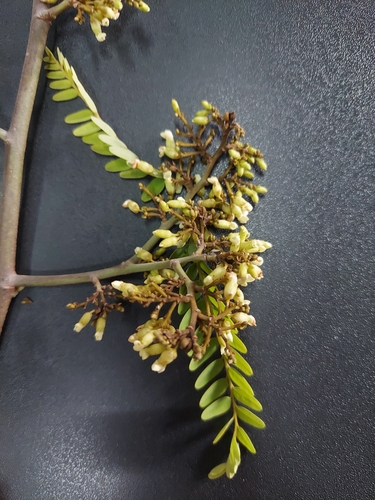
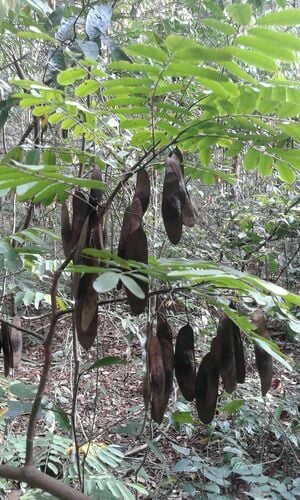
(c) Juan Gabriel, some rights reserved (CC BY-NC), uploaded by Juan Gabriel
iNaturalist· cc-by-nc
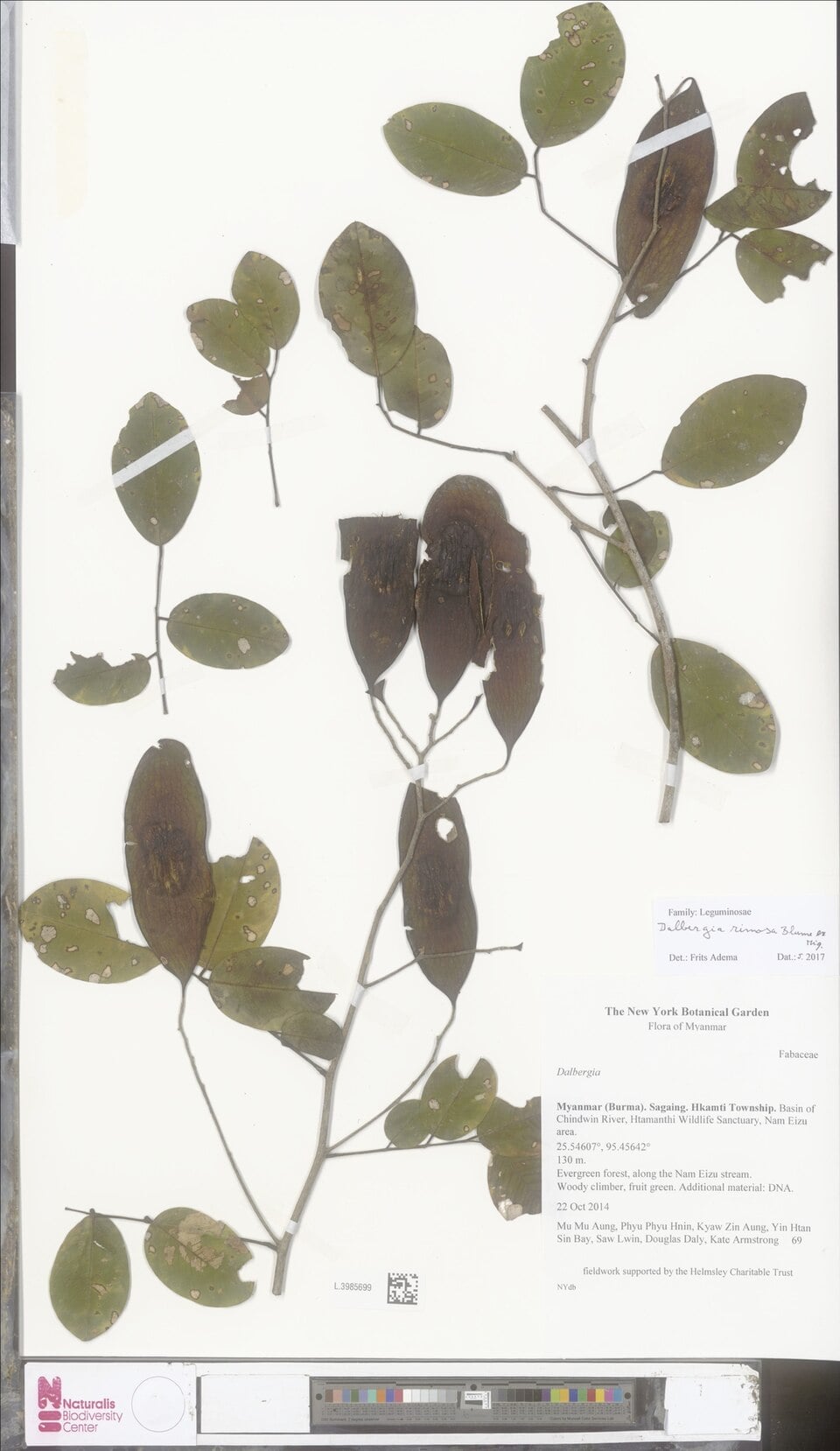
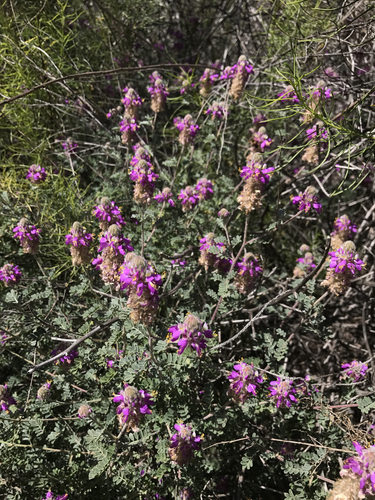
(c) maryannrobledo, some rights reserved (CC BY-NC)
iNaturalist· cc-by-sa
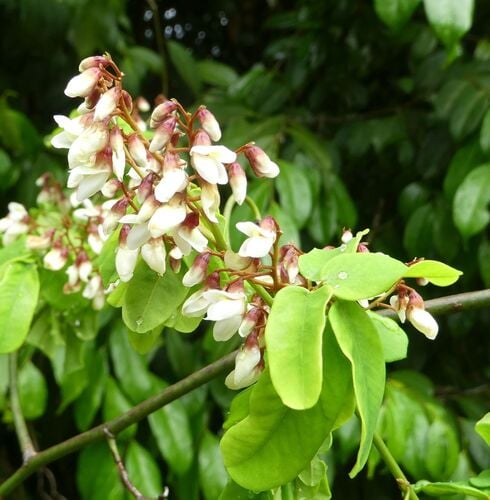
(c) Dr. Alexey Yakovlev, some rights reserved (CC BY-SA)
Summary
Source: WikipediaMucuna urens is a species of large liana from the family Fabaceae. The plant is native to tropical Central and South America, and has been introduced into the Republic of the Congo. Common names include horse-eye bean and ox-eye bean.
Description
A woody vine. It grows 30 m long. The stems are cylinder shaped and smooth. They can be 10 cm across at the base. The leaves are alternate and have 3 leaflets. They usually hang down. The leaflets are 7-14 cm long by 5-7 cm wide. The upper surface is dark green and the lower surface is light green. The end leaflet is narrowly oval with a rounded base and the side leaflets are unequal. The upper surface is dark green and shiny and the lower surface is light green. The flowering shoots hang down and the flowers have rusty hairs. The flowers are are blue to violet or red. The pod is woody and flattened. It is 12-23 cm long by 5-6 cm wide. They is a long point at the tip. There are ribs across the pod and stinging hairs. The seeds are 3.5 cm across. They are brown with a black hilum.
Edible Uses
Seed. The dried seeds are ground to produce a flour, which is used as food in times of famine caused by drought. The seeds are considered edible by some, poisonous by others. Even if it is edible, it is likely to require thorough cooking in order to destroy any harmful compounds.
Traditional Uses
CAUTION: They are probably poisonous without treatment.
This uses section is brief — help expand it
Medicinal Uses
Mucuna urens is used in traditional medicine. A tincture made from the powdered bean macerated in alcohol is a soothing remedy used against hemorrhoids, especially those inclined to bleed. The stinging hairs that grow on the pods can be taken internally against intestinal worms, which are expelled alive. These hairs are irritating to the skin and cause intense itching, with reddening and the formation of tiny pustules, soon after contact; the active chemical is the proteolytic enzyme, mucunain. Potable water can be obtained from the fleshy stems. Fibres from the stem are used to make strong rope, and the seeds are used to make beads and ornaments, as well as being used as famine food. An extract of the seeds given to male guinea pigs at low dosages was found to cause the degeneration of sperm, raising the possibility that the plant could be used as a male anti-fertility agent.
Known Hazards
Mucuna species often possess irritant hairs on the seedpods and sometimes on the flowers and other parts. These hairs consist of 1-2 small basal cells and a large needle-like top cell. The top cell breaks off easily, piercing the skin and injecting chemical compounds that are present in the hairs. The proteolytic enzyme 'Mucunain' is said to be the active agent. The hairs can contaminate clothes or other objects, and remain active when dried, though they can be destroyed by heat. Intense itching, with reddening of the skin and small papules or urticaria occur a few minutes after contact with the hairy parts of the plant. There is no serious danger, unless the hairs get into the eye, in which case, in extreme situations, they have caused blindness. To remove the hairs from the skin, adhesive tape and washing with water and soap are considered useful. Dermatitis can be treated with corticosteroid ointment. See a doctor immediately if hairs go into the eyes.
Distribution
A tropical plant. It grows on river banks and in moist forests.
Where It Grows
Africa, Antilles, Central America, Cuba, Dominican Republic, Guiana, Guianas, Guyana, Haiti, Hispaniola, Jamaica, Lesser Antilles*, Nigeria, Puerto Rico, South America, Suriname, Trinidad, Venezuela, West Africa, West Indies*,
Cultivation
Succeeds in full sun and in partial shade. Mucuna species generally grow best in a shady position in a humus-rich, moist but well-drained soil. This species has a symbiotic relationship with certain soil bacteria; these bacteria form nodules on the roots and fix atmospheric nitrogen. Some of this nitrogen is utilized by the growing plant but some can also be used by other plants growing nearby.
Other Uses
The seeds are used in necklaces and ornaments. A fibre from the stems is used to make very strong ropes.
Synonyms
Also Known As
Mato, Ox-eye-bean, Pica-pica, Tortera
References (4)
- Grivetti, L. E., 1980, Agricultural development: present and potential role of edible wild plants. Part 2: Sub-Saharan Africa, Report to the Department of State Agency for International Development. p 32
- Hedrick, U.P., 1919, (Ed.), Sturtevant's edible plants of the world. p 423
- Plants of Haiti Smithsonian Institute http://botany.si.edu/antilles/West Indies
- Vorles. Churpfaulz. Phys.-Oucon. Ges. 2:399. 1787