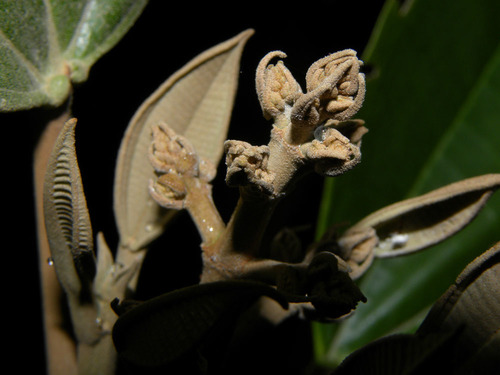
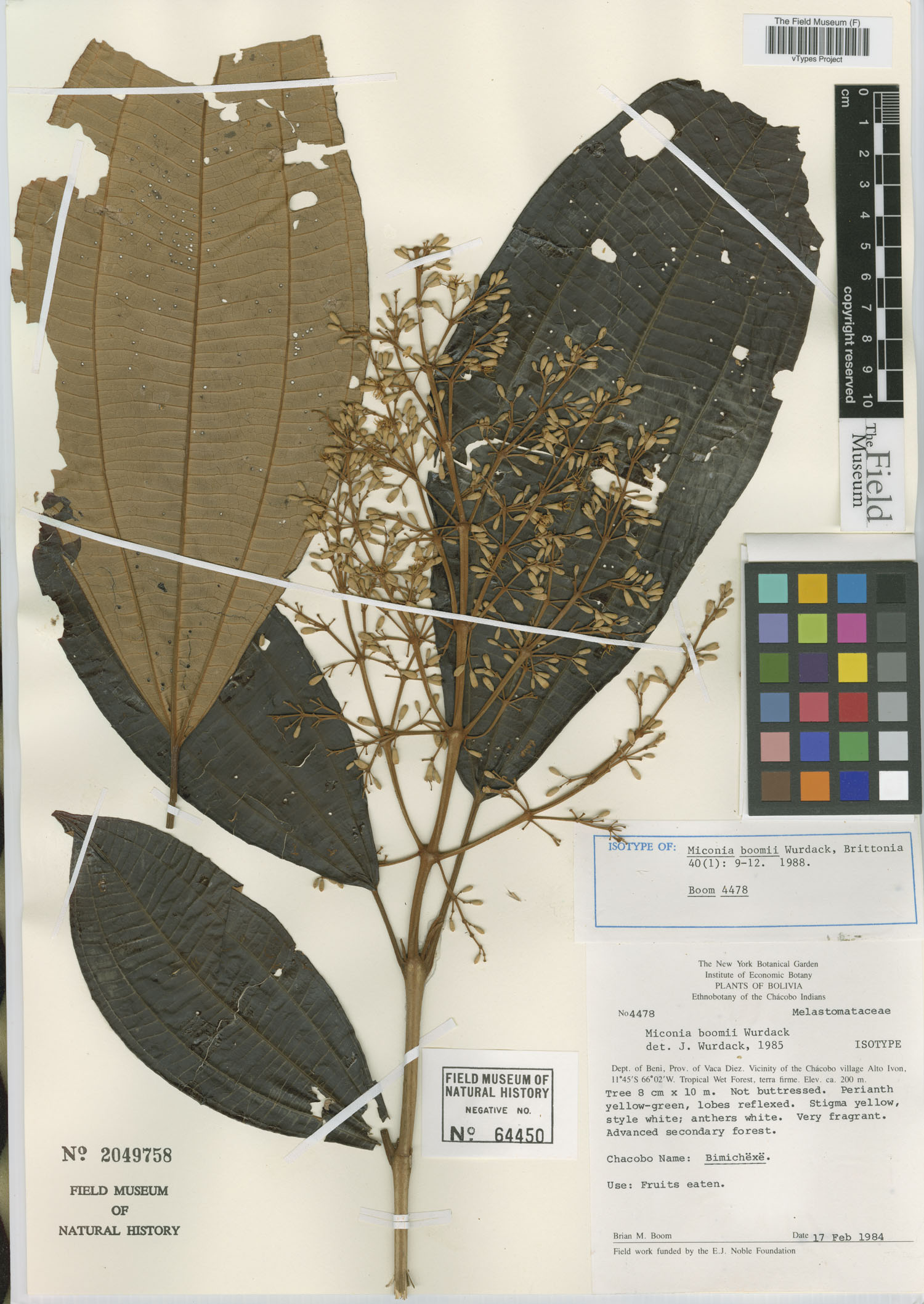
Mouriri pusa
Gardner
Silverwood, Pusa, Crato mouriri
iNaturalist· cc-by-nc
(c) alexandre callou sampaio, some rights reserved (CC BY-NC), uploaded by alexandre callou sampaio
iNaturalist· cc-by-sa
(c) vitordematos12, some rights reserved (CC BY-SA)
iNaturalist· cc-by-sa
(c) vitordematos12, some rights reserved (CC BY-SA)
Description
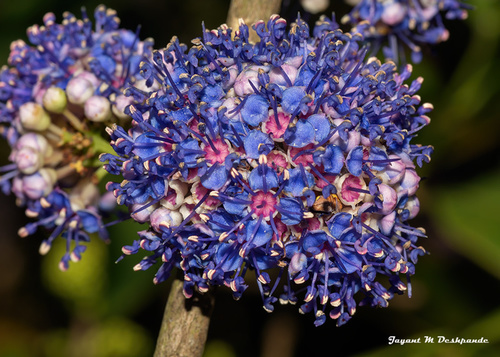
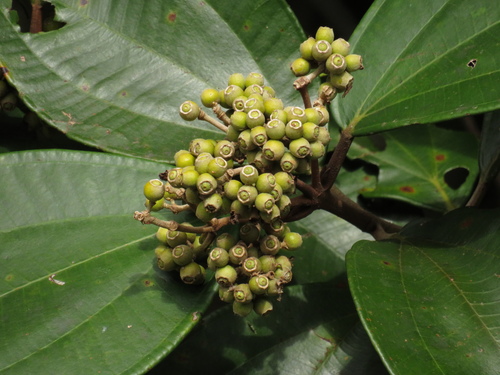
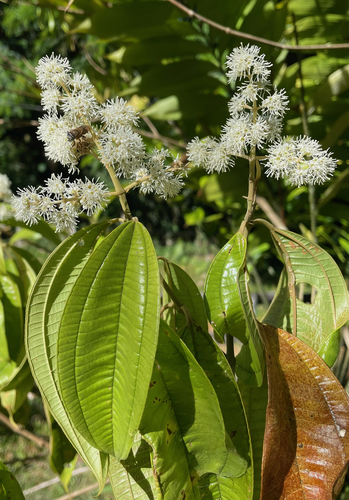
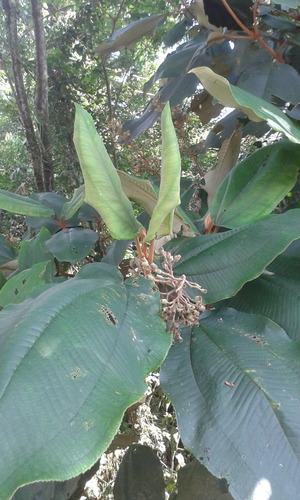
A tree. It may lose many leaves during the year. It grows 4-8 m tall. The crown is sparse. The leaves are somewhat leathery and 3-6 cm long. The flowers are white and have a scent. They are in clusters along the woody branches. They can be on the main trunk. The fruit are round and with a thin skin. The fruit are the size of a small plum. They contain 1-4 seeds. The pulp is juicy and sweet.
Edible Uses
Fruit - raw. The thin-skinned fruit has a succulent, sweet-tasting, pleasant, yellow pulp. A fine flavour. The globose fruits are 25mm or more in diameter, containing 1 - 4 seeds.
Traditional Uses
The fruit are eaten fresh.
This uses section is brief — help expand it
Medicinal Uses
The fruit have antioxidant properties.
Distribution
A tropical plant. It grows in scrubland and rocky sandy areas in Brazil.
Where It Grows
Amazon, Bolivia, Brazil*, South America,
Cultivation
Plants are grown from seed. The seeds are collected from ripe fruit. The fruit are put into plastic bags to allow them to partly decompose and the seeds removed under running water. The seeds need to be planted fresh. They are best in light shade. Seedlings emerge in 70-90 days.
Propagation
Seed - best sown as soon as it is ripe in a partially shaded position in a nursery seedbed. A germination rate of around 50% can be expected, with the seed sprouting within 70 - 90 days.
Other Uses
The wood is coarse-textured, straight-grained, moderately heavy, with a low resistance to wood-eating organisms. Hard to cut, and of small dimensions, it is only used for fuel and to make charcoal.
Production
The plant grows slowly.
Other Information
The fruit are sold in markets. The fruit are enjoyed.
Notes
They have also been put in the family Memecylaceae. It has antioxidant properties.
Nutrition
| Part | Moisture | kJ | kcal | Protein | Vit A | Vit C | Iron | Zinc |
|---|---|---|---|---|---|---|---|---|
| Fruit | 64.1 | — | — | — | — | 28.9 | — | — |
Synonyms
Also Known As
Croada, Jabuticaba-do-campo, Manapuca, Mandapuca, Munduru, Puca-preta, Pusa
References (14)
- Cavalcante, P.B. 1991. Frutas comestíveis da Amazônia. Edições CEJUP.
- Fagg, C. W. et al, 2015, Useful Brazilian plants listed in the manuscripts and publications of the Scottish medic and naturalist George Gardner (1812–1849). Journal of Ethnopharmacology 161 (2015) 18–29
- Grandtner, M. M. & Chevrette, J., 2013, Dictionary of Trees, Volume 2: South America: Nomenclature, Taxonomy and Ecology. Academic Press p 424
- Grandtner, M. M. & Chevrette, J., 2013, Dictionary of Trees, Volume 2: South America: Nomenclature, Taxonomy and Ecology. Academic Press p 424
- Hedrick, U.P., 1919, (Ed.), Sturtevant's edible plants of the world. p 422
Show all 14 references Hide references
- J. Bot. (Hooker) 2:23, t. 1. 1840
- Kermath, B. M., et al, 2014, Food Plants in the Americas: A survey of the domesticated, cultivated and wild plants used for Human food in North, Central and South America and the Caribbean. On line draft. p 552
- Leticia, Z., et al, 2015, Do Socioeconomic characteristics explain the knowledge and use of native food plants in semiarid environments in Northeastern Brazil? Journal of Arid Environments 115:53-61
- Lorenzi, H., Bacher, L., Lacerda, M. & Sartori, S., 2006, Brazilian Fruits & Cultivated Exotics. Sao Paulo, Instituto Plantarum de Estuados da Flora Ltda. p 172
- Lorenzi, H., 2009, Brazilian Trees. A Guide to the Identification and Cultivation of Brazilian Native Trees. Instituto Plantarum de Estuados da Flora Ltda. Vol. 3 p 209
- Morley, T., 1976, Melastomataceae, Flora Neotropica Vol. 15 p 181
- Oliviera V. B., et al, 2012, Native foods from Brazilian biodiversity as a source of bioactive compounds. Food Research International 48 (2012) 170-179
- Paz, F. S., et al, 2021, Edible Fruit Plant Species in the Amazon Forest Rely Mostly on Bees and Beetles as Pollinators. Journal of Economic Entomology, XX(XX), 2021, 1–13
- Rufino, M. M., et al, 2009, Quality for fresh consumption and processing of some non-traditional tropical fruits from Brazil. Fruits, Vol. 64, p 361-370