Gigantochloa robusta
Kurz.
Mayong bamboo
gbif· cc-by
Royal Botanic Gardens, Kew
gbif· cc-by
Royal Botanic Gardens, Kew
gbif· cc-by
Royal Botanic Gardens, Kew
Description
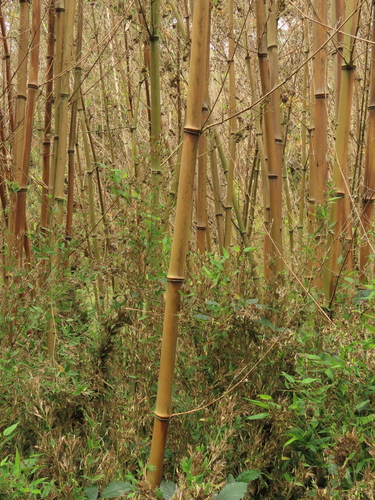
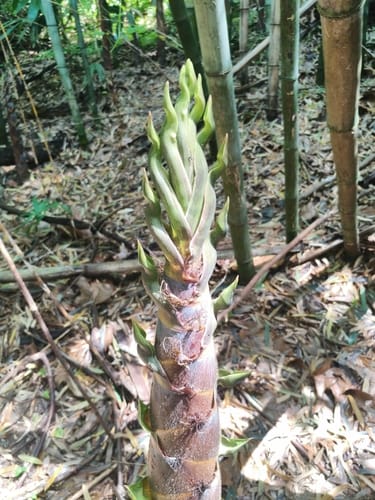
A bamboo. It grows 20-33 m high. The young shoots are brown-green and have dark brown hairs. The stems are 7-9 cm across. There are aerial roots at the nodes. The internodes are 40 cm long. Branches arise from the nodes above 2-3 m. .
Edible Uses
The young shoots are used as a vegetable.
Traditional Uses
The young shoots are used as a vegetable.
This uses section is brief — help expand it
Distribution
A tropical plant. It grows in the humid tropics up to 1,500 m above sea level. It needs a temperature above -2°C. In Brisbane Botanical gardens.
Where It Grows
Asia, Australia, Indonesia*, Malaysia, SE Asia,
Cultivation
Plants can be grown from sections of the rhizome and by division of the clumps.
Propagation
Gigantochloa robusta is only propagated vegetatively. Rhizome or culm cuttings. Culm cuttings have a survival rate of nearly 100%. For large-scale planting, cuttings are raised in a nursery and transplanted to the field when the plants are about one year old. It is recommended to plant in holes of about 1 m x 1 m x 1 m to which compost or other organic fertilizer has been applied.
Other Uses
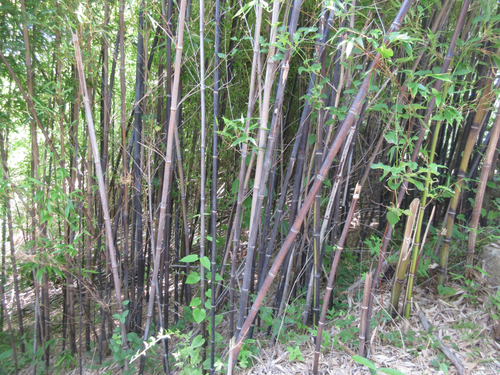
The culms are widely used for water pipes, floors and walls for houses, to make handicrafts and bamboo musical instruments. In West Java, a typical water carrying vessel ('kele'') is made from the culm by the Baduy. The canes are up to 20 metres long, 7 - 9 cm in diameter, with a wall up to 18 mm thick and internodes up to 40 cm long. They are a dirty yellow to light green colour with yellow stripes in the lower 2 metres, non-waxy, with scattered brownish hairs on upper parts; lowest nodes with aerial roots.
Also Known As
Bambu mayong, Bambu riau
References (5)
- Hedrick, U.P., 1919, (Ed.), Sturtevant's edible plants of the world. p 328
- Hibbert, M., 2002, The Aussie Plant Finder 2002, Florilegium. p 111
- http://www.plantnames.unimelb.edu.au/sorting/Bamboos_Edible.html
- Indian Forester 1:344. 1876
- Sukarya, D. G., (Ed.) 2013, 3,500 Plant Species of the Botanic Gardens of Indonesia. LIPI p 846