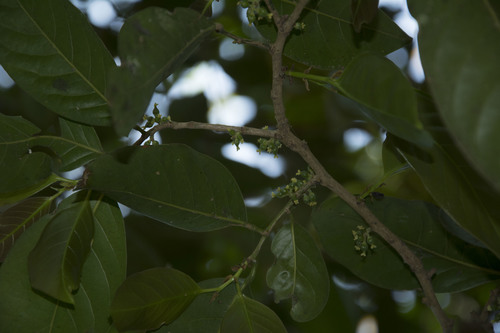
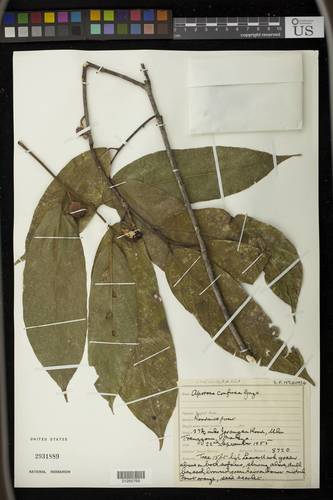
Flueggea leucopyrus
Willd.
iNaturalist· cc-by-nc-sa
(c) Satish Nikam, some rights reserved (CC BY-NC-SA)
iNaturalist· cc-by-nc
(c) Russell Cumming, some rights reserved (CC BY-NC), uploaded by Russell Cumming
iNaturalist· cc-by
(c) P Jeganathan, some rights reserved (CC BY), uploaded by P Jeganathan
Summary
Source: WikipediaFlueggea leucopyrus is a species of shrub or tree. It primarily grows in wet tropical biomes. Its common names include Indian snowberry, white honey shrub, bushweed, and cool pot.
Description
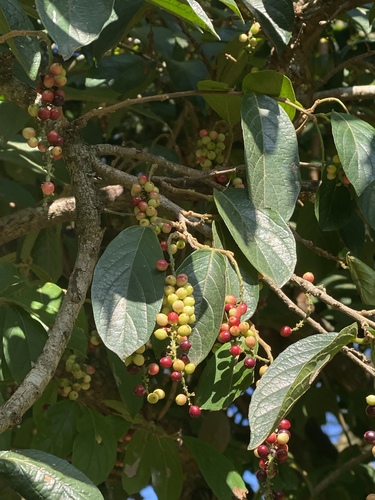
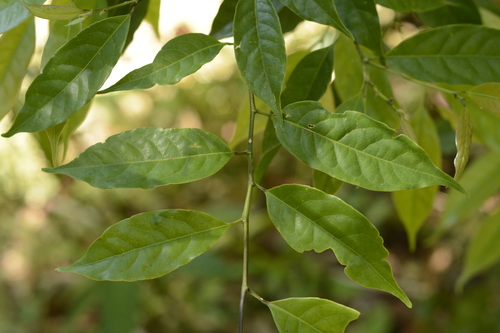
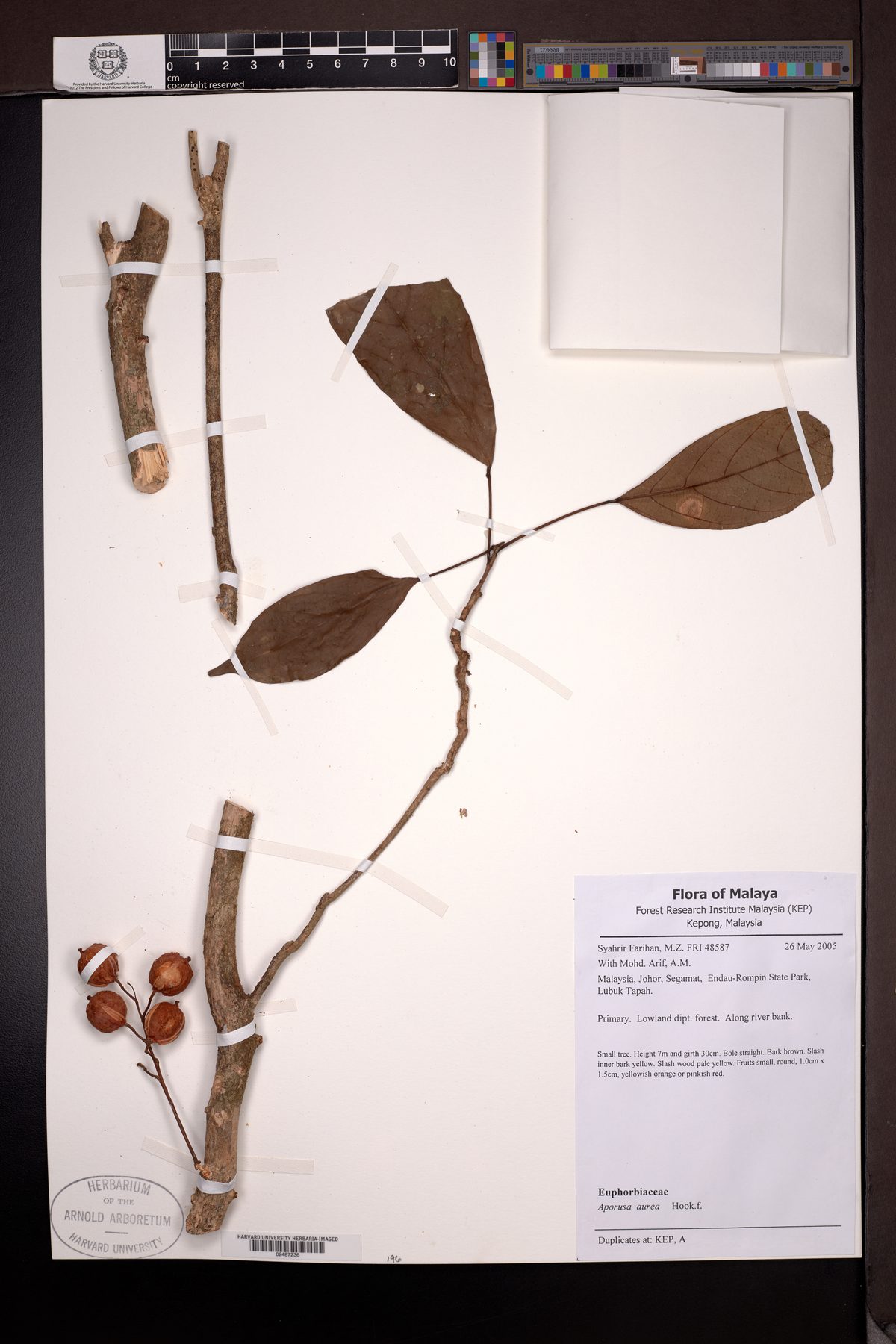
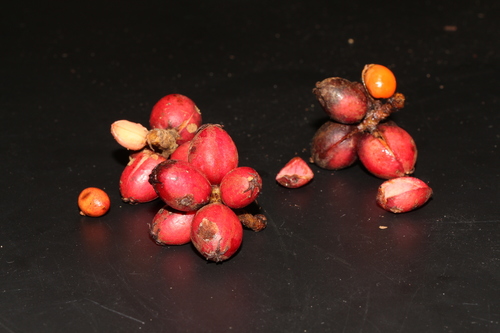
A shrub. It grows 5 m tall. It can have spines 6-14 mm long. It loses its leaves during the year. Plants are separately male and female. The leaves are simple and in clusters on short side shoots. They are 0.7-3.6 cm long by 0.4-2.5 cm wide. The leaf stalks are 3-6 mm long. The flowers are often in clusters in the axils of leaves. There are no petals but 5 or 6 sepals. These are cream or yellow. Flowers are about 1 mm long. The fruit are white berries. They are 4-7 mm long and 6-8 mm wide. They contain 3 seeds.
Edible Uses
The young shoots and leaves are cooked and eaten as a vegetable. The sweet white berries are eaten raw. The seeds are also edible.
Traditional Uses
The young shoots and leaves are cooked and eaten as a vegetable. The fruit are eaten raw. The berries are sweet and edible. The seeds are also eaten.
Medicinal Uses
Its fruits are edible. Juice or paste of the leaves of Flueggea leucopyrus is used alongside tobacco to eradicate worms in sores. It has been used in Ayurveda and folk medicine, especially in Sri Lankan folk medicine, where it is used in the management of acute and chronic types of wounds. F. leucopyrus is used as an antifungal against Aspergillus. F. leucopyrus shows potential anti-inflammatory effects against protein denaturation and proteinase inhibitors, possibly due to flavonoids and polyphenols. Further research is needed to identify active components and their mechanisms of action. Extracts from F. leucopyrus possess antioxidant properties, with the most significant effects observed in chloroform and alcohol extracts. These extracts showed a dose-dependent increase in antioxidant activity, with percentages of 82.5% and 88.4% respectively. Flavanoids, alkaloids, tannins, and steroids present in the extracts are believed to be responsible for this scavenging activity. Alcohol extracts were the most effective, followed by chloroform extracts, then ethyl acetate extracts, then hydro-alcohol extracts, then hexane extracts. This antioxidant activity was attributed to the reduction of the stable radical DPPH by the chemical constituents of the plant, which act as hydrogen donors. The decoction of aerial parts of F. leucopyrus shows cytotoxic effects on breast cancer cells, particularly Her2 negative cells (MCF-7 and MDA-MB-231), compared to Her2 positive (SKBR-3) and non-cancerous cells (MCF-10A). This supports its traditional use for its anticancer properties. Young branches of F. leucopyrus have been used as brooms by the aboriginal inhabitants of the Nilgiri Biosphere Reserve within the Western Ghats region of India.
Distribution
A tropical plant. In tropical Queensland it grows between 350-870 m altitude. In southern China it grows between 1,000-1,400 m above sea level. In Sichuan and Yunnan. Western Rajasthan. It grows on gravelly soil.
Where It Grows
Africa, Asia, Australia, China, East Africa, Ethiopia, India, Indochina, Middle East, Myanmar, Northeastern India, Pakistan, Saudi Arabia, SE Asia, Somalia, Sri Lanka, Thailand,
Other Uses
The leaf and fruit extract has also been used as a reducing agent in the biosynthesis of silver nanoparticles. The wood is pink, close-grained and hard. It is only used for fuel.
Other Information
It is a famine food.
Notes
There are 16 Flueggea species. They grow in the tropics. Also in family Euphorbiaceae.
Nutrition
| Part | Moisture | kJ | kcal | Protein | Vit A | Vit C | Iron | Zinc |
|---|---|---|---|---|---|---|---|---|
| Fruit | — | — | — | — | 39.5 | — | — | — |
Synonyms
Also Known As
Achal, Ainta, Arg, Bhathi, Bilchuli, Chalanchalota, Challamunta, Chinya-pyu, Girk, Gudahale, Halepan, Hartho, Hebata, Hebeta, Hepata, Hooli, Humri, Kandekuvana, Kareioori, Karkun, Kon-chinya, Maappulanathi, Pamdharphali, Parpo, Petuni, Pichrun, Posheri, Rarata, Rithei, Salepan, Shinwi, Sooli, Tella-pulisara, Tella-pulugudu, Tellapulcheru, Vanuthi, Vellaippulanji, Vorepuvan
References (24)
- Addis, G., Asfaw, Z & Woldu, Z., 2013, Ethnobotany of Wild and Semi-wild Edible Plants of Konso Ethnic Community, South Ethiopia. Ethnobotany Research and Applications. 11:121-141
- Addis, G., et al, 2013, The Role of Wild and Semi-wild Edible Plants in Household Food Sovereignty in Hamer and Konso Communities, South Ethiopia. Ethnobotany Research & Applications. 11:251-271
- Ambasta, S.P. (Ed.), 2000, The Useful Plants of India. CSIR India. p 563 (As Securinega leucopyrus)
- Balemie, K., & Kebebew, F., 2006, Ethnobotanical study of wild edible plants in Derashe and Kucha Districts, South Ethiopia. Journal of Ethnobiology and Ethnomedicine.
- Cooper, W. and Cooper, W., 2004, Fruits of the Australian Tropical Rainforest. Nokomis Editions, Victoria, Australia. p 184
Show all 24 references Hide references
- Flora of Pakistan. www.eFloras.org
- GUPTA & KANODIA, (As Securinega leucopyrus)
- Hedrick, U.P., 1919, (Ed.), Sturtevant's edible plants of the world. p 311
- Karuppusamy, S., et al, 2011, Antioxidant activity of selected lesser known edible fruits from Western Ghats, of India. Indian Journal of Natural Products and resources. 2(2): 174-178
- Kuvar, S. D. & Shinde, R. D., 2019, Wild Edible Plants used by Kokni Tribe of Nasik District, Maharashtra. Journal of Global Biosciences. Volume 8, Number 2, 2019, pp. 5936-5945
- Lulekal, E., et al, 2011, Wild edible plants in Ethiopia: a review on their potential to combat food insecurity. Afrika Focus - Vol. 24, No 2. pp 71-121
- Melzer, R. & Plumb, J., 2011, Plants of Capricornia. Belgamba, Rockhampton. p 121
- Ocho, D. L., et al, 2012, Assessing the levels of food shortage using the traffic light metaphor by analyzing the gathering and consumption of wild food plants, crop parts and crop residues in Konso, Ethiopia. Journal of Ethnobiology and Ethnomedicine 8:30
- Reddy, K. N. et al, 2007, Traditional knowledge on wild food plants in Andhra Pradesh. Indian Journal of Traditional Knowledge. Vol. 6(1): 223-229 (As Securinega leucopyrus)
- Sasi, R. & Rajendran, A., 2012, Diversity of Wild Fruits in Nilgiri Hills of the Southern Western Ghats - Ethnobotanical Aspects. IJABPT, 3(1) p 82-87
- SAXENA, (As Securinega leucopyrus)
- Schatz, G.E., 2001, Generic Tree Flora of Madagascar. Royal Botanical Gardens, Kew and Missouri Botanical Garden. p 151 (Genus)
- SHANKARNARAYAN & SAXENA. (As Securinega leucopyrus)
- Sharma, B.D., & Lakshminarasimhan, P., 1986, Ethnobotanical Studies on the Tribals of Nasik District (Maharashtra). J. Econ. Tax. Bot. Vol. 8 No. 2 pp 439-446 (As Securinega leucopyrus)
- Singh, H.B., Arora R.K.,1978, Wild edible Plants of India. Indian Council of Agricultural Research, New Delhi. p 72 (As Securinega leucopyrus)
- Soysa, P., et al, 2014, Evaluation of antioxidant and antiproliferative activity of Flueggea leucopyrus Willd. (katupila). BMC Complementary and Alternative Medicine, 14:274
- Sp. pl. 4(2):757. 1806 (As leucopyra)
- Tamil herbs, 2007, Edible Plants of the Tropical Dry Evergreen Forest. (As Securinega leucopyrus)
- World Checklist of Useful Plant Species 2020. Royal Botanic Gardens, Kew