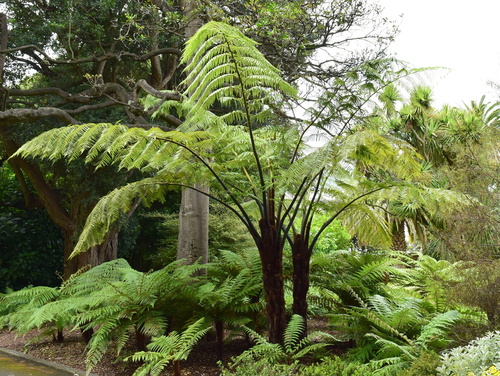
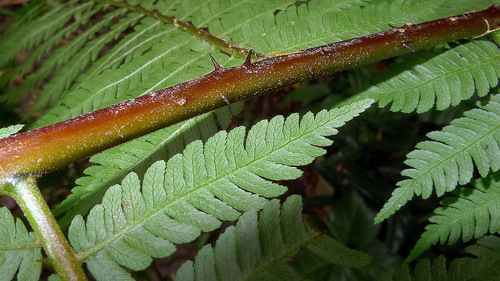
Sphaeropteris lunulata
(J. Forster) R. M. Tryon
Balabala, Balabala balaka
iNaturalist· cc-by-nc
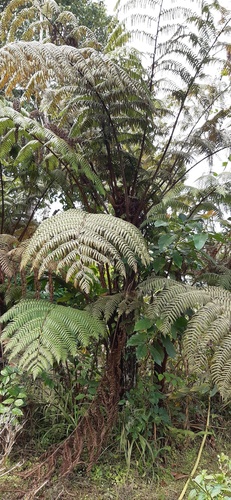
(c) Mark Rosenstein, some rights reserved (CC BY-NC)
iNaturalist· cc-by-nc
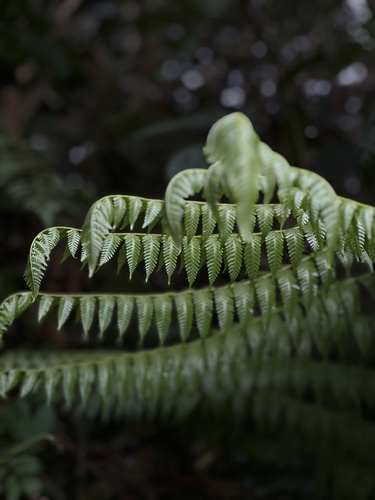
(c) John B, some rights reserved (CC BY-NC)
iNaturalist· cc-by-nc
(c) John B, some rights reserved (CC BY-NC)
Summary
Source: WikipediaSphaeropteris lunulata is a species of tree fern in the family Cyatheaceae, native from Sulawesi in Malesia and the Bismarck Archipelago in Papuasia to the western Pacific. It was first described by Georg Forster in 1786 as Polypodium lunulatum and transferred to Sphaeropteris by Rolla Tryon in 1970.
Description
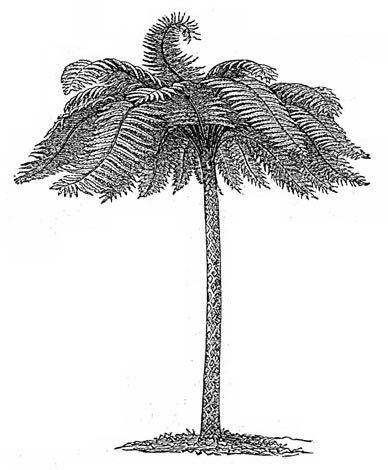
A large tree fern. The trunk is erect and can be 8-10 m high. The fronds are divided 3 times. They can be 6 m long.
This description is brief — help expand it
Edible Uses
The young fronds are eaten, and the white pith of the stem is cooked in an earth oven and eaten, particularly in times of scarcity.
Traditional Uses
The young fronds are eaten in times of scarcity. The white pith of the stem is cooked in an earth oven and eaten.
This uses section is brief — help expand it
Distribution
A tropical plant. It grows in tropical and subtropical locations. They grow from sea level to 100 m altitude. They grow in the rainforest.
Where It Grows
American Samoa, Fiji, Guam, Marianas, New Caledonia, Pacific, Papua New Guinea, PNG, Samoa, Solomon Islands, Tonga, Vanuatu, Wallis and Futuna,
Other Information
A famine food.
Synonyms
Also Known As
Olioli
References (6)
- French, B.R., 2010, Food Plants of Solomon Islands. A Compendium. Food Plants International Inc. p 111 (As Cyathea lunulata)
- Hedrick, U.P., 1919, (Ed.), Sturtevant's edible plants of the world. p 46 (As Cyathea lunulata)
- Large, M.F., & Braggins, J.E., 2004, Tree Ferns. CSIRO Publishing, Melbourne, Australia. p 143 (As Cyathea lunulata)
- Stone, B., (As Cyathea lunulata)
- Vila Herbarium notes Vanuatu (As Cyathea lunulata)
Show all 6 references Hide references
- World Checklist of Useful Plant Species 2020. Royal Botanic Gardens, Kew