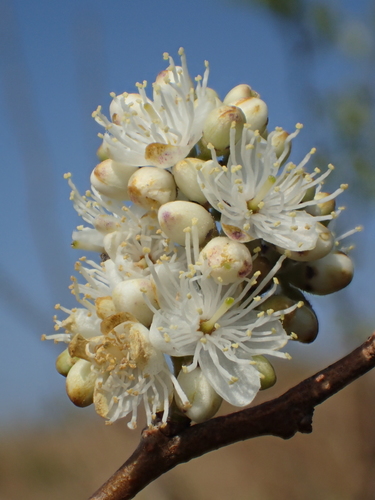
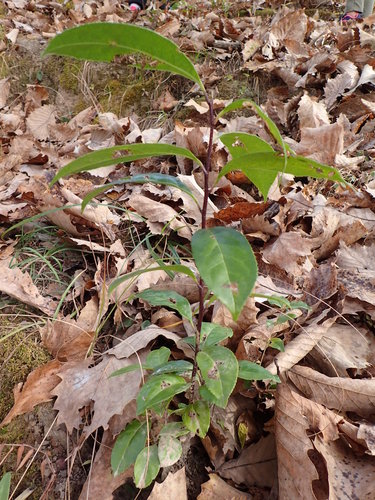
Symplocos theiformis
(L.f.) Oken
Bogota tea
iNaturalist· cc-by-nc
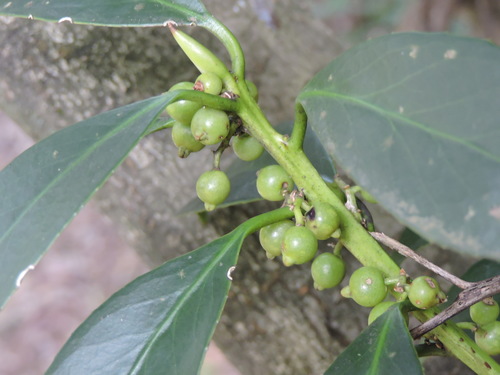
(c) Daniel Montejo Casas, some rights reserved (CC BY-NC), uploaded by Daniel Montejo Casas
iNaturalist· cc-by-nc-sa
(c) Mateo Hernandez Schmidt, some rights reserved (CC BY-NC-SA), uploaded by Mateo Hernandez Schmidt
Description
A tree of the Symplocaceae family found in tropical and warm temperate zones, belonging to a family containing a single genus with approximately 320 Symplocos species.
Edible Uses
The leaves are used as a tea substitute. Infused for 15 minutes, the tea has a good aroma and flavour. A tea made from the leaves is drunk both as a refreshing drink and also for its health promoting properties. The tea can be used as a substitute for conventional tea (Camellia sinensis).
Traditional Uses
The leaves are used for a tea drink.
This uses section is brief — help expand it
Medicinal Uses
Tha plant has astringent and tonic qualities similar to tea and coffee. It is said to be of help when a person is chilled and threatened with colds.
Distribution
A tropical plant.
Where It Grows
Brazil, Central America, Colombia, Nicaragua, South America,
Notes
There is only one genus in the Symplocaceae family. There are 320 Symplocos species. They grow in tropical and warm temperate zones.
Synonyms
Also Known As
Te de Bogota
References (5)
- Hedrick, U.P., 1919, (Ed.), Sturtevant's edible plants of the world. p 638 (As Symplocos alstonia)
- Heywood, V.H., Brummitt, R.K., Culham, A., and Seberg, O., 2007, Flowering Plant Families of the World. Royal Botanical Gardens, Kew. p 314 (Family) (As Symplocos alstonia)
- Kermath, B. M., et al, 2014, Food Plants in the Americas: A survey of the domesticated, cultivated and wild plants used for Human food in North, Central and South America and the Caribbean. On line draft. p 845
- Smith, N., Mori, S.A., et al, 2004, Flowering Plants of the Neotropics. Princeton. p 366
- World Checklist of Useful Plant Species 2020. Royal Botanic Gardens, Kew