Berberis darwinii
Hook.
Darwin's barberry
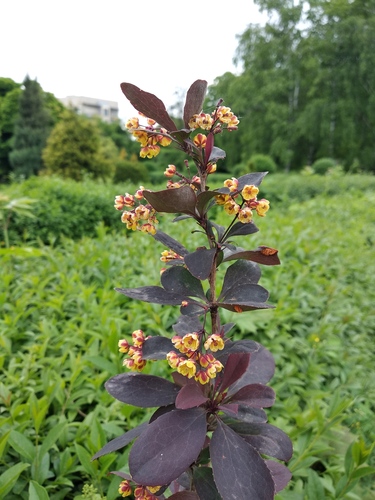
iNaturalist· cc-by
(c) Jon Sullivan, some rights reserved (CC BY)
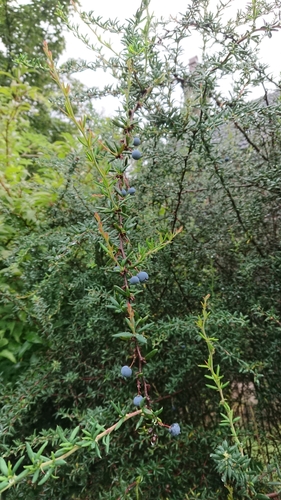
iNaturalist· cc-by-nc
(c) Ajahn, some rights reserved (CC BY-NC), uploaded by Ajahn
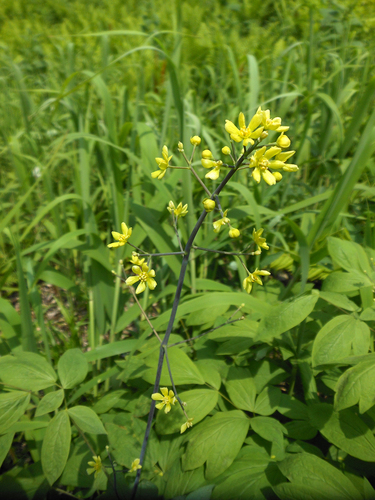
iNaturalist· cc-by
(c) Jon Sullivan, some rights reserved (CC BY)
Summary
Source: WikipediaBerberis darwinii, Darwin's barberry, is a species of flowering plant in the family Berberidaceae. It is native to southern Chile and Argentina and naturalized elsewhere. Regional vernacular names include michay, calafate, and quelung. Growing to 3–4 m (9.8–13.1 ft) tall, it is an evergreen thorny shrub.
Description
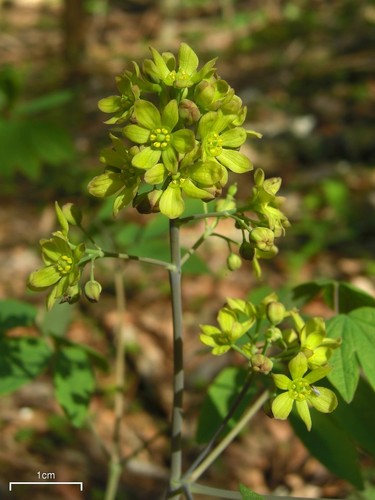
An evergreen shrub. It grows 2.5-3 m high and spreads 3.5 m wide. The leaves are glossy and spiny. They are dark green above and paler underneath. They are small. They are like holly leaves. The flowers are small and cup-shaped and orange-yellow. They hang in large numbers among the leaves. The fruit are blue berries. They are 7 mm across. The fruit have many seeds.
Edible Uses
Edible Parts: Fruit Edible Uses: Fruit - raw or cooked and used in preserves. An acid but very pleasant flavour, children seem particularly fond of the fruit[2, K]. When fully ripe, the fruit loses most of its acidity and makes very pleasant eating. Unfortunately there is a lot of seed compared to the amount of flesh and this does detract somewhat from the pleasure of eating it. The fruit goes very well raw in a muesli or cooked in a porridge. The fruits are about 7mm long.
Traditional Uses
The ripe fruit are eaten raw when fully ripe. The seeds are not eaten. The ripe fruit are used in preserves.
This uses section is brief — help expand it
Medicinal Uses
Antibacterial Cancer Dysentery Tonic Urinary The root bark is tonic. Berberine, universally present in all parts of Berberis species but especially the rhizomes, has marked antibacterial effects, especially upon the urinary system. Since it is not appreciably absorbed by the body, it is used orally in the treatment of various enteric infections, especially bacterial dysentery. It should not be used with Glycyrrhiza species (Liquorice) because this nullifies the effects of the berberine. Berberine has also shown antitumour activity.
Distribution
It is a temperate plant. It is frost hardy. It can tolerate temperatures down to -15°C. It has become naturalised in Australia in the Dandenong ranges in Victoria. It is wind hardy. It can grow in coastal locations. It suits hardiness zones 7-10. In Argentina it grows from sea level to 1,500 m above sea level. Mt Lofty Botanical Gardens. Tasmania Herbarium. Arboretum Tasmania.
Where It Grows
Argentina, Australia, Britain, Chile, Europe, New Zealand, South America*, Tasmania,
Cultivation
Prefers a warm moist loamy soil in full sun or light shade but it is by no means fastidious, succeeding in thin, dry and shallow soils. Grows well in heavy clay soils. Succeeds on chalky soils if other conditions are suitable but prefers an acid soil. Dislikes exposure to strong winds according to one report, whilst others say that it is a very wind hardy plant, tolerating maritime exposure. Does not flower well in exposed positions. Plants growing in a very exposed position on our trial grounds in Cornwall are flowering and fruiting well, they are rather slow growing but are looking very happy and healthy. A very ornamental plant, it is hardy to about -15°c. A good bee plant. Birds love this fruit and will happily eat it all before it is fully ripe. If you want to experience the fully ripe fruit then it might be necessary to find ways of keep the birds off the plants. Hybridizes freely with other members of this genus. Plants can be pruned back quite severely, they resprout well from the base. This species is notably resistant to honey fungus. The berries are typically harvested in late summer to early autumn when they are ripe. Barberry generally flowers in spring, depending on the species and local climate.
Propagation
Seed - best sown as soon as it is ripe in a cold frame, when it should germinate in late winter or early spring. Seed from over-ripe fruit will take longer to germinate, whilst stored seed may require cold stratification and should be sown in a cold frame as early in the year as possible. The seedlings are subject to damping off, so should be kept well ventilated. When the seedlings are large enough to handle, prick them out into individual pots and grow them on in a cold frame. If growth is sufficient, it can be possible to plant them out into their permanent positions in the autumn, but generally it is best to leave them in the cold frame for the winter and plant them out in late spring or early summer of the following year. Cuttings of half-ripe wood, July/August in a frame. Cuttings of mature wood of the current season's growth, preferably with a heel, October/November in a frame.
Other Uses
Dye Hedge Hedge Agroforestry uses: Barberry can be used as a hedge, providing dense foliage that offers shelter for wildlife. Additionally, its deep roots can help with soil stabilization. Plants are very amenable to trimming and can be used as a formal hedge. They also make a very good informal hedge, their long arching branches looking especially attractive when in flower or bearing fruit. The plants tolerate maritime exposure, though they are slow-growing . A yellow dye is obtained from the root and bark. 1. Nectary - Flowers rich in nectar and pollen: Yes – Barberry flowers are small but rich in nectar and pollen, attracting bees and other pollinators. 2. Wildlife - Food (Fruit, Seeds, Leaf litter, Shelter, Nesting, Roosting): Yes – Barberry produces edible berries that are a food source for birds and other wildlife. The dense, thorny branches provide good shelter and protection for nesting and roosting birds. 3. Invertebrate Shelter (Overwintering sites, Leaf litter, Groundcover): Yes – Barberry shrubs' dense structure and leaf litter can offer overwintering sites and shelter for invertebrates. 4. Pest Confuser (Smell): No – Barberry is not known for emitting a smell that confuses pests. Special Uses Attracts Wildlife Food Forest Hedge Hedge
Notes
There are about 450-500 Berberis species. This one can become invasive. There is some evidence it helps Alzheimer's.
Also Known As
Calafate, Mechay, Michay
References (27)
- Bircher, A. G. & Bircher, W. H., 2000, Encyclopedia of Fruit Trees and Edible Flowering Plants in Egypt and the Subtropics. AUC Press. p 57
- Bodkin, F., 1991, Encyclopedia Botanica. Cornstalk publishing, p 141
- Brickell, C. (Ed.), 1999, The Royal Horticultural Society A-Z Encyclopedia of Garden Plants. Convent Garden Books. p 171
- Chamorro, M. F., & Ladio, A., 2020, Native and exotic plants with edible fleshy fruits utilized in Patagonia and their role as sources of local functional foods. BMC Complementary Medicine and Therapies. 20:155
- Cordero, S. E., Abello, L. A., & Galvez, F. L., 2017, Plantas silvestres comestibles y medicinales de Chile y otras partes del mundo. CORMA p 41
Show all 27 references Hide references
- Cundall, P., (ed.), 2004, Gardening Australia: flora: the gardener's bible. ABC Books. p 229
- Facciola, S., 1998, Cornucopia 2: a Source Book of Edible Plants. Kampong Publications, p 48
- Flowerdew, B., 2000, Complete Fruit Book. Kyle Cathie Ltd., London. p 168
- Glowinski, L., 1999, The Complete Book of Fruit Growing in Australia. Lothian. p 179
- Hedrick, U.P., 1919, (Ed.), Sturtevant's edible plants of the world. p 98
- Heywood, V.H., Brummitt, R.K., Culham, A., and Seberg, O. 2007, Flowering Plant Families of the World. Royal Botanical Gardens, Kew. p 60
- Hibbert, M., 2002, The Aussie Plant Finder 2002, Florilegium. p 42
- Icon. pl. 7: t. 672. 1844
- Irving, M., 2009, The Forager Handbook, A Guide to the Edible Plants of Britain. Ebury Press p 48
- John, L., & Stevenson, V., 1979, The Complete Book of Fruit. Angus & Robertson p 74
- Joyce, D., 1998, The Garden Plant Selector. Ryland, Peters and Small. p 124
- Leon-Lobos, P., et al, 2022, Patterns of Traditional and Modern Uses of Wild Edible Native Plants of Chile: Challenges and Future Perspectives. Plants (Basel) v 11 (6) Table S1
- Lord, E.E., & Willis, J.H., 1999, Shrubs and Trees for Australian gardens. Lothian. p 206
- Lyle, S., 2006, Discovering fruit and nuts. Land Links. p 88
- Marinelli, J. (Ed), 2004, Plant. DK. p 446
- Plants for a Future database, The Field, Penpol, Lostwithiel, Cornwall, PL22 0NG, UK. http://www.scs.leeds.ac.uk/pfaf/
- Rapoport, E. H., et al, 1995, Edible Weeds: A Scarcely Used Resource. Bulletin of the Ecological Society of America. Vol. 76 No. 3 pp 163-166
- Ryan, S., 2008, Dicksonia. Rare Plants Manual. Hyland House. p 10
- Tasmanian Herbarium Vascular Plants list p 15
- Velasquez, P. & Montenegro, G., 2017, Chilean Endemic/Native Plant Resources as Functional and Superfoods. Chp. 6 in Superfood and Functional Food - An Overview of Their Processing and Utilization
- www.chileflora.com
- Young, J., (Ed.), 2001, Botanica's Pocket Trees and Shrubs. Random House. p 132