Hydropuntia edulis
(S. G. Gmelin) Silva
Ceylon moss
gbif· cc-by
GBIF
gbif· cc-by
GBIF
gbif· cc-by
Meise Botanic Garden
Description
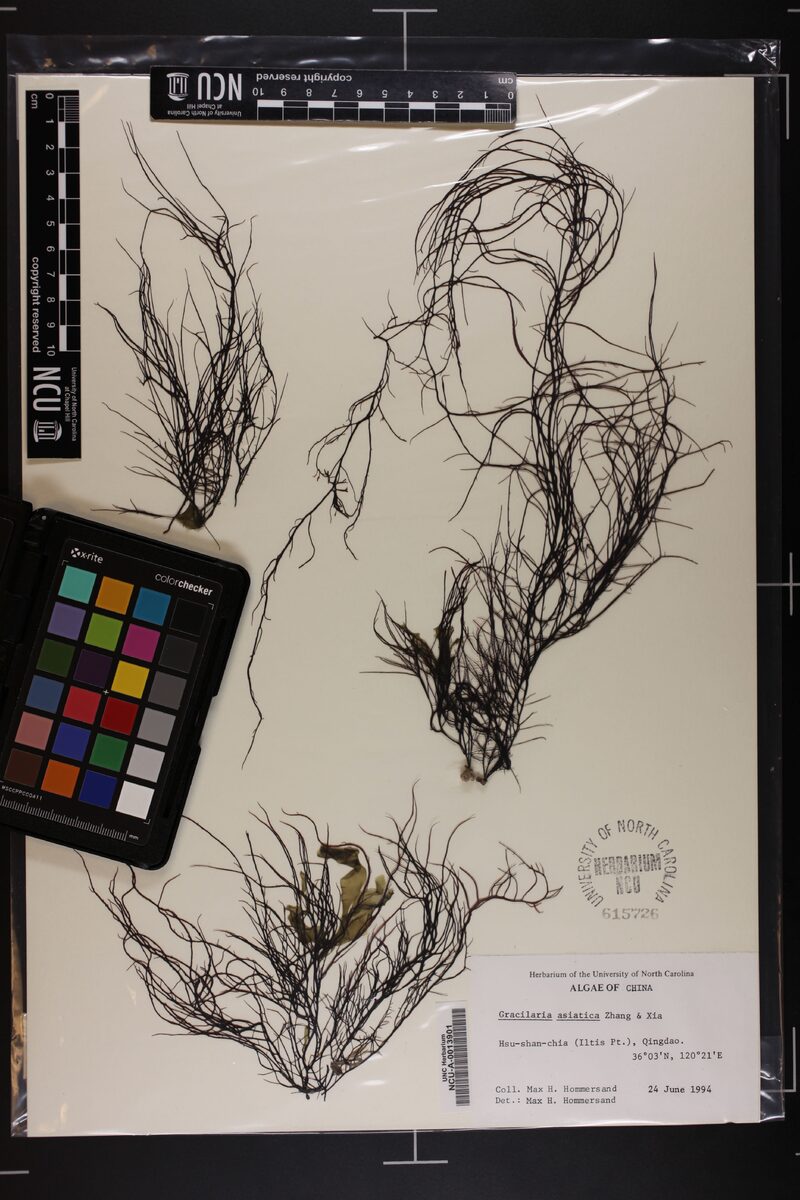
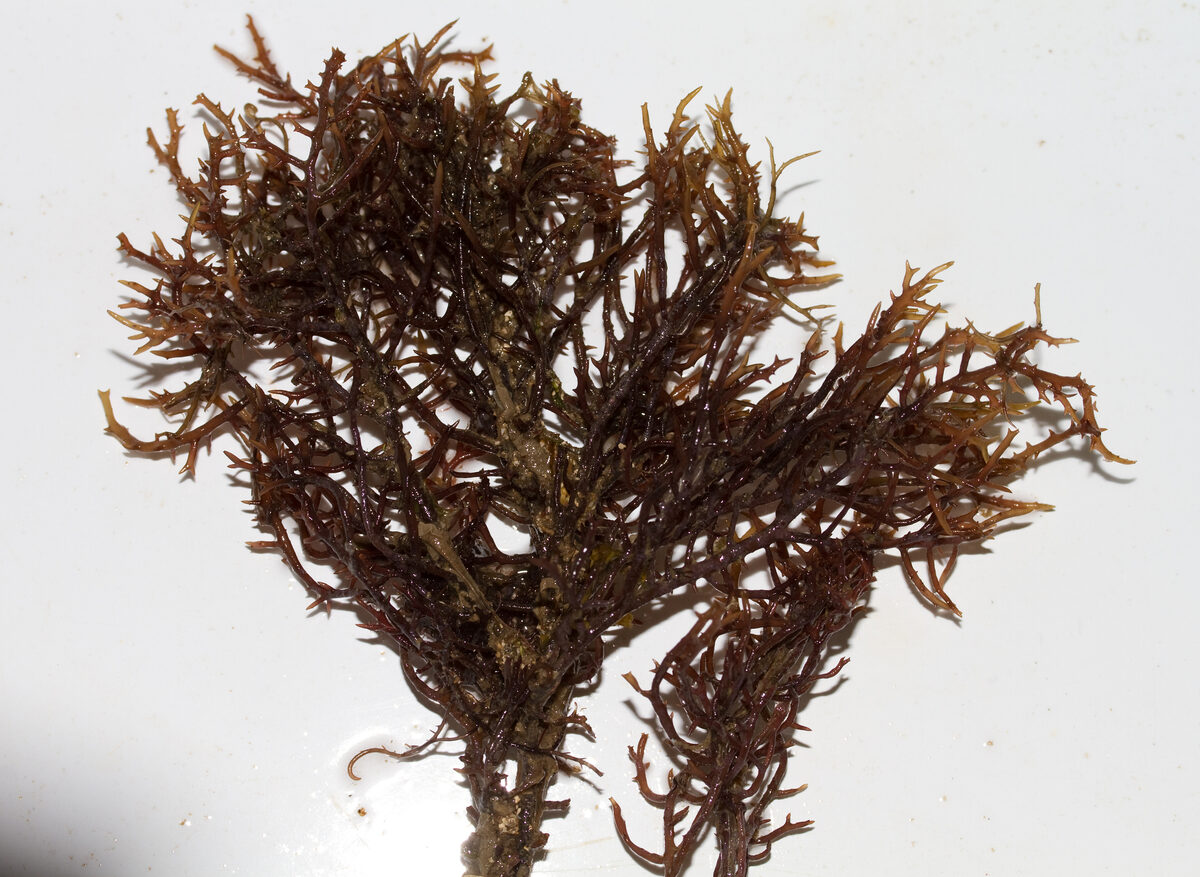
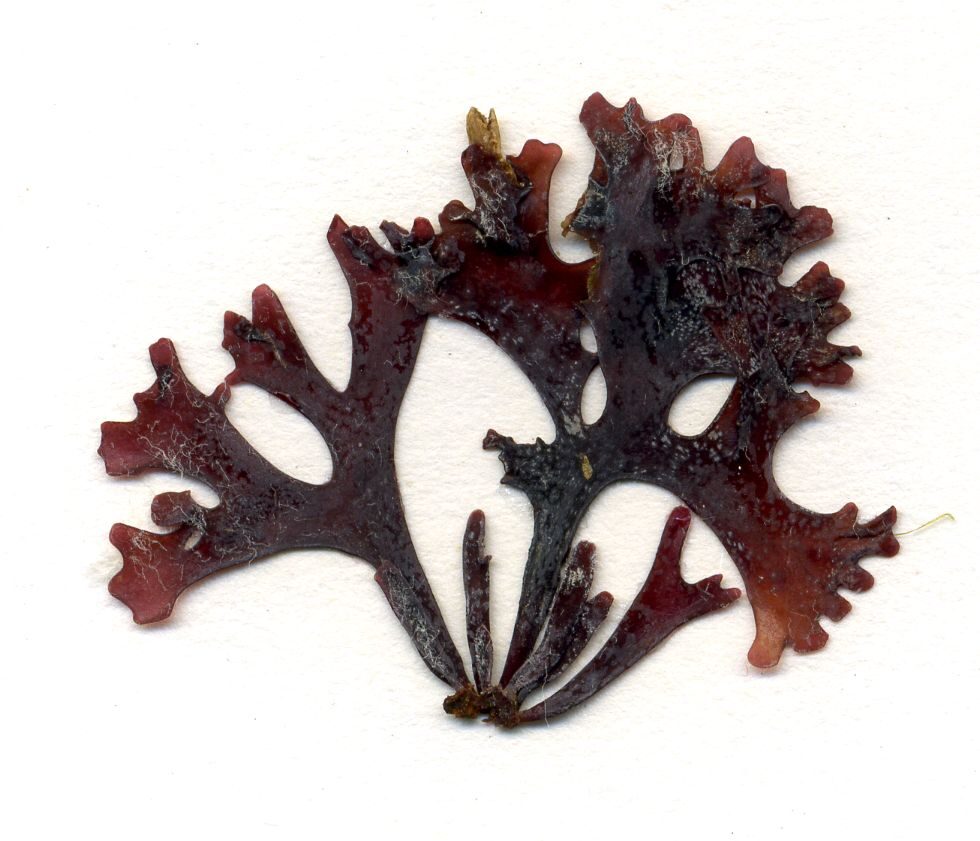
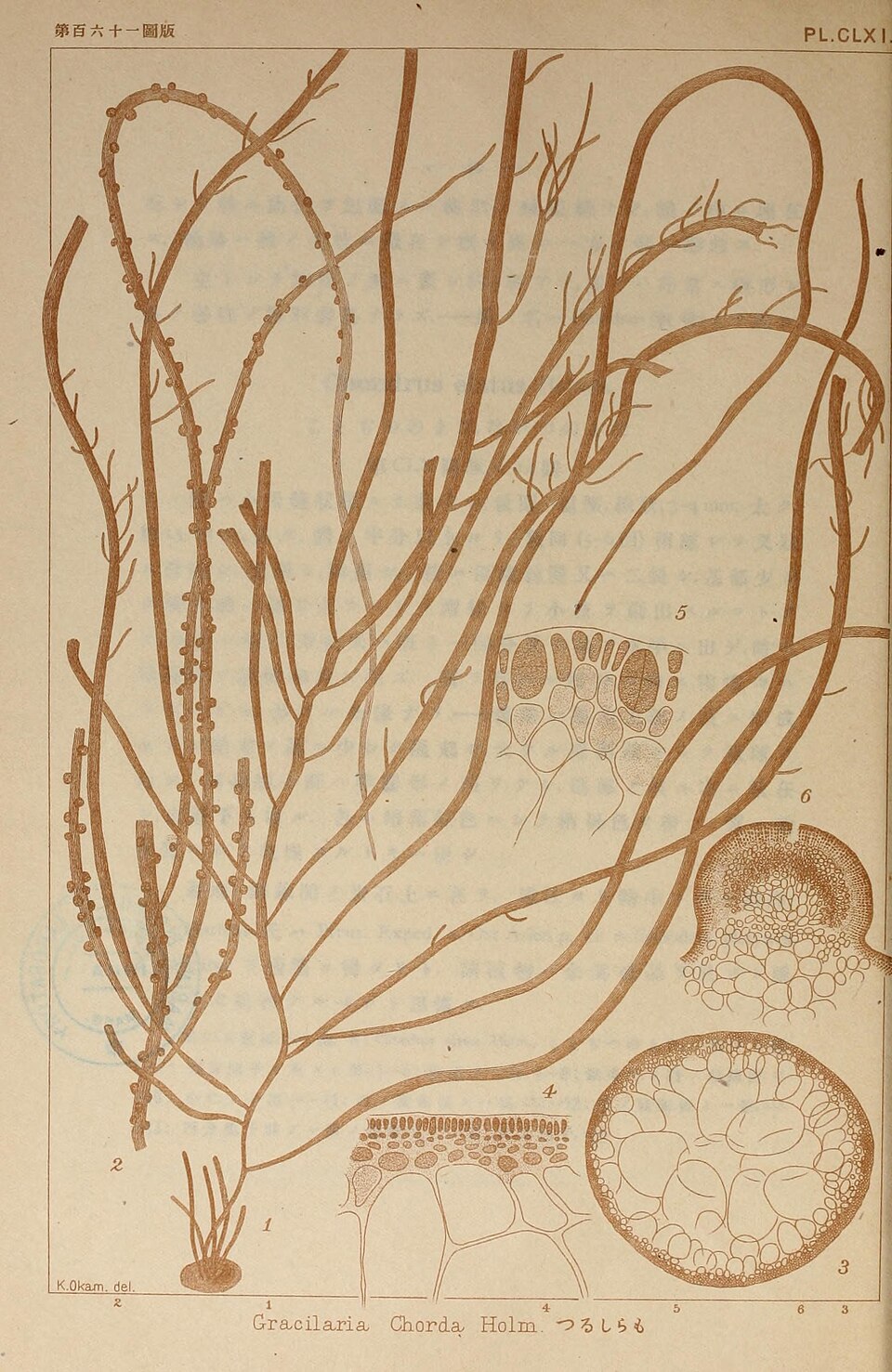
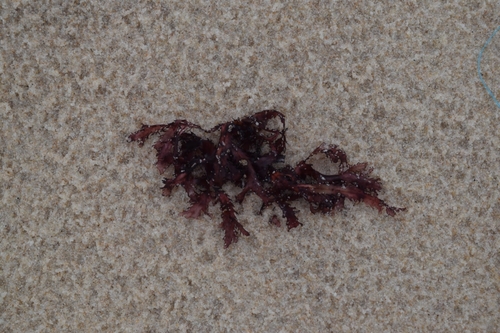
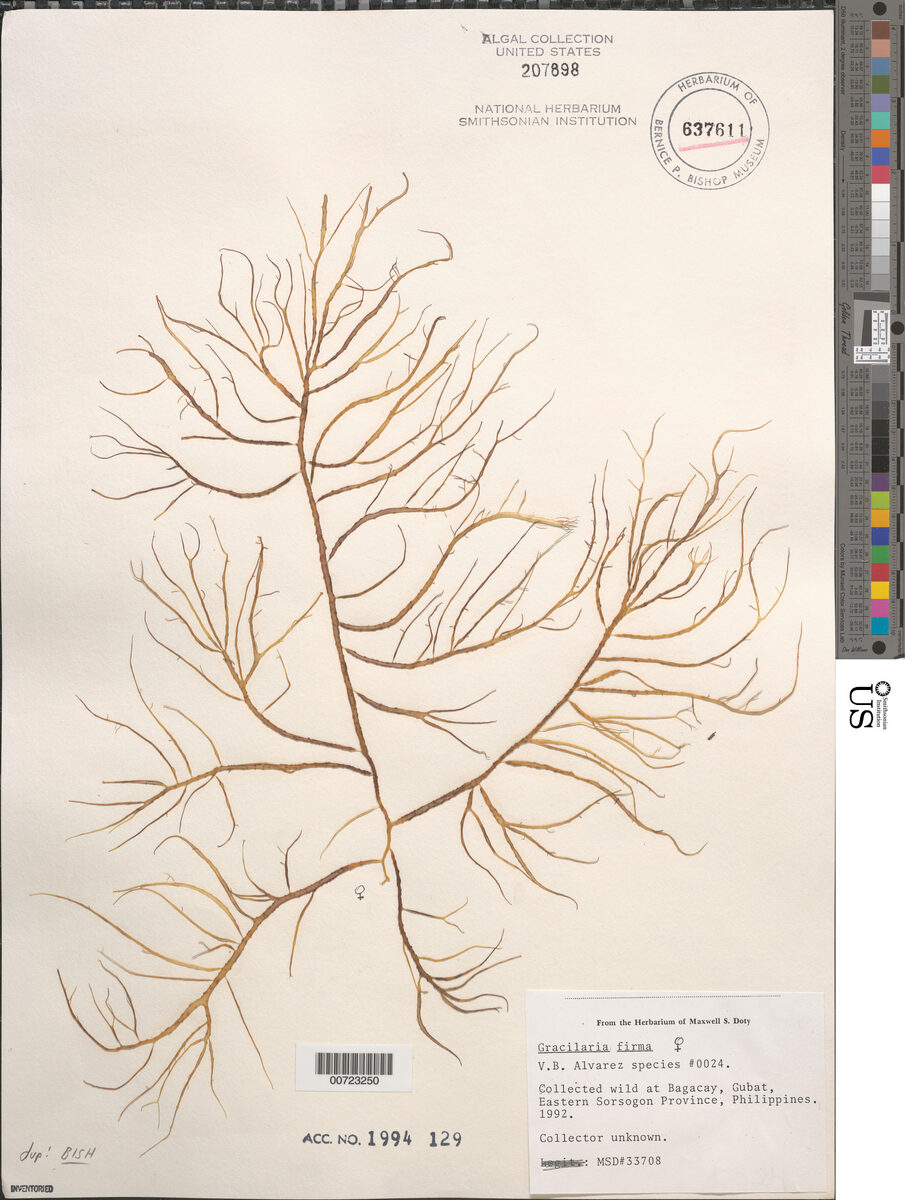
A seaweed. It has irregular branches and forms clumps. They can be 20 cm long. The branches are cylinder shaped or slightly flattened. They can be pink to purple.
Edible Uses
The seaweed is boiled for about 5 minutes and eaten as a vegetable with meat dishes, used in soups and jellies, pickled, or made into a drink called Kanji. Agar is extracted and used for jellies and a porridge can be prepared from it.
Traditional Uses
This algae is used for making porridge and for preparing a drink called Kanji. The agar is extracted and used for jellies. It can be boiled for about 5 minutes and used as a vegetable with a meat dish. It is used in soups and jelly and also pickled.
Distribution
A tropical plant. It grows on rocky shores. It grows just below the tidal zone and is on sheltered or slightly exposed shores.
Where It Grows
Africa, Asia, Australia, China, East Africa, Eritrea, FSM, Guam, Hawaii, India, Indonesia, Kenya, Korea, Madagascar, Malaysia, Mauritius, Micronesia, Myanmar, Pacific, Papua New Guinea, PNG, Philippines, Samoa, SE Asia, Singapore, Solomon Islands, Sri Lanka, Taiwan, Tanzania, USA,
Synonyms
Also Known As
Agar-agar, Atjar, Chan, Chow-parsi, Conji-parsi, Jaffna moss, Kadala-passi, Limu manauea
References (14)
- Ambasta, S.P. (Ed.), 2000, The Useful Plants of India. CSIR India. p 247 (As Gracilaria edulis) and (As Gracilaria lichenoides)
- Burkill, I.H., 1966, A Dictionary of the Economic Products of the Malay Peninsula. Ministry of Agriculture and Cooperatives, Kuala Lumpur, Malaysia. Vol 1 (A-H) p 1126 (As Gracilaria lichenoides)
- Chapman, V.J. and Chapman, D.J., 1980, Seaweeds and their uses. London. (As Gracilaria lichenoides)
- Cribb, A.B., 1996, Seaweeds of Queensland A Naturalist's Guide. The Queensland Naturalists' Club Handbook No. 2. p 83 (As Gracilaria edulis)
- Facciola, S., 1998, Cornucopia 2: a Source Book of Edible Plants. Kampong Publications, p 259 (As Gracilaria lichenoides)
Show all 14 references Hide references
- Hedrick, U.P., 1919, (Ed.), Sturtevant's edible plants of the world. p 332 (As Gracilaria lichenoides)
- http://www.seavegetables.com (As Gracilaria edulis)
- Kiple, K.F. & Ornelas, K.C., (eds), 2000, The Cambridge World History of Food. CUP p 237 (As Gracilaria lichenoides)
- Macmillan, H.F. (Revised Barlow, H.S., et al), 1991, Tropical Planting and Gardening. Sixth edition. Malayan Nature Society. Kuala Lumpur. p 346 (As Gracilaria lichenoides)
- Millar, A. J., et al, 1999, Annotated and Illustrated Survey of the Marine Macroalgae from Motupore Island and Vicinity (Port Moresby area, Papua New Guinea). 111. Rhodophyta. Australian Systematic Botany 12, 549-591 (As Gracilaria edulis)
- Subba Rao, G.N., 1965, Uses of seaweed directly as human food. Indo-Pacific Fisheries Council Regional Studies 2:1-32 (As Gracilaria lichenoides)
- Womersley, H.B. S. & Bailey, A., 1970, Marine algae of the Solomon Islands. Philosophical Transactions of the Royal Society of London. B. Biological Sciences 259:257-352 (As Gracilaria edulis)
- Zaneveld, J.S., 1955, Economic marine algae of tropical South and East Asia and their utilization. Indo-Pacific Special Publications, No 3 Bangkok. (As Gracilaria lichenoides)
- Zemke-White, W. L. & Ohno, M., 1999, World seaweed utilisation: An end-of-century summary. Journal of Applied Phycology 11: 369-376 (As Gracilaria edulis)