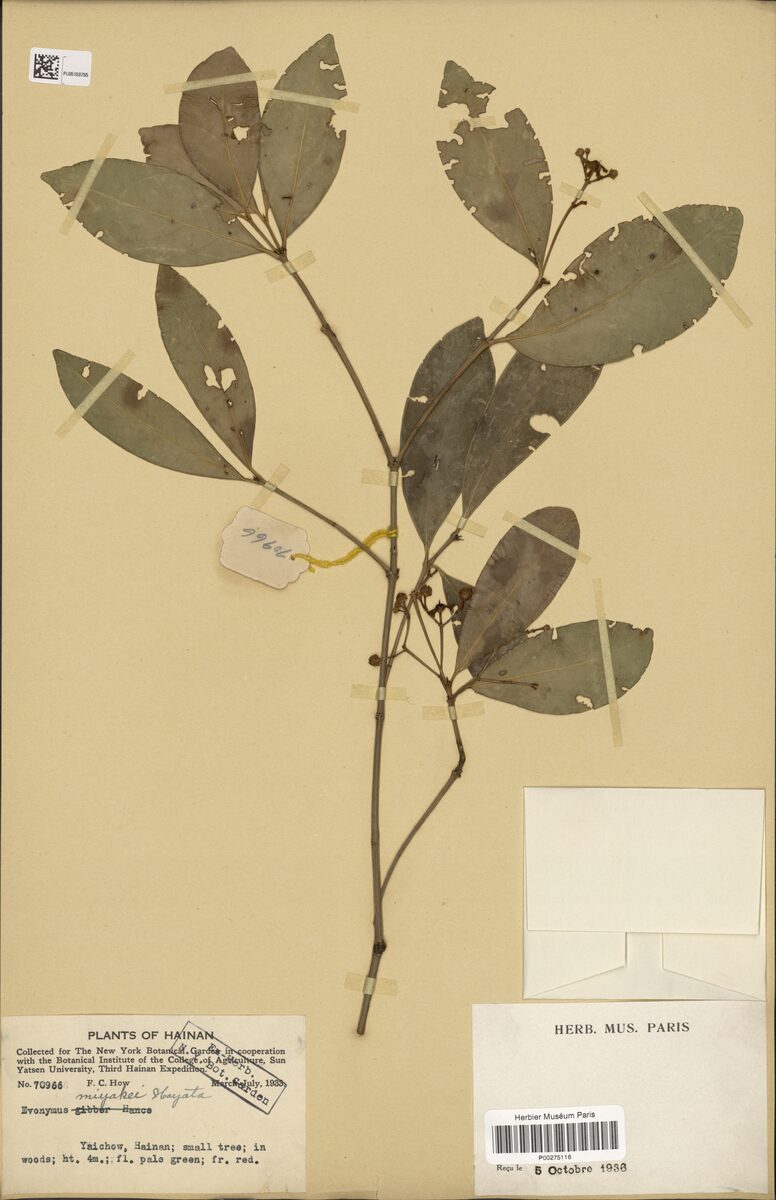
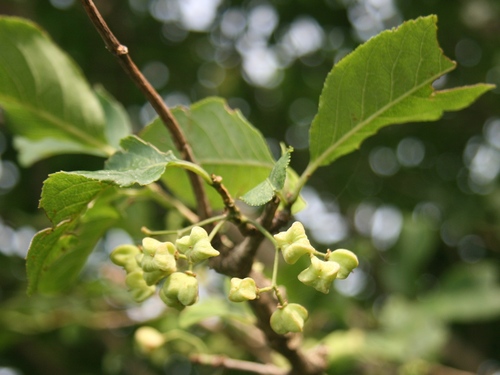
Salacia grandiflora
Kurz.
iNaturalist· cc-by-nc-sa
(c) Smithsonian Institution, National Museum of Natural History, Department of Botany, some rights reserved (CC BY-NC-SA)
gbif· cc0
President and Fellows of Harvard College
gbif· cc0
President and Fellows of Harvard College
Description
A sprawling shrub or woody creeper. The leaves are shiny on both surfaces. The fruit are orange and fleshy. They are 3-5 cm across. There are 2 or more seeds in each fruit.
Edible Uses
Fruit - raw. The small amount of sweetish, white pulp surrounding the seed is eaten. The fruit is an orange-pink drupe 25 - 50mm long, containing 2 or more seeds.
Traditional Uses
The sweet layer around the seed is eaten.
This uses section is brief — help expand it
Medicinal Uses
A decoction from the roots is used after childbirth.
Distribution
A tropical plant. It grows in lowland forests up to 750 m altitude.
Where It Grows
Asia, India, Indochina, Indonesia, Malaysia, Myanmar, SE Asia, Singapore, Thailand,
Other Uses
The wood, which is not attacked by termites but is also not very durable, is reported to be used in building houses.
Notes
It is also put in the family Hippocrataceae.
Synonyms
Also Known As
Andor solpu, Hempedal ayam, Membatu pasir, Mempedal ayam, Meriku, Nasi sejuk, Pedal ayam, Serapat
References (6)
- Ambasta, S.P. (Ed.), 2000, The Useful Plants of India. CSIR India. p 539
- Burkill, I.H., 1966, A Dictionary of the Economic Products of the Malay Peninsula. Ministry of Agriculture and Cooperatives, Kuala Lumpur, Malaysia. Vol 2 (I-Z) p 1977
- Ding Hou, 1964, Celastraceae 2, Flora Malesiana, Ser. 1. Vol 6 (3) p 413
- Milow, P., et al, 2013, Malaysian species of plants with edible fruits or seeds and their evaluation. International Journal of Fruit Science. 14:1, 1-2
- PROSEA No. 2
Show all 6 references Hide references
- World Checklist of Useful Plant Species 2020. Royal Botanic Gardens, Kew