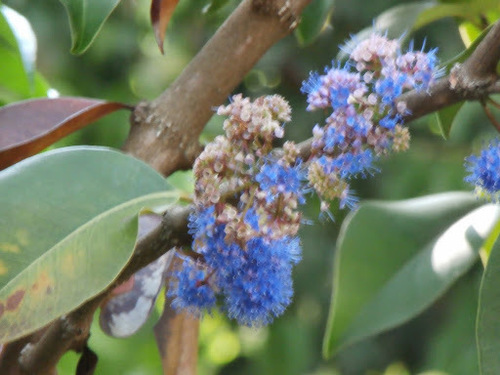
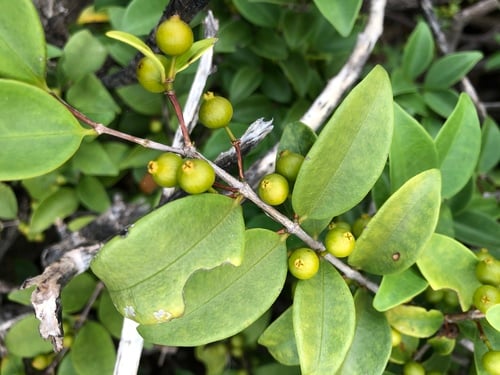
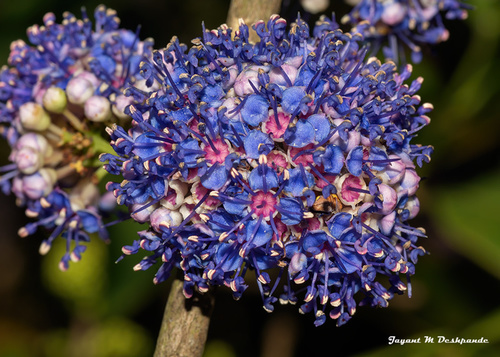
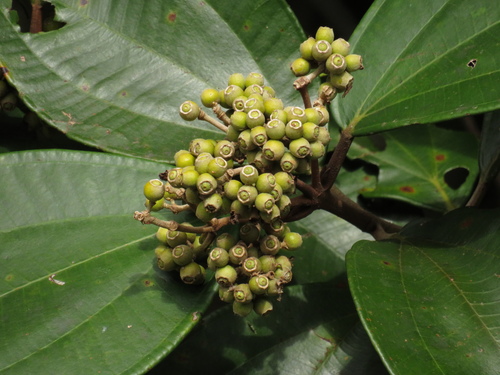
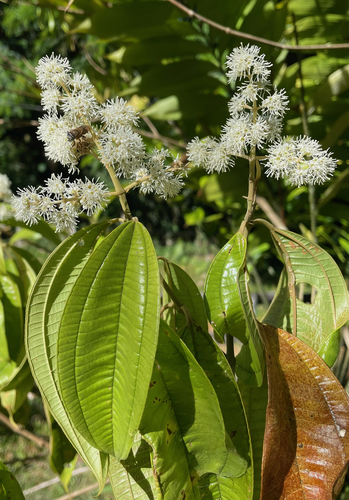
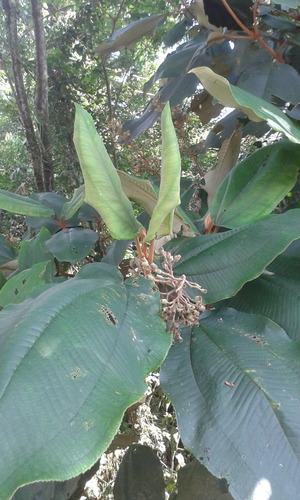
Memecylon caeruleum
Jack
iNaturalist· cc-by-nc
(c) Pizzas fear me, some rights reserved (CC BY-NC), uploaded by Pizzas fear me
iNaturalist· cc-by
(c) Huey, some rights reserved (CC BY), uploaded by Huey
iNaturalist· cc-by-nc
(c) lindsaychongseng, some rights reserved (CC BY-NC)
Summary
Source: WikipediaMemecylon caeruleum is a shrub or tree species in the Melastomataceae family. It is found from New Guinea, west through Southeast Asia to Tibet, Zhōngguó/China. It has become an invasive weed in the Seychelles. It has some local use for wood and food.
Description
A shrub or small tree. It grows 3-6 m tall. The stems are angular. The leaves are oblong and 8-11 cm long by 4-6 cm wide. The flowers are in clusters in the axils of leaves. The petals are white or greenish yellow but pale blue towards the base. The fruit are pink to red and turn purple to black as they ripen. They are oval and 1-1.5 cm across. They are juicy.
Edible Uses
The trunks of the shrub are used for firewood in Cambodia. Amongst Kuy- and Khmer-speaking people living in the same villages in Stung Treng and Preah Vihear provinces of north-central Cambodia, the tree is used as a source of wood. The leaves or young shoots, and the fruit are recorded as being eaten by local people in the Andaman and Nicobar Islands of India.
Traditional Uses
The leaves and fruit are occasionally eaten.
This uses section is brief — help expand it
Distribution
A tropical plant. It grows near the coast. It grows in forests between 900-1,200 m above sea level in southern China. In Yunnan.
Where It Grows
Andamans, Asia, Cambodia, China, India, Indochina, Indonesia, Malaysia, Myanmar, New Guinea, SE Asia, Singapore, Thailand, Tibet, Vietnam,
Cultivation
We have no specific information for this species, but in general the species in this genus succeed in full sun or in partial shade, growing best in a moist, well-drained, humus-rich soil.
Propagation
Seed - Air layering
Other Uses
We have no specific information for this species, but in general the wood of Memecylon species is usually white to brown, very dense and heavy, sinking in water. It is also often very durable. Where the wood gets large enough it is often used traditionally for purposes such as poles, house posts, lumber and furniture. The wood of many species in the genus has a high calorific value and is often favoured as a fuel and for making charcoal.
Production
In China plants flower April to August and fruit December to January.
Notes
There are about 300 Memecylon species. Also put in the family Memecylaceae.
Synonyms
Also Known As
Api-api hutan, Delek-delek jambu, Delek jambu puteh, Kelat batu, Lam lam, Phlong khee tai, Plong, Prom, Senonya, Thabye-on
References (8)
- Ambasta, S.P. (Ed.), 2000, The Useful Plants of India. CSIR India. p 364
- Burkill, I.H., 1966, A Dictionary of the Economic Products of the Malay Peninsula. Ministry of Agriculture and Cooperatives, Kuala Lumpur, Malaysia. Vol 2 (I-Z) p 1475
- Dobriyal, M. J. R. & Dobriyal, R., 2014, Non Wood Forest Produce an Option for Ethnic Food and Nutritional Security in India. Int. J. of Usuf. Mngt. 15(1):17-37
- Engel, D.H., & Phummai, S., 2000, A Field Guide to Tropical Plants of Asia. Timber Press. p 131
- Milow, P., et al, 2013, Malaysian species of plants with edible fruits or seeds and their evaluation. International Journal of Fruit Science. 14:1, 1-27
Show all 8 references Hide references
- Schatz, G.E., 2001, Generic Tree Flora of Madagascar. Royal Botanical Gardens, Kew and Missouri Botanical Garden. p 258 (Genus)
- Sosef, M. S. M., Hong, L. T., & Prawirohatmodjo, S. (Eds.), 1998, Timber tree: Lesser-known timbers. Plant Resources of South-East Asia, 5(3), p 368
- World Checklist of Useful Plant Species 2020. Royal Botanic Gardens, Kew