Bhesa indica
(Bedd.) Ding Hou
Buku-buku, Biku-biku
iNaturalist· cc-by
(c) Srinivasan Kasinathan, some rights reserved (CC BY), uploaded by Srinivasan Kasinathan
iNaturalist· cc-by
(c) madhavan a.p, some rights reserved (CC BY)
Summary
Source: WikipediaBhesa indica is a flowering plant tree species in the Centroplacaceae family. It is distributed along the tropical wet evergreen forests of the Western Ghats of India. It is considered synonymous with Bhesa paniculata by some authors.
Description
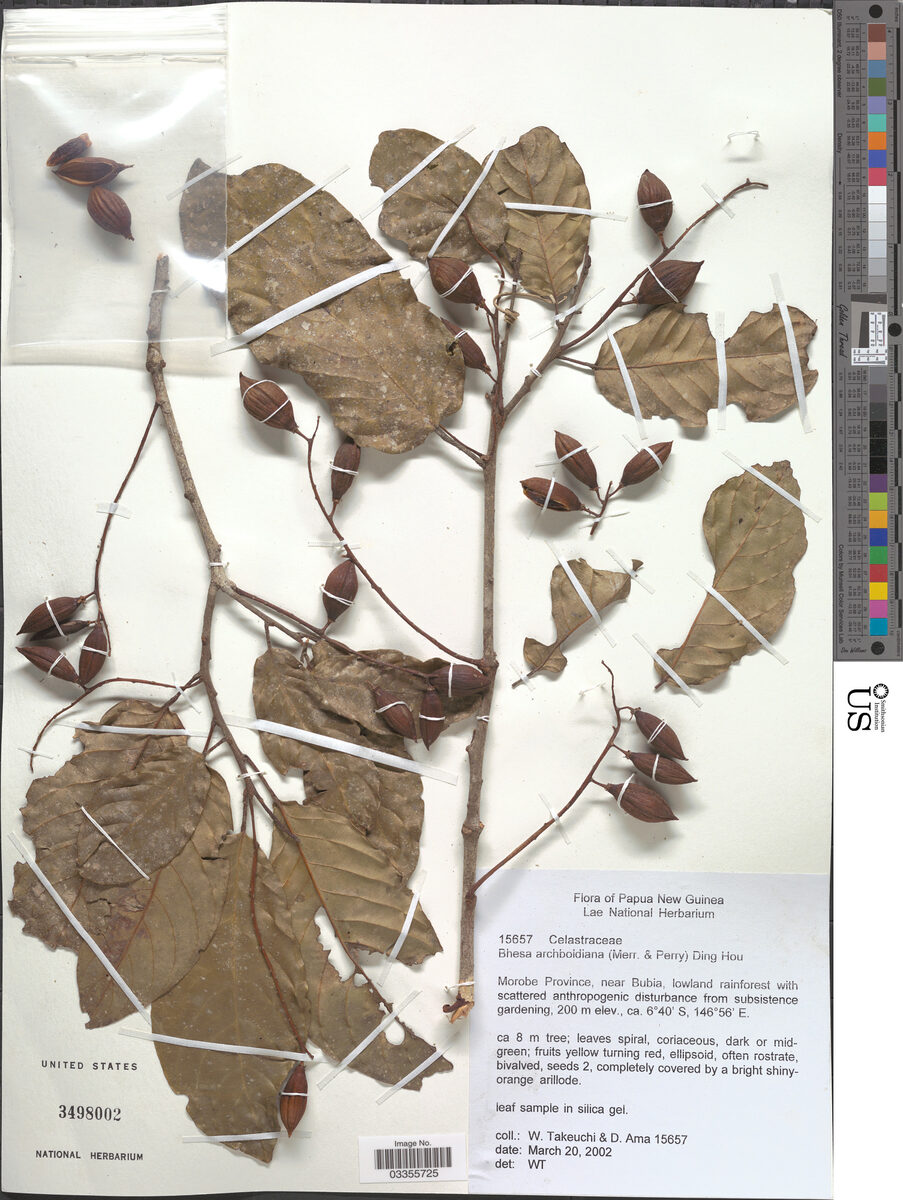
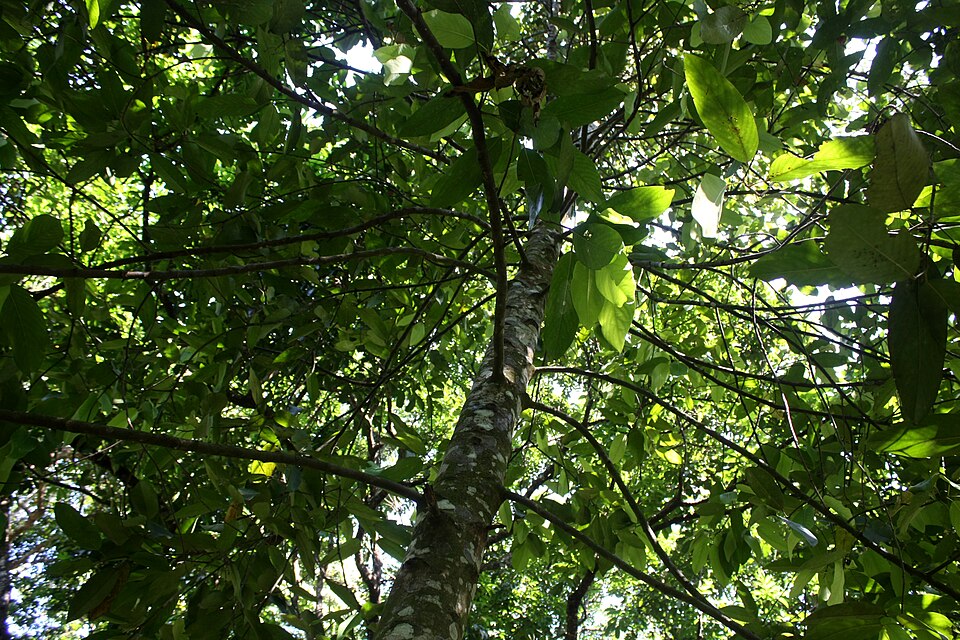
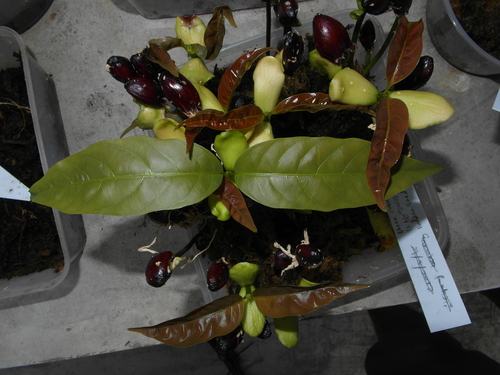
A tree. It grows 30 m tall. The bark is smooth and brown. The leaves are simple and alternate. They are in spirals or clustered at the ends of twigs. The leaf stalks are 3-5 cm long and swollen at the ends. The leaf blade is 10-18 cm long by 5-9 cm wide. They are narrowly oval and taper to a short tip. The flowers are in panicles at the ends of branches. They are small and white. The fruit is a red capsule with 2 lobes. There is one seed in each lobe.
Edible Uses
The fruit are eaten, though they have little taste.
Traditional Uses
The fruit are eaten. They don't have much taste.
This uses section is brief — help expand it
Distribution
A tropical plant. It grows in wet evergreen forests. It grows between 900-1,600 m above sea level.
Where It Grows
Asia, India, Indochina, Indonesia, Malaysia, SE Asia, Singapore, Thailand,
Notes
Also put in the family Celastraceae.
Synonyms
Also Known As
Benak, Kadapala, Kadapla, Medang tandok, Penali, Perungarandam, Sepauh