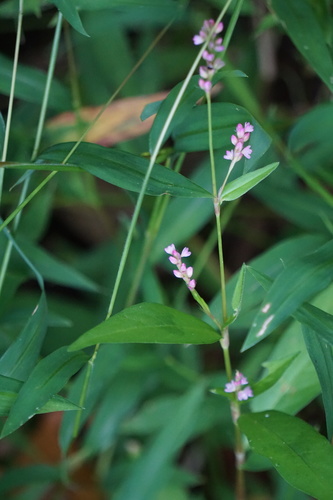
Polygonum tortuosum
D. Don
Eastern knotweed
iNaturalist· cc-by-nc
(c) Kulbhushansingh Suryawanshi, some rights reserved (CC BY-NC)
iNaturalist· cc-by-nc
(c) rinchenwangmo, some rights reserved (CC BY-NC)
iNaturalist· cc-by-nc
(c) lougarou, some rights reserved (CC BY-NC)
Description
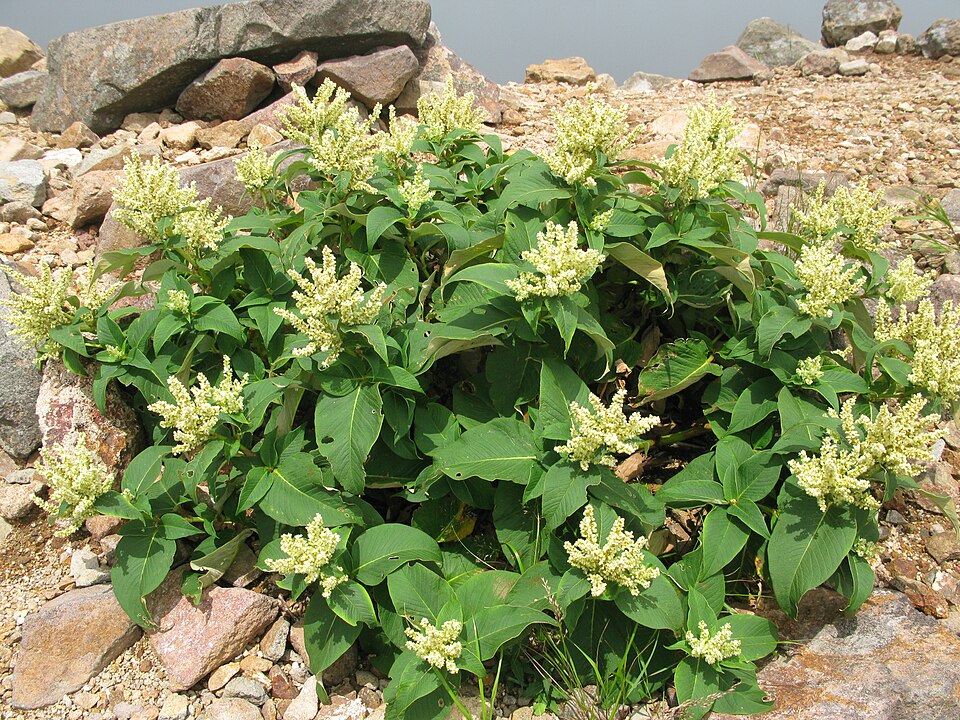
A small shrub. The roots are robust. It grows 30-50 cm tall. The branches are forked. The leaves are oval and 2-4 cm long by 1-2 cm wide. They can be hairy. The flowers are small and white or cream. The dry fruit is brown and oval and sharply 3 sided.
Edible Uses
The dried leaves are used as a tea substitute. The tender stems are eaten raw or pickled.
Traditional Uses
The dried leaves are used as a tea substitute. The tender stems are eaten raw or pickled.
This uses section is brief — help expand it
Medicinal Uses
The roots are used in medicine.
Distribution
It is a temperate plant. It grows on grassy slopes. It grows between 3,600-4,900 m above sea level.
Where It Grows
Afghanistan, Asia, Bhutan, China, Himalayas*, India, Nepal, Pakistan, Tibet,
Notes
The roots are used in medicine.
Synonyms
Also Known As
Bakranda, Bakrolya, Chaunle, Chawanle, Cha zhi shen xue ning, Niala, Nyalowa
References (6)
- Ambasta, S.P. (Ed.), 2000, The Useful Plants of India. CSIR India. p 482
- Flora of China @ efloras.org Volume 5
- Ghimire, S. K., et al, 2008, Non-Timber Forest Products of Nepal Himalaya. WWF Nepal p 111 (As Aconogonon tortuosum)
- Negi, K.S., 1988, Some little known wild edible plants of U.P. Hills. J. Econ. Tax. Bot. Vol. 12 No. 2 pp 345-360
- Prodr. fl. nepal. 71. 1825
Show all 6 references Hide references
- Yeshi, K. et al, 2017, Taxonomical Identification of Himalayan Edible Medicinal Plants in Bhutan and the Phenolic Contents and Antioxidant Activity of Selected Plants. TBAP 7 (2) 2017 pp 89 - 106 (As Aconogonon tortuosum)