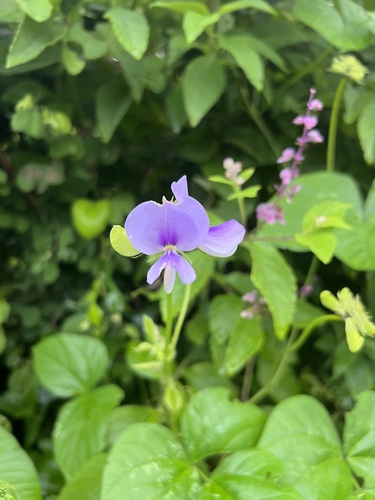
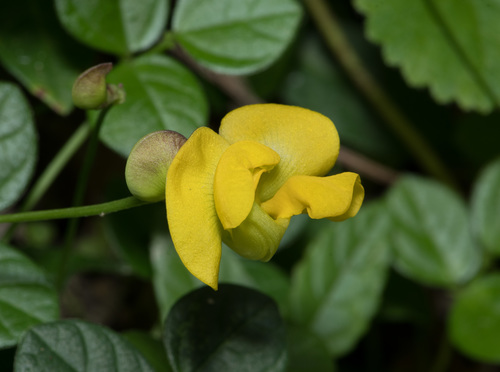
Xylia xylocarpa
(Roxb.) W. Theob.
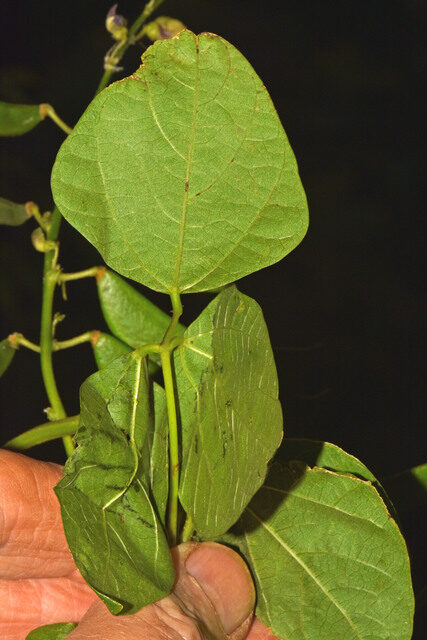
iNaturalist· cc-by-nc-sa
(c) Dinesh Valke, some rights reserved (CC BY-NC-SA)
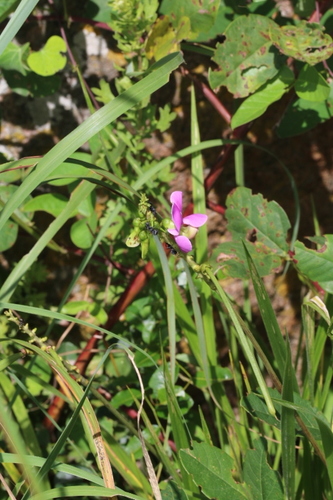
iNaturalist· cc-by-nc
(c) Radha Veach, some rights reserved (CC BY-NC)
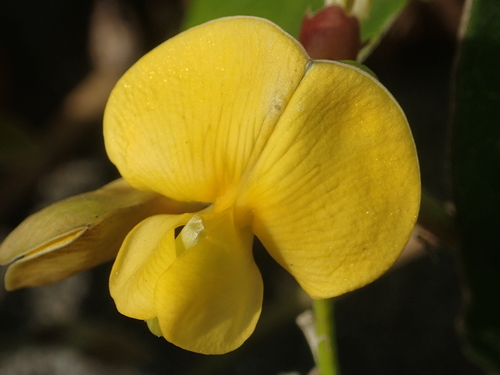
iNaturalist· cc-by-nc
(c) Radha Veach, some rights reserved (CC BY-NC)
Summary
Source: WikipediaXylia xylocarpa is a species of tree in the mimosoid clade of the subfamily Caesalpinioideae of the family Fabaceae.
Description
A tree. It grows 30 m high. It loses its leaves during the year. The trunk is straight. The branches are slender and drooping. The bark is red brown and thin. The leaves are twice divided with a single pair of side stalks 10-30 cm long. There are 3-7 pairs of opposite leaflets. These are 4-15 cm long by 3-6 cm wide and the top ones are the largest. Young shoots have yellow hairs. Young leaves are pink. The flowers are pale yellow in dense round heads. These are 2 cm across. The fruit is 10-15 cm long by 5-6 cm thick. It is woody and slightly curved. It splits into 2 parts that curve backwards. There are 6-10 flat, dark seeds.
Edible Uses
The seeds are roasted and eaten.
Traditional Uses
The seeds are roasted and eaten.
This uses section is brief — help expand it
Medicinal Uses
The bark contains tannins and is astringent. A decoction is used to rid the body of worms. It is also used in the treatment of leprosy, vomiting, diarrhoea, gonorrhoea and ulcers. The oil from the seeds is used in the treatment of rheumatism, piles and leprosy.
Known Hazards
Seeds and fruit listed as edible portion.
Distribution
A tropical plant. It grows up to 850 m above sea level. It grows in areas with an annual rainfall of 1,200 to 1,700 mm.
Where It Grows
Africa, Asia, Bangladesh, Cambodia, India, Indochina, Laos, Myanmar, Philippines, SE Asia, Singapore, Solomon Islands, Tanzania, Thailand, Uganda, Vietnam, West Africa,
Cultivation
A plant of the moist to wet lowland tropics, occasionally to elevations of 850 metres. It is found in areas where annual daytime annual rainfall is within the range 16 - 35°c, though it can tolerate 8 - 35°c. It prefers a mean annual rainfall of 1,700 - 4,500mm, but tolerates 1,300 - 5,000mm, succeeding in areas with no dry season as well as those with a clearly defined dry season. Prefers a dry season of 3 - 5 months. Prefers a sunny position, but also succeeds in light shade. Prefers a deep, well-drained sandy soil, but can succeed in a range of conditions. Prefers a pH in the range 5 - 6, tolerating 4.5 - 6.5. The growth rate of young trees is reportedly fairly high: In India trees were on average 5.7 metres tall and 8cm in diameter after 5 years; in Bangladesh 16 metres tall and 19cm after 10 years. A 23-year-old tree growing in the Arboretum of the Forest Research Institute Malaysia achieved 26 metres height and 30cm in diameter. Trees can be coppiced. The plant is fire resistant. It regenerates well after fires. The tree has a well-developed, deep tap-root. This species has a symbiotic relationship with certain soil bacteria, these bacteria form nodules on the roots and fix atmospheric nitrogen. Some of this nitrogen is utilized by the growing plant but some can also be used by other plants growing nearby.
Propagation
Seed - it can be stored at ambient temperatures for more than three years if kept dry. Fresh seeds do not need pre-treatment. Stored seeds should be pre-soaked prior to sowing - immerse the seed in almost boiling water for a few minutes (being careful not to cook the seed!) and then soak it in warm water for 12 - 24 hours, by which time it should have imbibed water and swollen up. Seed viability is high and germination occurs readily when sown under shade and with adequate watering. A germination rate of 70% - 90% can be expected, with the seeds sprouting within 3 - 4 days. Direct seeding is recommended, as seedlings do not stand the shock of transplanting well, probably because the tap root develops rapidly and attains 30cm length in 1 - 2 months.
Other Uses
The bark and wood are a source of tannins. A red resin is obtained from the trunk. An oil is obtained from the seeds. The heartwood is dark red, slightly streaked and very fine; it is clearly demarcated from the thick, yellowish-white sapwood. The grain is interlocked or wavy; the texture moderately fine to medium and even; the surface somewhat gummy, causing a speckled appearance. The wood is heavy; extremely hard; very strong; very durable, being resistant to the weather as well as termites and other insects - untreated sleepers lasted for 12 years in Thailand and for 20-24 years in India. It is easy to work when fresh but becoming hard when dry and difficult to work by hand. It is difficult to work and plane and has a serious blunting effect on tools but a good finish can be obtained. The wood is mainly utilized in heavy construction, house building, making bridges etc, as well as for railway sleepers, ship building, agricultural implements, tool handles etc. The wood is prized for fuel and for making charcoal. The woody pods are used as fuel for cooking. Leaves are used as green manure in Areca cultures.
Notes
There are 13 Xylia species. Also as Mimosaceae.
Synonyms
Also Known As
Aravitakku, Aruvapalam, Bak deeng, Betadavarike, Boja, Bojeh, Camxe, Dhamani, Dhamoni, Eravalu, Errachennamangi, Hommavarika, Hpat, Irul, Irumulla, Iruvel, Itul, Jamba, Jambe, Jambu, Kadhai, Kanakakuli, Kondatangeedu, Kongora, Maak deeng, Mai deen, Mai-salan, Pkhay, Pran, Prway, Pyin, Pyinkado, Scimsapa, Shilpe, Sivve, Sokrom, Suria, Surya, Takku, Tangini, Tirawa, Yerrul
References (15)
- Ambasta, S.P. (Ed.), 2000, The Useful Plants of India. CSIR India. p 694
- Burkill, I.H., 1966, A Dictionary of the Economic Products of the Malay Peninsula. Ministry of Agriculture and Cooperatives, Kuala Lumpur, Malaysia. Vol 2 (I-Z) p 2315
- Cengel, D. J. & Dany. C., (Eds), 2016, Integrating Forest Biodiversity Resource Management and Sustainable Community Livelihood Development in the Preah Vihear Protected Forest. International Tropical Timber Organization p 104
- Chandrashekara, U. M., 2009, Tree species yielding edible fruit in the coffee-based homegardens of Kerala, India: their diversity, uses and management. Food Sec. 1:361-370
- Dobriyal, M. J. R. & Dobriyal, R., 2014, Non Wood Forest Produce an Option for Ethnic Food and Nutritional Security in India. Int. J. of Usuf. Mngt. 15(1):17-37
Show all 15 references Hide references
- Kaewjampa, N., et al, 2014, Investigation Species of Edible Tree and Medicinal Plants in Faculty of Agriculture, Khon Kaen University. International Journal of Environmental and Rural Development (2014) 5-1
- Mason, Burma ed. W. Theob. 2:541. 1883 (Taubert, Bot. Centralbl. 67:395. 1891)
- Misra S. & Misra M., 2016, Ethnobotanical and Nutritional Evaluation of Some Edible Fruit Plants of Southern Odisha, India. International Journal of Advances in Agricultural Science and Technology, Vol.3 Issue.1, March- 2016, pg. 1-30
- Misra, S., 2020, Survey of edible plants for human consumption in south Odisha, India. Journal of Emerging Technologies and Innovative Research (JETIR) Vol. 7, Issue 12 p 292
- Prixar, S., et al, 2006, Species composition, distribution and management of trees in paddy fields in central Laos. p 22
- Ramachandran, V.S. and Nair, V.J., 1981, Ethnobotanical studies in Cannanore District, Kerala State (India). J Econ. Tax. Bot. Vol 2 pp 65-72
- Ramachandran, V. S., 2007, Wild edible plants of the Anamalais, Coimbatore district, western Ghats, Tamil Nadu. Indian Journal or Traditional Knowledge. 6(1) pp 173-176
- Schatz, G.E., 2001, Generic Tree Flora of Madagascar. Royal Botanical Gardens, Kew and Missouri Botanical Garden. p 208 (Genus)
- Setiya, A. V., et al, 2016, Exploration and documentation of some wild edible plants used by the aboriginals from Gadchiroli District (M.S.) India. International Advanced Research Journal in Science, Engineering and Technology. 3(7)
- World Checklist of Useful Plant Species 2020. Royal Botanic Gardens, Kew