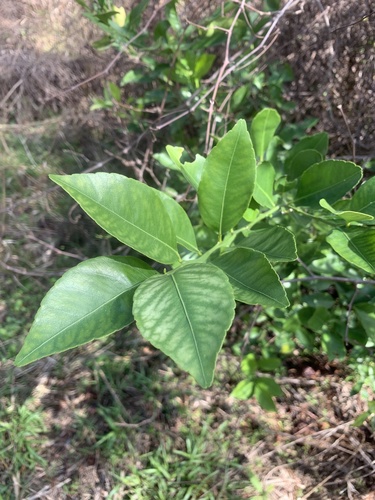
Zanthoxylum myriacanthum
Wallich ex Hooker f.
iNaturalist· cc0
no rights reserved, uploaded by Agnes Trekker
iNaturalist· cc-by-nc
(c) isf3020028, some rights reserved (CC BY-NC)
Summary
Source: WikipediaZanthoxylum myriacanthum (Chinese: 大叶臭花椒) is a woody plant from the family Rutaceae.
Description
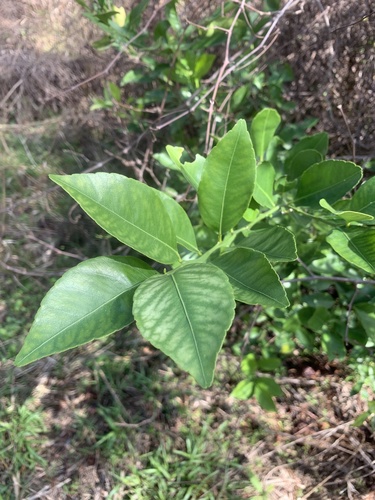
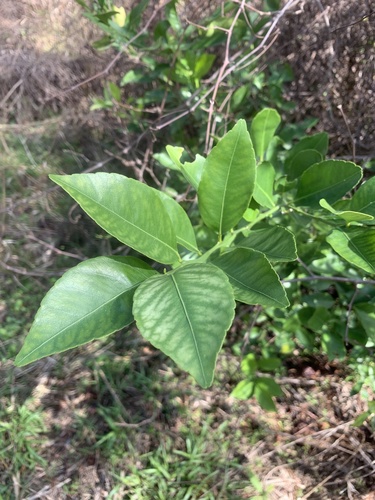
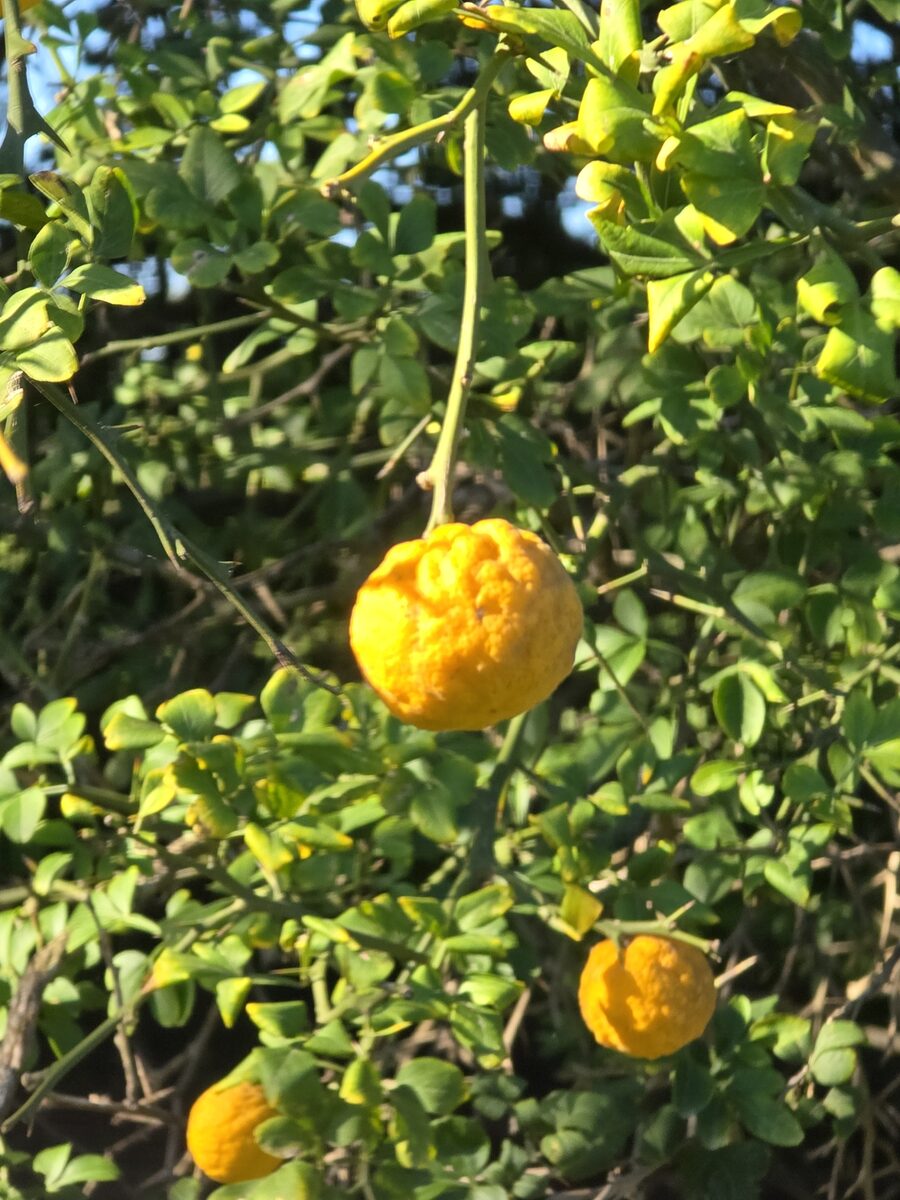
A shrub or tree. It grows 20 m tall. The leaves have 2-11 pairs of leaflets. They have pointed tips. There are very small teeth. The flowers are in clusters 15-25 cm long. They are in clusters at the ends of branches or in the axils of leaves. The fruit are 3-7 mm wide. The seeds are very small and black.
Edible Uses
The seeds are used as a spice and cooked with food.
Traditional Uses
The seeds are used as a spice. They are cooked with food.
This uses section is brief — help expand it
Medicinal Uses
The smoke from burning seeds is inhaled as a treatment for an ulcerated, syphilitic nose.
Known Hazards
The plant has been used as a fish poison.
Distribution
A subtropical plant. In China it grows in hill forests between 200-1,500 m above sea level. In Yunnan.
Where It Grows
Asia, Bhutan, China, Himalayas, India, Indochina, Indonesia, Laos, Malaysia, Myanmar, Philippines, SE Asia, Thailand, Vietnam,
Cultivation
A dioecious species, both male and female forms must be grown if seed is required.
Propagation
Seed - best sown as soon as it is ripe. Stored seed may requires up to 3 months cold stratification, though scarification may also help. Germination should take place within 6 months, though it might take another 12 months. Prick out the seedlings into individual pots when they are large enough to handle and grow them until large enough to plant out. Cuttings of half-ripe wood. Root cuttings, 3cm long, planted horizontally in pots. Good percentage. Suckers, removed when the plant is dormant, and planted direct into their permanent positions.
Synonyms
Also Known As
Kabu-kabu hutan, Kekabu hutan, Kekabu jawa, Membola, Memali
References (6)
- Ambasta, S.P. (Ed.), 2000, The Useful Plants of India. CSIR India. p 698
- Burkill, I.H., 1966, A Dictionary of the Economic Products of the Malay Peninsula. Ministry of Agriculture and Cooperatives, Kuala Lumpur, Malaysia. Vol 2 (I-Z) p 2327
- Fl. Brit. India 1:496. 1875
- Gardner, S., et al, 2000, A Field Guide to Forest Trees of Northern Thailand, Kobfai Publishing Project. p 105
- Ghorbani, A., et al, 2012, A comparison of the wild food plant use knowledge of ethnic minorities in Naban River Watershed Nature Reserve, Yunnan, SW China. Journal of Ethnobiology and Ethnomedicine; 8:17
Show all 6 references Hide references
- PROSEA handbook Volume 13 Spices. p 280