Paraserianthes lophantha
(Willd.) I. C. Nielsen
Cape Leeuwin wattle, Caped Wattle, Crested Wattle, Swamp Wattle, Brush wattle
iNaturalist· cc-by-nc
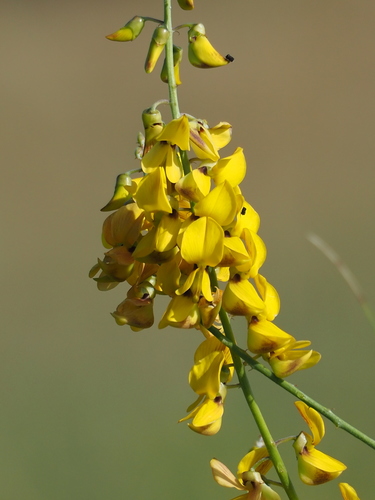
(c) vandelden, some rights reserved (CC BY-NC)
iNaturalist· cc-by-nc-sa
(c) c michael hogan, some rights reserved (CC BY-NC-SA), uploaded by c michael hogan
iNaturalist· cc-by-nc
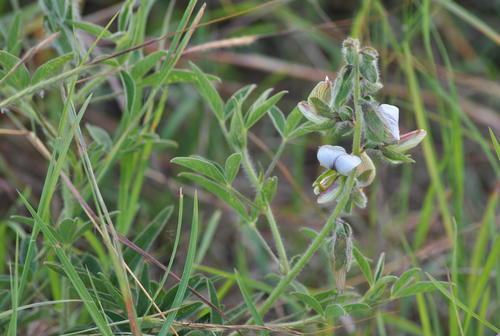
(c) Victor B., some rights reserved (CC BY-NC), uploaded by Victor B.
Description
A small slender tree. It grows up to 6-10 m tall and spreads 2-8 m across. The small branches are slightly ribbed. The leaves are feather like. They are twice divided. There are many small leaflets. The flowers are small and creamy yellow. They occur in large numbers. The stamens are long. The flowers occur in dense spikes in the axils of leaves. The spikes are 10 cm long. The fruit are long, flat, brownish pods. They are 8-12 cm long. They contain many black seeds. There are 6-12 seeds.
Edible Uses
The seed may sometimes be used as a vegetable as a substitute for petai (Parkia speciosa) or as a flavouring to replace jengkol (Archidendron jiringa).
Distribution
It grows in temperate and subtropical places. It grows along rivers and near the edges of forest. It can grow in moist well drained soils and dry soils. It does best in full sun. It can grow in arid places. In Indonesia it grows in mountain forests between 1,800-3,100 m above sea level. It suits hardiness zones 9-10. Tasmania Herbarium.
Where It Grows
Africa, Algeria, Asia, Australia*, Bolivia, Britain, Colombia, East Africa, Ecuador, Ethiopia, Hawaii, India, Indonesia*, Italy, Kenya, Morocco, New Zealand, Norfolk Is., North America, Pacific, Pakistan, Peru, SE Asia, South Africa, Southern Africa, South America, Spain, Tanzania, Tasmania, USA, Venezuela,
Cultivation
Plants are grown from seed. Seed germinate readily. It re-sprouts when cut.
Propagation
Seed - it has a hard seedcoat and may benefit from scarification before sowing to speed up germination. This can usually be done by pouring a small amount of nearly boiling water on the seeds (being careful not to cook them!) and then soaking them for 12 - 24 hours in warm water. By this time they should have imbibed moisture and swollen - if they have not, then carefully make a nick in the seedcoat (being careful not to damage the embryo) and soak for a further 12 hours before sowing.
Other Uses
The wood is of poor quality for fuel. The tree is very fast-growing and fixes atmospheric nitrogen. It can be used as a pioneer species in reforestation projects. It can be used for the rehabilitation of sand dunes, for soil protection and shelter belts, and as a shade tree.
Production
It is fast growing.
Notes
There are 4 Paraserianthes species. Some Paraserianthes have been transferred to Falcataria. It can be invasive. Also as Mimosaceae.
Synonyms
Also Known As
Pohon kemlaningan gunung
References (18)
- Bekele-Tesemma A., Birnie, A., & Tengnas, B., 1993, Useful Trees and Shrubs for Ethiopia. Regional Soil Conservation Unit. Technical Handbook No 5. p 80 (As Albizia lophantha)
- Bull. Mus. Natl. Hist. Nat., B, Adansonia 5:326. 1983
- Hibbert, M., 2002, The Aussie Plant Finder 2002, Florilegium. p 219
- Bodkin, F., 1991, Encyclopedia Botanica. Cornstalk publishing, p 62 (As Albizia lophantha)
- Brickell, C. (Ed.), 1999, The Royal Horticultural Society A-Z Encyclopedia of Garden Plants. Convent Garden Books. p 93 (As Albizia lophantha)
Show all 18 references Hide references
- Cundall, P., (ed.), 2004, Gardening Australia: flora: the gardener's bible. ABC Books. p 986
- Elliot, W.R., & Jones, D.L., 1982, Encyclopedia of Australian Plants suitable for cultivation. Vol 2. Lothian. p 170 (As Albizia lophantha)
- Etherington, K., & Imwold, D., (Eds), 2001, Botanica's Trees & Shrubs. The illustrated A-Z of over 8500 trees and shrubs. Random House, Australia. p 510
- Kew Plants of the World Online
- Lazarides, M. & Hince, B., 1993, Handbook of Economic Plants of Australia, CSIRO. p12 (As Albizia lophantha)
- Lord, E.E., & Willis, J.H., 1999, Shrubs and Trees for Australian gardens. Lothian. p11 (As Albizia lophantha)
- Marinelli, J. (Ed), 2004, Plant. DK. p 464
- Paczkowska, G . & Chapman, A.R., 2000, The Western Australian Flora. A Descriptive Calatogue. Western Australian Herbarium. p 330
- Palgrave, K.C., 1996, Trees of Southern Africa. Struik Publishers. p 221 (As Albizia lophantha)
- PROSEA handbook Volume 13 Spices. p 278
- Royal Botanic Gardens, Kew (1999). Survey of Economic Plants for Arid and Semi-Arid Lands (SEPASAL) database. Published on the Internet; http://www.rbgkew.org.uk/ceb/sepasal/internet [Accessed 28th April 2011]
- Sukarya, D. G., (Ed.) 2013, 3,500 Plant Species of the Botanic Gardens of Indonesia. LIPI p 432
- Tasmanian Herbarium Vascular Plants list p 39