Piper caninum
Blume
Java pepper
iNaturalist· cc-by-nc
(c) Ian Cowan, some rights reserved (CC BY-NC)
iNaturalist· cc-by-sa
(c) Steve Fitzgerald, some rights reserved (CC BY-SA)
iNaturalist· cc-by-sa
(c) Steve Fitzgerald, some rights reserved (CC BY-SA)
Description
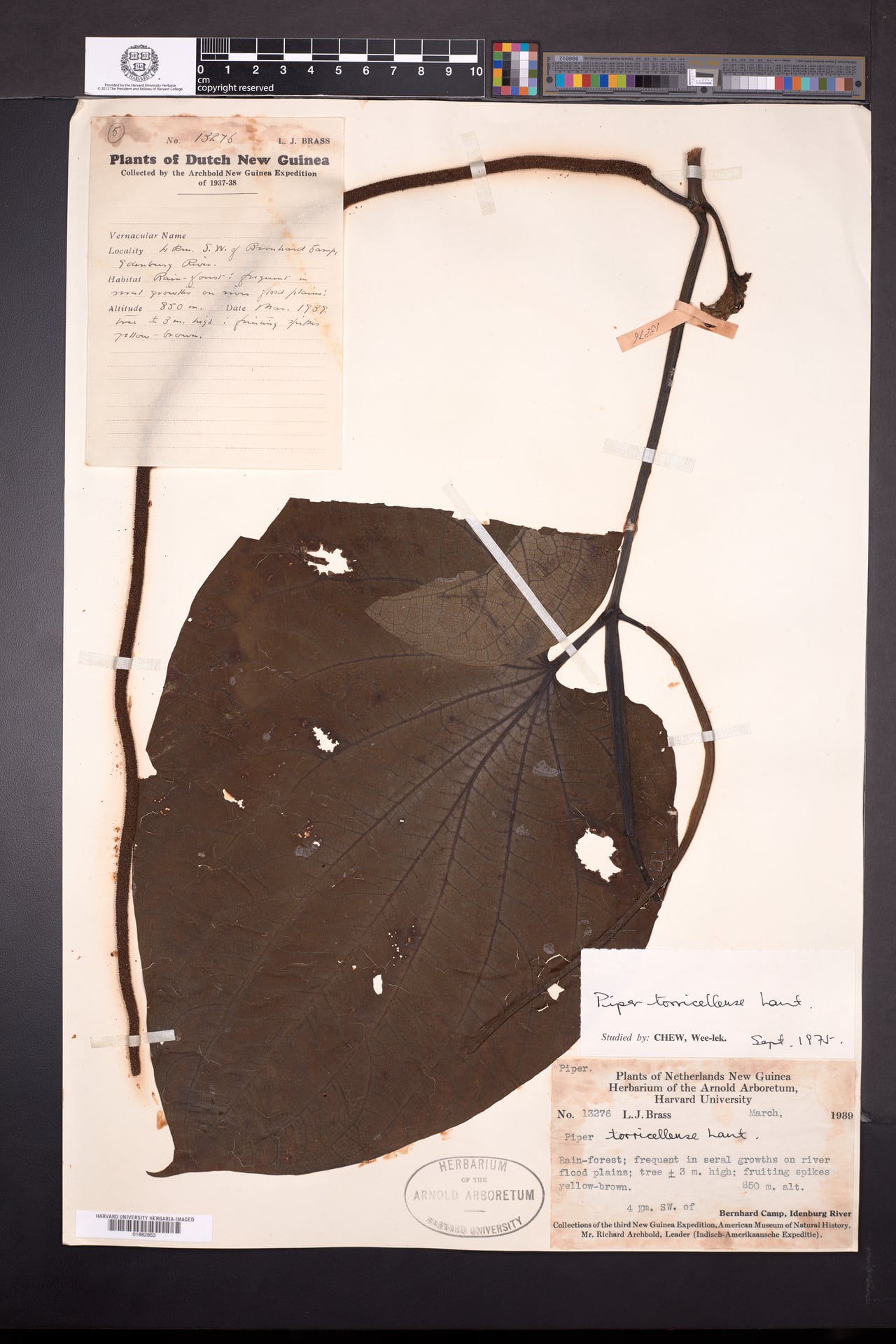
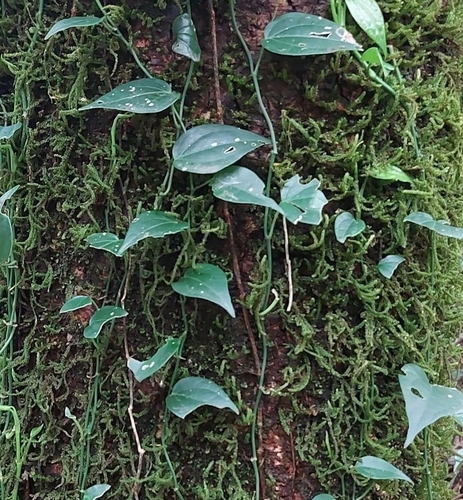
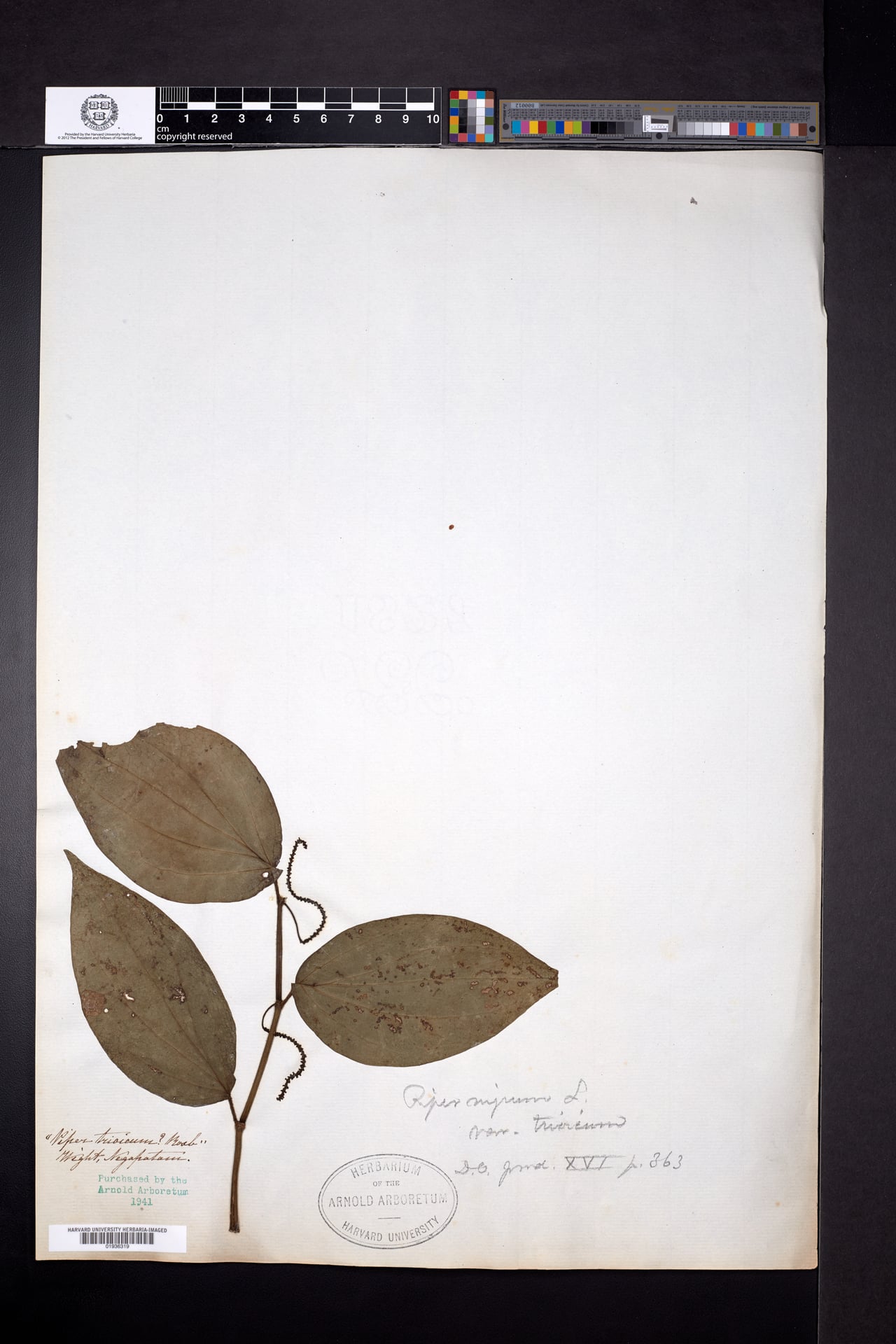
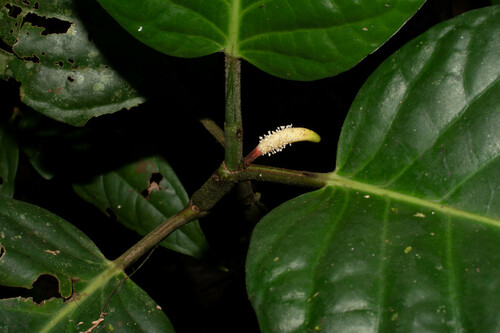
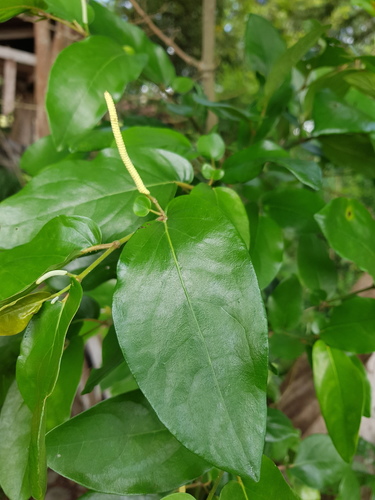
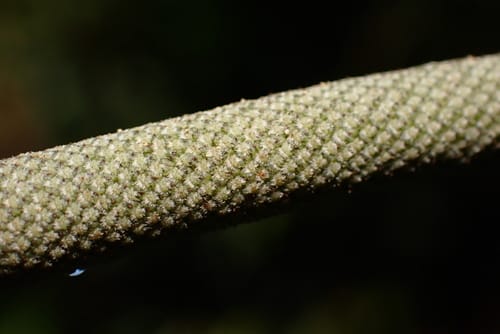
A slender climbing plant. Both the twigs and leaf stalks have scattered hairs. The leaf blade is oval and 14 cm long by 7 cm wide. Male and female flowers are separate. The female flowering organ is as long as the leaves. The male flowering shoots are longer. The fruiting body is longer than the leaves. The fruit is a berry and is round. They are 4 mm long by 3 mm wide and red.
Edible Uses
In Europe, cubeb was one of the valuable spices during the Middle Ages. It was ground as a seasoning for meat or used in sauces. A medieval recipe includes cubeb in making sauce sarcenes, which consists of almond milk and several spices. As an aromatic confectionery, cubeb was often candied and eaten whole. Ocet Kubebowy, a vinegar infused with cubeb, cumin and garlic, was used for meat marinades in Poland during the 14th century (Dembinska 1999, p. 199). Cubeb can be used to enhance the flavor of savory soups. Cubeb reached Africa by way of the Arabs. In Moroccan cuisine, cubeb is used in savory dishes and in pastries like makrouts, little diamonds of semolina with honey and dates. It also appears occasionally in the list of ingredients for the famed spice mixture Ras el hanout. In Indonesian cuisine, especially in Indonesian gulés (curries), cubeb is frequently used.
Traditional Uses
The fruit is used as a flavouring. The leaves are chewed with betel nut.
This uses section is brief — help expand it
Medicinal Uses
Physicians in the Islamic Golden Age distilled "water of al butm" (turpentine) from a mixture of herbal products, including cubeb. In Victorian and Edwardian England, cubeb was an antiseptic for gonorrhea treatment. William Wyatt Squire wrote in 1908 that cubeb berries "act specifically on the genitourinary mucous membrane. (They are) given in all stages of gonorrhea" and The National Botanic Pharmacopoeia printed in 1921 stated that cubeb was "an excellent remedy for flour albus or whites". A tincture of the compound appeared in the British Pharmacopoeia, and a gum with 1% cubebin, roughly equivalent to 30-60 grains of cubeb fruit, had become standardized as a drug, also called cubeb.
Distribution
A tropical plant. It grows in mixed forests. It occurs in the lowlands.
Where It Grows
Asia, Australia, Indochina, Indonesia, Malaysia, Myanmar, Pacific, Papua New Guinea, PNG, Philippines, SE Asia, Solomon Islands, Vietnam,
Cultivation
PROSEA handbook Volume 13 Spices. p 260
Propagation
Seed - New roots are formed quickly from stem nodes, making stem cuttings easy and reliable.
Other Uses
The plant is often found in the wild forming a dense mat of growth in light forest shade, and could also be used as a ground cover in a forest garden.
Synonyms
Also Known As
Buyo-buyo, Chambai, Detid, Lada hantu, Mrican, Sireh hutan, Sireh pacat, Tampadan, Ti(ee)u ch(os)
References (6)
- Burkill, I.H., 1966, A Dictionary of the Economic Products of the Malay Peninsula. Ministry of Agriculture and Cooperatives, Kuala Lumpur, Malaysia. Vol 2 (I-Z) p 1772
- Cooper, W. and Cooper, W., 2004, Fruits of the Australian Tropical Rainforest. Nokomis Editions, Victoria, Australia. p 398
- French, B.R., 2010, Food Plants of Solomon Islands. A Compendium. Food Plants International Inc. p 365
- PROSEA handbook Volume 13 Spices. p 261
- Sukarya, D. G., (Ed.) 2013, 3,500 Plant Species of the Botanic Gardens of Indonesia. LIPI p 1130
Show all 6 references Hide references
- World Checklist of Useful Plant Species 2020. Royal Botanic Gardens, Kew