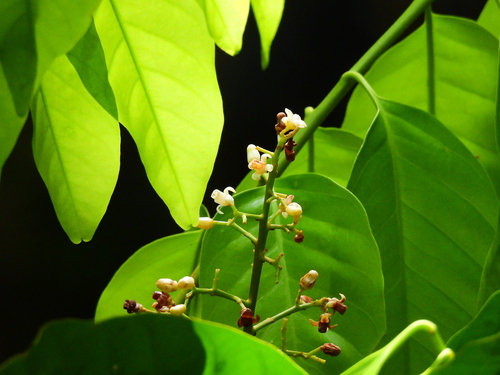
Azadirachta indica
Juss.
Neem tree
iNaturalist· cc-by-nc
(c) Hareesha A S, some rights reserved (CC BY-NC), uploaded by Hareesha A S
iNaturalist· cc-by-nc
(c) Aniruddha Singhamahapatra, some rights reserved (CC BY-NC), uploaded by Aniruddha Singhamahapatra
iNaturalist· cc-by-nc
(c) ijeez, some rights reserved (CC BY-NC)
Summary
Source: WikipediaAzadirachta indica, commonly known as neem, margosa, nimtree or Indian lilac, is a tree in the mahogany family Meliaceae. It is one of the two species in the genus Azadirachta. It is native to the Indian subcontinent and to parts of Southeast Asia, but is naturalized and grown around the world in tropical and subtropical areas. Its fruits and seeds are the source of neem oil. Nim is a Hindustani noun derived from Sanskrit nimba (निंब).
Description
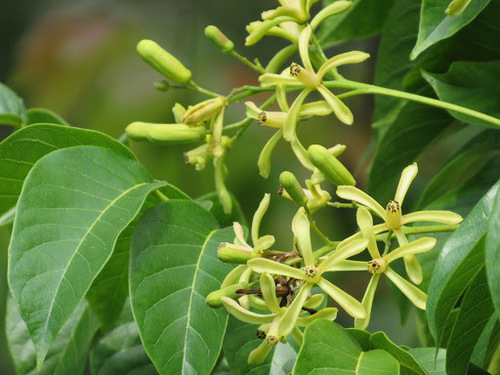
A medium sized tree. It grows to 5-18 m high. It has deep roots and normally keeps its leaves except when there is strong drought. The tree has a straight trunk and a rounded spreading crown. The bark is thick and grey. It is smooth when young and cracked when old. The leaves are alternate. The leaves are up to 35 cm long. They are made up of 7-17 leaflets. There is an odd number of leaflets. Each leaflet is 6-8 cm long. They are oblique with teeth along the edge. The flowers are small and white. Many flowers occur on branched stalks. The fruit are oval and smooth. They are 1.5 cm long by 1 cm wide. They are green when young but turn yellow or brown at maturity. There is one seed inside and it has a thick seed coat.
Edible Uses
Edible Parts: Flowers Fruit Leaves Oil Sap Edible Uses: Drink Oil Edible parts: Fruit, Leaves, Flowers, Sap. Young bitter leaves of Neem are cooked and eaten in India. They are eaten raw or fried along with other vegetables. Flowers are used for flavour; they are bitter unless cooked. Fully ripe fruit pulp is eaten raw or cooked and used for drinks. Refined oil from the seeds can be used for cooking. An fermented alcoholic drink is made from the sap of the branches . The fruits are eaten fresh or cooked, or prepared as a dessert or lemonade-type drink . They are often eaten as a pre-meal appetizer . Famine food. Leaves are sold in local markets. Leaves contain 15 % protein.
Traditional Uses
The young leaves are cooked and eaten in India. They are eaten raw or fried along with other vegetables. They have a bitter taste. They are used in soups and curries. The flowers are used to flavour food. They are fried in oil or ghee. The pulp of the fully ripe fruit is eaten raw or cooked or used for drinks. Oil from the seeds can be used for cooking after being refined. The leaves and flowers are bitter unless cooked. The sap from the branches is fermented into an alcoholic drink and drunk. Caution: Alcohol is a cause of cancer. Caution: Alkaloids in the fruit and bark contain alkaloids that cause vomiting.
Medicinal Uses
Anthelmintic Antifungal Antihaemorrhoidal Antiinflammatory Antiperiodic Antiseptic Astringent Depurative Diuretic Eczema Febrifuge Leprosy Malaria Mouthwash Odontalgic Purgative Skin Neem is considered to be a pharmacy in its own right in India, where every part of the plant is used medicinally . It contains a number of medically active substances including meliacins, triterpenoid bitters, tannins and flavonoids . It is one of the most important detoxicants in Ayurvedic medicine and a potent febrifuge . It is a bitter, tonic herb that acts as an alterative, clearing toxins, reducing inflammation, lowering fevers, promoting healing and generally improving bodily functions . It destroys a wide range of parasitic organisms and is spermicidal . It is not usually given to the very young, the old or the weak . Leaf teas are traditionally used to treat malaria, peptic ulcers and intestinal worms . The leaf juice is applied externally to ulcers, wounds, boils and eczema . An oil extracted from the seed is strongly antifungal, anthelmintic, antiseptic and purgative . It is applied externally in cases of leprosy and is also used as a vehicle for applying other active ingredients to the body . People use the twigs as toothbrushes, where they help to firm up the gums and prevent gum disease . Dentists find them effective in preventing periodontal disease . The bark is bitter and astringent . A decoction is applied externally to haemorrhoids. Neem oil is a powerful spermicide and can therefore be used as an inexpensive birth control method . Neem oil has been used traditionally as a topical treatment for skin symptoms in both humans and livestock, but it should not be ingested orally. Neem has proved effective against certain fungi that infect humans. In a laboratory study, neem preparations showed toxicity to cultures of 14 common fungi. The tree has suppressed several species of pathogenic bacteria, including Salmonella typhosa and Staphylococus aureus . Various parts of A. indica have anthelmintic, antiperiodic, antiseptic, diuretic and purgative actions, and are also used to treat boils, pimples, eye diseases, hepatitis, leprosy, rheumatism, scrofula, ringworm and ulcers .
Known Hazards
Neem extracts may have toxic effects on fish and other aquatic wildlife and on some beneficial insects. Therefore, care should be taken that any unused extracts are disposed of by exposing them to heat or sunlight to break down the active compounds. Alkaloids in the fruit and bark contain alkaloids that may cause vomiting.
Distribution
A tropical plant. It occurs in most of Africa in both wet and dry areas. It is salt tolerant. It grows in the Sahel. It originally comes from India. They can stand temperatures up to 49°C. Temperatures below freezing kill the plant. In Africa trees mostly grow between 50 an 1500 m altitude. They do best in dry subtropical climates. It will grow on dry shallow soils but grows on most kinds of soils. It can grow in soils with pH of 5 but does best with pH of 6.2. It can grow in arid places. It suits hardiness zones 11-12.
Where It Grows
Africa, Algeria, Andamans, Angola, Antigua and Barbuda, Argentina, Asia, Australia, Bahamas, Bangladesh, Barbados, Benin, Botswana, Brazil, Burkina Faso, Burundi, Cambodia, Cameroon, Cape Verde, Central Africa, Central African Republic, CAR, Central America, Chad, Chile, China, Colombia, Congo DR, Côte d'Ivoire, Cuba, Djibouti, Dominica, Dominican Republic, East Africa, East Timor, Ecuador, Egypt, Equatorial-Guinea, Eritrea, Eswatini, Ethiopia, Fiji, French Guiana, Gabon, Gambia, Ghana, Guatemala, Guianas, Guinea, Guinée, Guinea-Bissau, Guyana, Haiti, Honduras, India*, Indochina, Indonesia*, Ivory Coast, Jamaica, Kenya, Laos, Lesotho, Liberia, Madagascar, Malawi, Malaysia*, Maldives, Mali, Mauritania, Mauritius, Mediterranean, Mexico, Middle East, Morocco, Mozambique, Myanmar*, Namibia, Nepal, Nicaragua, Niger, Nigeria, North Africa, North America, Northeastern India, Pacific, Pakistan, Panama, Paraguay, Peru, Philippines, Puerto Rico, Rwanda, Sahel, Sao Tome and Principe, Saudi Arabia, SE Asia, Senegal, Seychelles, Sierra Leone, Singapore, Somalia, South Africa, Southern Africa, South America, Sri Lanka, St. Kitts and Nevis, St Lucia, St. Vincent and Grenadines, Sudan, Suriname, Swaziland, Tanzania, Thailand, Timor-Leste, Togo, Trinidad-Tobago, Tunisia, Uganda, United Arab Emirates, UAE, USA, Uruguay, Venezuela, Virgin Islands, West Africa, West Indies, Yemen, Zambia, Zimbabwe,
Cultivation
It is cultivated at elevations up to 1,500 metres, but grows best when below 700 - 800 metres. It grows best in areas where annual daytime temperatures are within the range 26 - 40c, but can tolerate 14 - 46c. Mature plants tolerate some frost, but seedlings are more sensitive. It prefers a mean annual rainfall in the range 450 - 1,200mm, but tolerates 200 - 2,000mm. Prefers a well-drained soil in a sunny position. Tolerates poor soils and is drought tolerant once established. The plant quickly dies in waterlogged soils, and does not succeed in deep dry sands where the dry-season water table lies below 18 metres. Tolerant of moderate soil salinity. Plants can tolerate fairly heavy shade during their first few years, though then require large amounts of light. Prefers a pH in the range 5.5 - 7, tolerating 5 - 7.5. The plant needs some control, for it may aggressively invade neighbouring areas and become a weed. A fast-growing tree, it can reach a height of 4 - 7 metres after 3 years, and 5 - 11 metres after 8 years. Trees may start flowering and fruiting at the age of 4 - 5 years, but economic quantities of seed are produced only after 10 - 12 years. Trees coppice freely, and early growth from coppice is faster than growth from seedlings. The plant also withstands pollarding well. Zimbabwe. Tree poduces 20 kg of fruit. Neem is a fast-growing tree, often reaching heights of 15-20 meters (50-66 feet) within 5-10 years under suitable conditions.
Propagation
Seed - best sown as soon as it is ripe, it does not require pre-treatment, though depulping and cleaning of seeds considerably improves the germination rate . The seed can be sown in a nursery seedbed, direct in situ or in containers, covering the seed with about 1cm of compost . Mature seeds germinate within a week, with a germination percentage of 75 - 90% . Seedlings can be potted up when they are about 5cm tall Air-layering. Root cuttings. Seeds planted in nurseries need to have roots pruned off regularly. Seedlings can be planted out after 14-18 weeks. A spacing of 5 x 10 m is suitable. Fruit fall naturally during the rainy season.
Other Uses
Biomass Charcoal Containers Fencing Fuel Green manure Hair Hedge Insecticide Lighting Oil Shelterbelt Soap making Soap making Soil conditioner Soil stabilization Tannin Teeth Weather protection Wood Agroforestry Uses: Being drought resistant with a well-developed root system capable of extracting nutrient from the lower soil levels, it is a suitable tree for dune-fixation The large crown makes it an effective shade tree, planted widely as an avenue tree in towns and villages and along roads in many tropical countries. Because of its low branching, it is a valuable asset for use as a windbreak Intercropping A. Indica with pearl millet, Pennisetum glaucum, has given good results in India Farmers in India use neem cake (the residue left after extracting oil from the seeds) as an organic manure and soil amendment. It is believed to enhance the efficiency of nitrogen fertilizers by reducing the rate of nitrification and inhibiting soil pests including nematodes, fungi, and insects. The leaves and small twigs are used as mulch and green manure .The dried leaves are insect repellent, they are used like mothballs in linen cupboards and also placed within books in libraries The neem tree is a potent insect repellent . The principal active compound is called azadirachtin . Extracts can be made from leaves and other tissues, but the seeds contain the highest concentrations of the compound It acts as an insect repellent, inhibiting feeding, and disrupting insect growth, metamorphosis and reproduction . Formulations based on neem do not usually kill insects directly but alter their behaviour in significant ways to reduce pest damage to crops, and reduce their reproductive potential . Azadirachtin affects insect physiology by mimicking a natural hormone. It has been shown to affect egg production and hatching rates . Azadirachtin can inhibit moulting, preventing larvae from developing into pupae. Many foliage-feeding species avoid plants treated with neem compounds or cease eating after ingesting the neem . Its has proven effective as an antifeedant on about 100 insect species . Thus the extracts work especially well to protect plants from defoliation without affecting beneficial pollinating insects like honeybees A traditional agricultural practice involves the production of ?neem tea?. The seeds are dried, crushed and soaked in water overnight to produce a liquid pesticide that can be applied directly to crops. Crushed seed kernels are also used as a dry pesticide application, especially to control stem borers on young plants. These homemade remedies are often very effective in repelling pests or acting on insects as a feeding deterrent. The strength of homemade preparations can vary due to the concentration of azadirachtin and other compounds in the seed, which can in turn depends on the genetic source of the seeds. It can also be affected by the process of handling and drying the seeds, contaminants in the water, and exposure to high temperatures or sunlight. The active compounds break down quickly, so an application of neem tea generally provides protection for only about 1 week. A non-drying oil extracted from the seed, called margosa oil, has insecticidal properties . It is also used in hair dressings . The oil can also be used as a fuel in lamps . The oil has long been produced in Asia on an industrial scale for soaps, cosmetics, pharmaceuticals and other non-edible products. The seed oil yield is sometimes as high as 50% of the weight of the kernel A resin, obtained from the trunk by wounding the bark, is added to soap, toothpaste and skin lotions . This high-protein material has potential as a food additive and is widely used in Southeast Asia as 'neem glue' People use the twigs as toothbrushes, and dentists find twigs effective in preventing periodontal disease The tree bark contains 12-14% tannins. This compares favourably with conventional tannin chemicals Wood - the grain is rough and does not polish well . It is highly prized for its insecticidal properties . The wood is used to make wardrobes, bookcases and closets, as well as packing cases because of its insect repellent quality . The wood is so highly valued as an insecticide that in some areas of Africa the tree is grown in hedges in order to provide easily obtained supplies of the wood . The main stem of the tree is also widely used to make posts for construction or fencing because the wood is termite resistant Charcoal made from the wood is of excellent quality and the wood has long been used as firewood . 1. Nectary - Flowers rich in nectar and pollen: Yes – Neem flowers produce nectar and attract pollinators such as bees. 2. Wildlife - Food (Fruit, Seeds, Leaf litter, Shelter, Nesting, Roosting): Yes – Neem trees provide shelter with their dense foliage. Some birds may eat the fruit, though the seeds are not a major food source for wildlife. The leaf litter can support insects and other small organisms. 3. Invertebrate Shelter (Overwintering sites, Leaf litter, Groundcover): Yes – Neem’s rough bark, leaf litter, and dense foliage can provide shelter and overwintering sites for invertebrates. 4. Pest Confuser (Smell): Yes – Neem is well known for its strong-smelling compounds, which act as natural pesticides and can repel or confuse pests. Special Uses Carbon Farming Coppice Food Forest Hedge
Production
It is a fast growing plant and can be 4-7 m in 3 years. A mature tree produces 20-50 kg of fruit. Trees can last for 100 years.
Other Information
Famine food. It is cultivated. Leaves are sold in local markets. The pulp of the fruit is especially eaten by children.
Notes
Leaves contain 15 % protein. There are 2 Azadirachta species. It is used in medicine and as an insect repellant. It has anticancer properties.
Synonyms
Also Known As
Bevu, Dogon yaro, Geed hindi, Hithigas, Indian lilac, Ka dau, Kadu-nimb, Limba, Limbo, Limdo, Mahaneem, Mandvi, Margosa tree, Mirimiri, Neem dari, Niem, Nim, Nimba, Nimbay, Nimboni, Nimkauli, Nimpata, Nimu, Phak ka dao, Phak ki nin, Phak sdau, Pichumarda, Sadao, Sau dau, Sdao, Sdav, Svay reanov, Tama, Tamaga, Turi forta, Vapa chettu, Vembu, Vepa, Veypa marum
References (95)
- Ambasta S.P. (Ed.), 2000, The Useful Plants of India. CSIR India. p 64, 361
- Anderson, E. F., 1993, Plants and people of the Golden Triangle. Dioscorides Press. p 203
- Ara, R. I. T., 2015, Leafy Vegetables in Bangladesh. Photon eBooks. p 87
- Arinathan, V., et al, 2007, Wild edibles used by Palliyars of the western Ghats, Tamil Nadu. Indian Journal of Traditional Knowledge. 6(1) pp 163-168
- Bandyopadhyay, S. et al, 2009, Wild edible plants of Koch Bihar district, West Bengal. Natural Products Radiance 8(1) 64-72
Show all 95 references Hide references
- Bandyopadhyay, S., et al, 2012, A Census of Wild Edible Plants from Howrah District, West Bengal, India. Proceedings of UGC sponsored National Seminar 2012
- Banerjee, A., et al, 2013, Ethnobotanical Documentation of Some Wild Edible Plants in Bankura District, West Bengal, India. The Journal of Ethnobiology and Traditional Medicine. Photon 120 (2013) 585-590
- Barwick, M., 2004, Tropical and Subtropical Trees. A Worldwide Encyclopedic Guide. Thames and Hudson p 40
- Bekele-Tesemma A., Birnie, A., & Tengnas, B., 1993, Useful Trees and Shrubs for Ethiopia. Regional Soil Conservation Unit. Technical Handbook No 5. p 100
- Belem, M., et al, 2017, Strategy of Conservation and Protection of Wild Edible Plants Diversity in Burkina Faso. ANADOLU 27 (2) 2017, 82- 90
- Bernholt, H. et al, 2009, Plant species richness and diversity in urban and peri-urban gardens of Niamey, Niger. Agroforestry Systems 77:159-179
- Bircher, A. G. & Bircher, W. H., 2000, Encyclopedia of Fruit Trees and Edible Flowering Plants in Egypt and the Subtropics. AUC Press. p 49
- Bohra, N., et al, 2017, Ethnobotany of wild edible plants traditionally used by the local people in the Ramnagar regions from Nainital District, Uttarakhand, India. Biolife 5(1): 12-19
- Bole, P.V., & Yaghani, Y., 1985, Field Guide to the Common Trees of India. OUP p 83
- Brown, D., 2002, The Royal Horticultural Society encyclopedia of Herbs and their uses. DK Books. p 137
- Bunderson, W. T. et al, 2002, Common Agroforestry Species in Malawi. Malawi Agroforestry Extension Project, Pubication No. 46, Lilongwe. p 31
- Burkill, H. M., 1985, The useful plants of west tropical Africa, Vol. 4. Kew.
- Cengel, D. J. & Dany, C., (Eds), 2016, Integrating Forest Biodiversity Resource Management and Sustainable Community Livelihood Development in the Preah Vihear Protected Forest. International Tropical Timber Organization p 120
- Chauhan, S. H., et al, 2018, Consumption patterns of wild edibles by the Vasavas: a case study from Gujarat, India. Journal of Ethnobiology and Ethnomedicine (2018) 14:57
- Chatterjee, A. S., 1997, Fruit Trees in Cambodian Home Gardens. Trainers' training manual. Home garden series No.3 p 51
- Choudhary, S., 1999, Ethnobotany of Janjangbureh Island, The Gambia, West Africa. Honors thesis Dept. Biology City University of New York.
- Chowdery, T., et al, 2014, Wild edible plants of Uttar Dinajpur District, West Bengal. Life Science Leaflets. 47:pp 20-36 http://lifesciencesleaflets.ning.com
- Chowdhury, M. & Mukherjee, R., 2012, Wild Edible Plants Consumed by Local Communities of Maldah of West Bengal, India. Indian J.Sci.Res.3(2) : 163-170
- Coronel, R.E., 1982, Fruit Collections in the Philippines. IBPGR Newsletter p 9
- Cruz-Garcia, G. S., & Price, L. L., 2011, Ethnobotanical investigation of 'wild' food plants used by rice farmers in Kalasin, Northeast Thailand. Journal of Ethnobiology and Ethnomedicine 7:33
- Dharani, N., 2002, Field Guide to common Trees & Shrubs of East Africa. Struik. p 55
- Djihounouck, Y., et al, 2018, Diversité Et Importance Socio-Economique Des Espèces Fruitières Sauvages Comestibles En Zone Kasa (Sud-Ouest Du Sénégal). European Scientific Journal December 2018 edition Vol.14, No.36 ISSN: 1857 – 7881
- Etherington, K., & Imwold, D., (Eds), 2001, Botanica's Trees & Shrubs. The illustrated A-Z of over 8500 trees and shrubs. Random House, Australia. p 109
- Facciola, S., 1998, Cornucopia 2: a Source Book of Edible Plants. Kampong Publications, p 149
- FAO, 1988, Traditional Food Plants, FAO Food and Nutrition Paper 42. FAO Rome p 88
- Flora of Pakistan. www.eFloras.org
- GAMMIE,
- Gangwar, A. K. & Ramakrishnan, P. S., 1990, Ethnobotanical Notes on Some Tribes of Arunachal Pradesh, Northeastern India. Economic Botany, Vol. 44, No. 1 pp. 94-105
- Gardner, S., et al, 2000, A Field Guide to Forest Trees of Northern Thailand, Kobfai Publishing Project. p 115
- GUPTA & KANODIA,
- Harris, F. M. A. and Mohammed, S., 2003, Relying on Nature: Wild Foods in Northern Nigeria. Ambio Vol. 32 No. 1. p 25-30
- Hearne, D.A., & Rance, S.J., 1975, Trees for Darwin and Northern Australia. AGPS, Canberra p 28, Pl 8
- Jackes, B.R., 2001, Plants of the Tropics. Rainforest to Heath. An Identification Guide. James Cook University. p 63
- Jacquat, C., 1990, Plants from the Markets of Thailand. D.K. Book House p 74
- Japanese International Research Centre for Agricultural Science www.jircas.affrc.go.jp/project/value_addition/Vegetables
- Jardin, C., 1970, List of Foods Used In Africa, FAO Nutrition Information Document Series No 2.p 55 (As Antelaea azadirachta)
- Kachenchart, B., et al, 2008, Phenology of Edible Plants at Sakaerat Forest. In Proceedings of the FORTROP II: Tropical Forestry Change in a Changing World. Bangkok, Thailand. (As var. siamensis)
- Kahlon, L. K. & Singh, R., 2019, Traditional knowledge & Dynamics of edible plants of primitive tribal group ‘Paudi Bhuyan’ with changing demography migration patterns in Northern Odisha. Indian Journal of Traditional Knowledge Vol 18(1), pp 7-15
- Karim, F. M. & Dakheel, A, J., 2006, Salt-tolerant plants of the United Arab Emirates. 2006. International Center for Biosaline Agriculture, Dubai, UAE. p 125
- Khumgratok, S., Edible Plants in Cultural Forests of Northeastern Thailand. Mahasarakham University Thailand. (As Azadirachta indica var. siamensis)
- Kintzios, S. E., 2006, Terrestrial Plant-Derived Anticancer Agents and Plant Species Used in Anticancer research. Critical Reviews in Plant Sciences. 25: pp 79-113
- Kiran, K. C., et al, 2019, Diversity and Seasonal Availability of Potential Wild Edible Plants from Vidarbha Region of Maharashtra State, India. Int.J.Curr.Microbiol.App.Sci (2019) 8(2): 1434-1446
- Krishen P., 2006, Trees of Delhi, A Field Guide. DK Books. p 242
- Latham, P., 2004, Useful Plants of Bas-Congo province. Latham & DFID p 46
- Latham, P. & Mbuta, A. K., 2014, Useful Plants of Bas-Congo Province, Democratic Republic of Congo. Volume 1. Salvation Army. p 67
- Luczaj, L., et al, 2021, Wild food plants and fungi sold in the markets of Luang Prabang, Lao PDR. Journal of Ethnobiology and Ethnomedicine (2021) 17:6
- Martin, F.W. & Ruberte, R.M., 1979, Edible Leaves of the Tropics. Antillian College Press, Mayaguez, Puerto Rico. p 92, 205
- Maydell, H. von, 1990, Trees and shrubs of the Sahel: their characteristics and uses. Margraf. p 173
- Mbuya, L.P., Msanga, H.P., Ruffo, C.K., Birnie, A & Tengnas, B., 1994, Useful Trees and Shrubs for Tanzania. Regional Soil Conservation Unit. Technical Handbook No 6. p 112
- Maikhuri, R, K, and Gangwar, A. K., 1993, Ethnobiological Notes on the Khasi and Garo Tribes of Meghalaya, Northeast India, Economic Botany, Vol. 47, No. 4, pp. 345-357
- Maydell, H. von, 1990 Trees and shrubs of the Sahel: their characteristics and uses. Margraf. p
- Medhi, P. & Borthakur, S. K., 2012, Phytoresources from North Cachur Hills of Assam -3: Edible plants sold at Hflong market. Indian Journal or Natural Products and Resources. 3(1) pp 84-109
- Mem. Mus. Hist. Nat. 19:221, t. 2, fig. 5. 1830
- Natuhara, Y., et al, 2011, Uses of trees in paddy fields in Champasak Province, Southern Lao PDR. Landscape and Ecological Engineering. p 7
- Onu P. N. and Aniebo A. O., 2013, Toxicity and nutritional assessment of aqueous Azadirachta indica (neem) leaf extract in broiler chicks, International Journal of Biosciences, vol.3, no.6, p.172.
- Paczkowska, G. & Chapman, A.R., 2000, The Western Australian Flora. A Descriptive Catalogue. Western Australian Herbarium. p 294
- Partha, P., 2014, Ethnobotany of the Laleng (Patra) Community in Bangladesh. Journal of Pharmacognosy and Phytochemistry. 2(6):173-184
- Patiri, B. & Borah, A., 2007, Wild Edible Plants of Assam. Geethaki Publishers. p 24
- Phangchopi, U., et al, 2015, Diversity of wild edible plants in Marat Longri Wildlife Sanctuary, Assam. Indian Journal of Natural Products and Resources Vol. 6(4), December 2015 pp. 305-313
- Prachi, K., et al, 2012, Underutilized wild fruits of North Maharashtra. Journal of Research in Plant Sciences. (2012) 1:071-076
- Pradhan, R., et al, 2020, Potential Wild Edible Plants and its Significance in Livelihood of Indigenous People of Male Mahadeshwara Hills, Karnataka. Economic Affairs Vol. 64, No. 4 pp. 01-14
- Prixar, S., et al, 2006, Species composition, distribution and management of trees in paddy fields in central Laos. p 14
- Rajendra, K.C., 2014. Prominent Non-Wood Forest Products of Te- rai and Siwalik Regions in Nepal. Food and Agriculture Organization, Kathmandu, Nepal. p 79
- Recher, P, 2001, Fruit Spirit Botanical Gardens Plant Index. www.nrg.com.au/~recher/ seedlist.html p 4
- Reddy, B. M., 2012, Wild edible plants of Chandrapur district, Maharashtra, India. Indian Journal of Natural Products and Resources. 3(1) pp 110-117
- Royal Botanic Gardens, Kew (1999). Survey of Economic Plants for Arid and Semi-Arid Lands (SEPASAL) database. Published on the Internet; http://www.rbgkew.org.uk/ceb/sepasal/internet [Accessed 3rd May 2011]
- Sahni, K.C., 2000, The Book of Indian Trees. Bombay Natural History Society. Oxford. p 55
- Saikia, M., 2015, Wild edible vegetables consumed by Assamese people of Dhemaji District of Assam, NE India and their medicinal values. Archives of Applied Science Research, 2015, 7 (5):102-109 (As Melia indica)
- Sarma, H., et al, 2010, Updated Estimates of Wild Edible and Threatened Plants of Assam: A Meta-analysis. International Journal of Botany 6(4): 414-423
- Sarvalingam, A., et al, 2014, Wild edible plant resources used by the Irulas of the Maruthamalai Hills, Southern Western Ghats, Coimbatore, Tamil Nadu. Indian Journal of Natural Products and Resources 5(2):198-201
- Sawian, J. T., et al, 2007, Wild edible plants of Meghalaya, North-east India. Natural Product Radiance Vol. 6(5): p 413
- SAXENA,
- Selvam, V., 2007, Trees and shrubs of the Maldives. RAP Publication No. 2007/12 p 38
- SHANKARNARAYAN & SAXENA,
- SHORTT,
- Singh, H.B., Arora R.K.,1978, Wild edible Plants of India. Indian Council of Agricultural Research, New Delhi. p 39
- Sujanapal, P., & Sankaran, K. V., 2016, Common Plants of Maldives. FAO & Kerala FRI, p 49
- Sukarya, D. G., (Ed.) 2013, 3,500 Plant Species of the Botanic Gardens of Indonesia. LIPI p 142
- Swaminathan, M.S., and Kochnar, S.L., 2007, An Atlas of Major Flowering Trees in India. Macmillan. p 77
- Tanaka, Y & Van Ke, N., 2007, Edible Wild Plants of Vietnam. Orchid Press. p 93
- Terra, G.J.A., 1973, Tropical Vegetables. Communication 54e Royal Tropical Institute, Amsterdam, p 27
- Thorng, R., et al, 2015, Roles of Wild Food Plants in Ethnic Group Communities in Mondulkiri Province, Northeastern Cambodia. Journal of Mekong Societies Vol.11 No.2 May-August 2015 pp. 1-17
- Toppo, P. et al, 2016, Wild edible plants of Dhamtari district of Chhattisgarh, India. Van Sangyan Vol. 3, No. 4
- Turreira Garcia, N., et al, 2017, Ethnobotanical knowledgeof the Kuy and Khmer people in Prey Lang, Cambodia. Cambodian Journal of Natural History 2017 (1): 76-101
- WATT
- Wild edible plants of Himachal Pradesh
- World Checklist of Useful Plant Species 2020. Royal Botanic Gardens, Kew
- www.worldagroforestrycentre.org/sea/products/afdbases/af
- Yasukawa, K., Medicinal and Edible Plants as Cancer Preventive Agents. Drug Discovery Research in Pharmacognosy. p185 www.intechopen.com
- Young, J., (Ed.), 2001, Botanica's Pocket Trees and Shrubs. Random House. p 120