Arcangelisia gusanlung
Lo
Gu shan long
gbif· cc-by
Royal Botanic Gardens, Kew
gbif· cc-by
Royal Botanic Gardens, Kew
Description
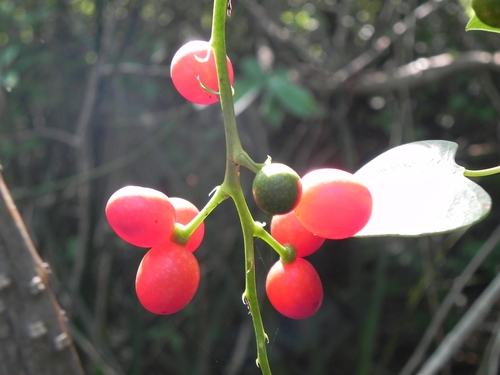
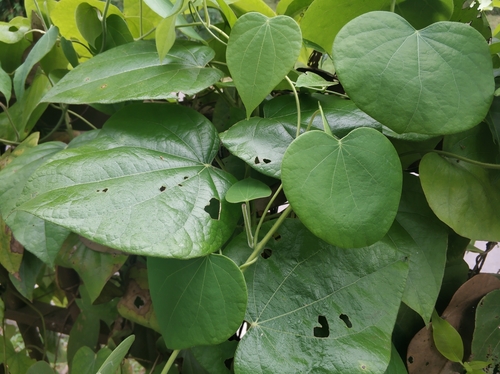
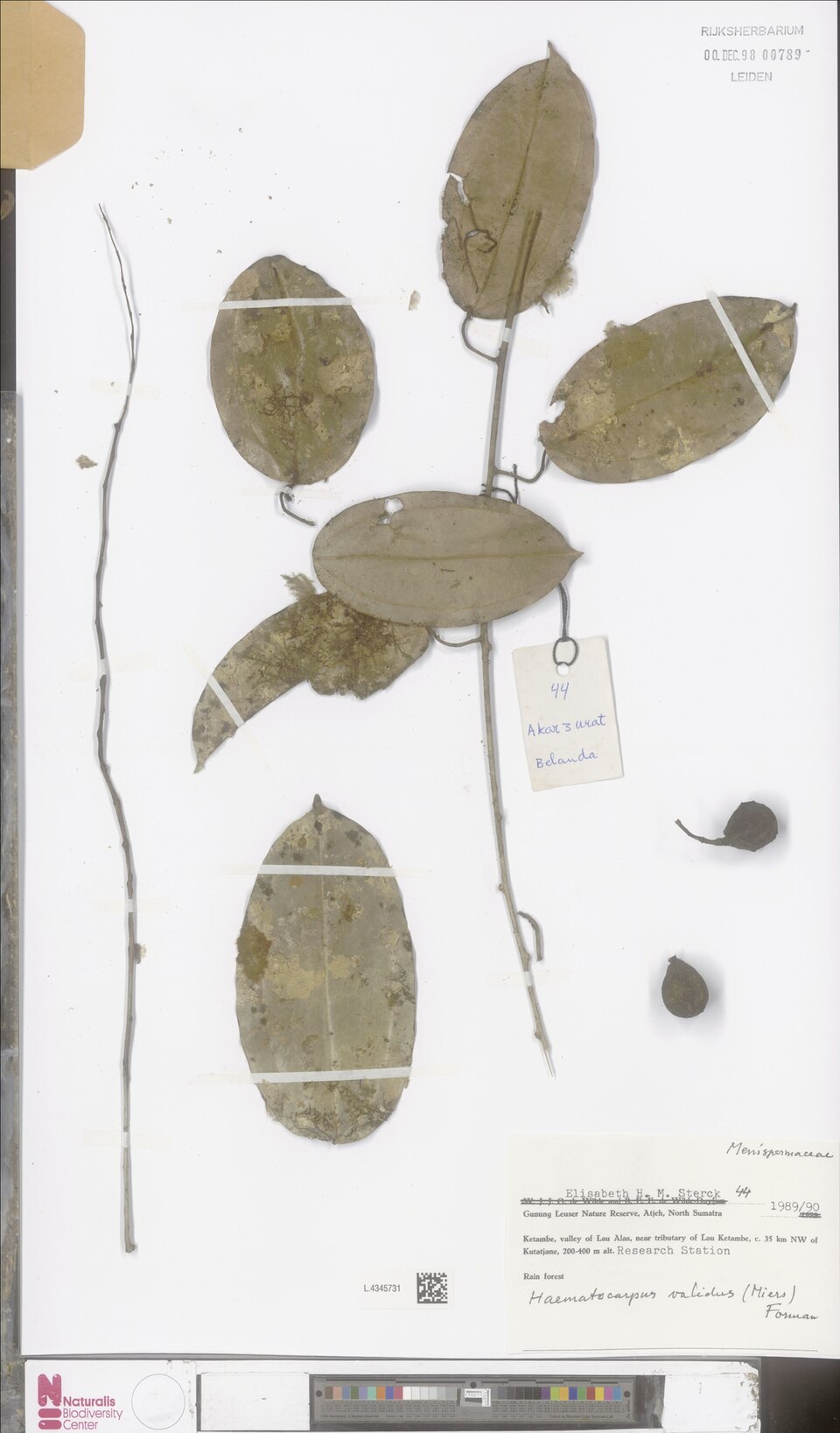
A large woody vine. It is up to 10 m long. The stems and old branches are grey. They have lines along them. The leaves have stalks which are shorter than the leaf blade. The leaf blade is leathery and oval. It is 8-13 cm long by 6-9.5 cm wide. It is cup shaped near the tip. Male flowers are usually on old stems. The male flower parts are in 3 rings.
Traditional Uses
CAUTION Many related plants are poisonous.
This uses section is brief — help expand it
Medicinal Uses
The stems are used in traditional medicine and have anticancer properties.
Known Hazards
Many related plants in this genus are poisonous.
Distribution
It is a tropical plant. It grows in forests in Hainan in China.
Where It Grows
Asia, China,
Cultivation
A dioecious species, both male and female forms need to be grown if fruit and seed are required.
Other Uses
This species is closely related to Arcangelisia flava and is very likely to have the same range of uses. These are:- A yellow dye is extracted from the woody stem. This is due mainly to the presence of the alkaloid berberine in the stem
Notes
There are 4 Arcangelisia species. They occur in SE Asia. The stems are used in medicine. They have anticancer properties.
Synonyms
References (2)
- Altschul, S.V.R., 1973, Drugs and Foods from Little-known Plants. Notes in Harvard University Herbaria. Harvard Univ. Press. Massachusetts. no. 999
- Lo Hsienshui, Chen Tao, Menispermaceae. Flora of China.