Cassia javanica
L.
Pink-and-white shower, Apple-blossum Cassia
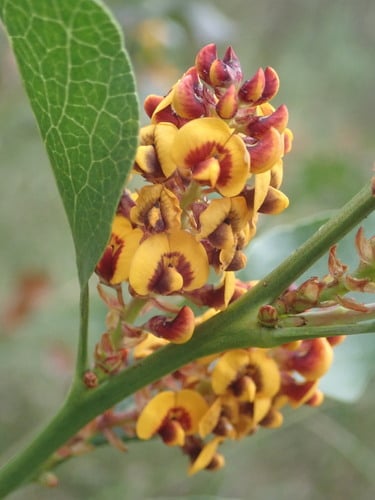
iNaturalist· cc-by-nc
(c) Sophia Yudina, some rights reserved (CC BY-NC), uploaded by Sophia Yudina
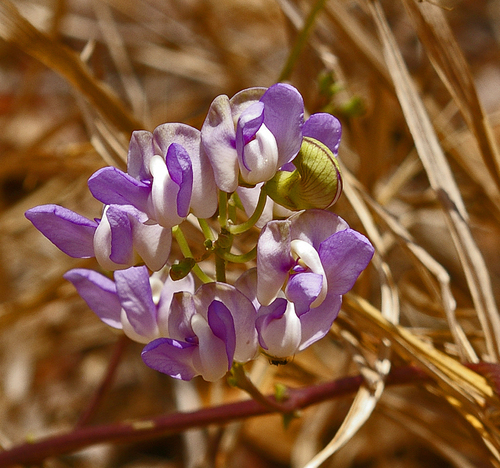
iNaturalist· cc-by-nc-sa
(c) Mauricio Mercadante, some rights reserved (CC BY-NC-SA)
iNaturalist· cc-by-nc
(c) magdastlucia, some rights reserved (CC BY-NC), uploaded by magdastlucia
Summary
Source: WikipediaCassia javanica, also known as Java cassia, pink shower, apple blossom tree, rainbow shower tree, and Palawan cherry, is a species of tree in the family Fabaceae. Its origin is in Southeast Asia, but it has been extensively grown in tropical areas worldwide as a garden tree owing to its beautiful crimson and pink flower bunches.
Description
A tree up to 15 m tall. The bark is brown and smooth. The branches are spreading giving an umbrella like crown. It loses its leaves during the year. The leaves are feathery and 15-30 cm long. They are made up of 8-14 pairs of leaflets. The leaflets are 3-5 cm long. They are oval and rounded at the tip. They have short stalks. They are smooth and soft to touch. The flowers are pink and in clusters of about 10 flowers. They are on long slender stalks. The pods are 20-60 cm long and contain 50-75 seeds. The seeds are black and corky and 1-1.5 cm across. They are greenish-brown.
Edible Uses
The seeds are traditionally chewed with betel pepper leaves. The seeds, leaves, and plant as a vegetable are edible portions.
Traditional Uses
Seeds chewed with betel pepper leaves.
This uses section is brief — help expand it
Medicinal Uses
It is used medicinally as a substitute to Cassia fistula for treating constipation, colic, chlorosis and urinary disorders. Its leaves are effective against herpes simplex and the bark of C. javanica is one of the ingredients in ayurvedic and other traditional medicine antidiabetic formulations. C. javanica yields a lightweight to heavy hardwood that is used for general construction, furniture and cabinet making. The bark of C. javanica is used for tanning in the leather processing industry.
Distribution
A tropical plant. It is native to Indonesia. It grows in the plains in India. It suits hardiness zones 11-12. In XTBG Yunnan.
Where It Grows
Africa, Asia, Australia, Cambodia, China, East Africa, Hawaii, India, Indonesia, Indochina, Laos, Malaysia, Mozambique, Myanmar, Nepal, Pacific, Pakistan, Philippines, Sao Tome and Principe, SE Asia, Thailand, Timor-Leste, USA, Vietnam, West Africa, Zimbabwe,
Cultivation
Plants can be grown from seeds. The seeds need treatment to break the hard seed coat. Plants can also be grown by softwood cuttings.
Propagation
Seed - scarifying the seed, or pre-soaking in warm water for 12 - 24 hours can improve germination rates. Germination rates of 20 - 70% have been recorded, with the seed taking from 5 days to 1 year to germinate. Fresh seed can be stored for only 3 weeks in airtight containers, but storing dry seeds for over one year is also reported.
Other Uses
The bark has been used for tanning, but the amount of tannin is comparatively low. The heartwood is light-yellow when first cut, becoming red to pale orange-brown with age; it is demarcated, but not always sharply, from the 2 - 5cm wide band of sapwood. The texture is moderately fine; the grain interlocked; the taste bitter. The wood is moderately heavy, hard, strong, moderately durable when exposed to the weather or in contact with the ground, but very durable for interior work. It has poor resistance to termites and other insects. It is used for general construction, furniture and cabinet making. Smaller pieces of the wood are used for fuel and to make charcoal. The tree is planted to provide shade in plantations.
Production
Plants are fairly short lived.
Notes
There are 100 Cassia species. This group has been revised to a smaller more consistent group. Also as Caesalpinaceae.
Synonyms
Also Known As
Bo proek, Javanese Cassia, Kanpaphruek, Kasiid, Muong hoa-dao, Rainbow shower
References (16)
- Barwick, M., 2004, Tropical and Subtropical Trees. A Worldwide Encyclopedic Guide. Thames and Hudson p 94
- Bole, P.V., & Yaghani, Y., 1985, Field Guide to the Common Trees of India. OUP p 61
- Bodkin, F., 1991, Encyclopedia Botanica. Cornstalk publishing, p 221
- Burkill, H. M., 1985, The useful plants of west tropical Africa, Vol. 1. Kew.
- Cundall, P., (ed.), 2004, Gardening Australia: flora: the gardener's bible. ABC Books. p 337
Show all 16 references Hide references
- Etherington, K., & Imwold, D., (Eds), 2001, Botanica's Trees & Shrubs. The illustrated A-Z of over 8500 trees and shrubs. Random House, Australia. p 187
- Gardner, S., et al, 2000, A Field Guide to Forest Trees of Northern Thailand, Kobfai Publishing Project. p 172
- Grubben, G. J. H. and Denton, O. A. (eds), 2004, Plant Resources of Tropical Africa 2. Vegetables. PROTA, Wageningen, Netherlands. p 560 (Has Cassia agnes as a synonym)
- Hibbert, M., 2002, The Aussie Plant Finder 2002, Florilegium. p 61
- Jacquat, C., 1990, Plants from the Markets of Thailand. D.K. Book House p 44
- Krishen P., 2006, Trees of Delhi, A Field Guide. DK Books. p 234
- Llamas, K.A., 2003, Tropical Flowering Plants. Timber Press. p 202
- Sp. pl. 1:379. 1753
- World Checklist of Useful Plant Species 2020. Royal Botanic Gardens, Kew
- Xu, Z., Tao, G. & Tan J., 1988, Tropical Wild Flowers and Plants in Xishuangbanna, Agricultural Publishing House. photo 12 (Var indo-chinensis)
- Young, J., (Ed.), 2001, Botanica's Pocket Trees and Shrubs. Random House. p 203