Balaka seemannii
(H. Wendl.) Becc.
Spear palm
iNaturalist· cc-by-nc
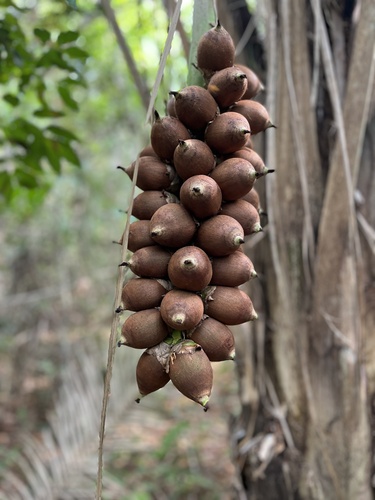
(c) Igor Azevedo, some rights reserved (CC BY-NC), uploaded by Igor Azevedo
iNaturalist· cc-by-nc
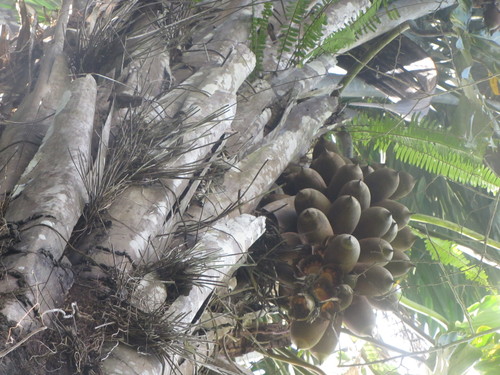
(c) Igor Azevedo, some rights reserved (CC BY-NC), uploaded by Igor Azevedo
iNaturalist· cc-by-nc-sa
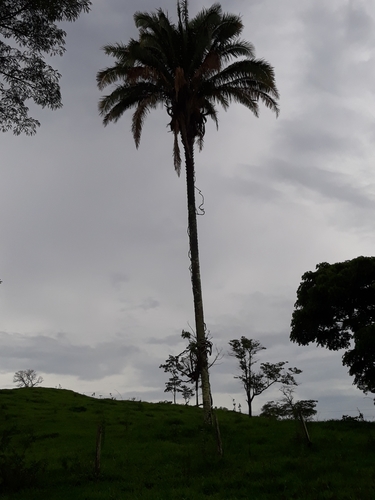
(c) LannaMountainsCharlie, some rights reserved (CC BY-NC-SA), uploaded by LannaMountainsCharlie
Summary
Source: WikipediaBalaka seemannii is a species of flowering plant in the family Arecaceae that is endemic to Fiji; growing in mixed forests on Vanua Levu and Taveuni islands.
Description
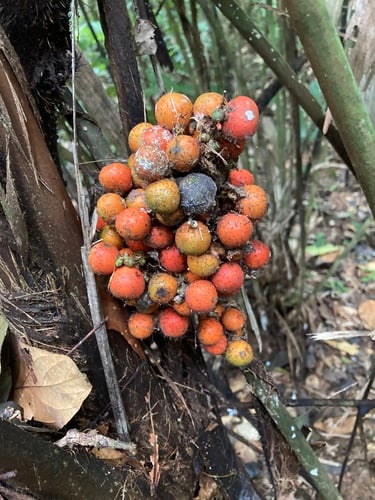
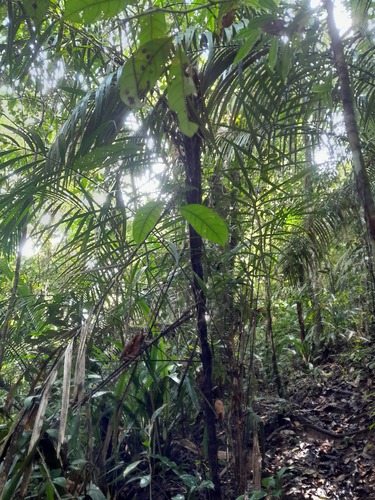
A small palm. It grows to 4-8 m high. The trunk is 2-5 cm across. The trunk has prominent ridges. The leaves are 2 m long. The leaf stalk is 10-25 cm long. There are 10-12 leaflets on each side of the stalk. The leaflets are 23 cm long and 10 cm across at the tip. They are triangular. The flowering stalks is branched and 3.5-23 cm long. The fruit are red and 1.4-1.9 cm long and 5-10 mm across. The immature fruit is edible.
Edible Uses
The kernel of immature fruit is edible, and immature fruit can be eaten fresh.
Traditional Uses
The kernel of the immature fruit is edible.
This uses section is brief — help expand it
Distribution
A tropical plant. It occurs in Fiji on Vanua Levu. It occurs from sea level to 1,000 m altitude. It grows in dense forests. It needs well drained soil. They need a shady location.
Where It Grows
Australia, Fiji, Hawaii, Pacific,
Cultivation
Plants are grown from seed. Ripe seed germinate quickly. Seed should not be allowed to dry out. Seed from single palms will grow. Plants can be transplanted providing the roots are not allowed to dry out.
Production
Plants grow quickly.
Notes
There are 7 Balaka species.
Synonyms
References (9)
- Ann. Jard. Bot. Buitenzorg 2:91. 1885
- Balick, M.J. and Beck, H.T., (Ed.), 1990, Useful palms of the World. A Synoptic Bibliography. Colombia p 205
- Dowe, J.L., 1989, Palms of the South-West Pacific. Palm and Cycad Society of Australia. p 80
- Jones, D.L., 1994, Palms throughout the World. Smithtonian Institution, Washington. p 140
- Jones, D.L., 2000, Palms of Australia 3rd edition. Reed/New Holland. p 123
Show all 9 references Hide references
- Reis, S. V. and Lipp, F. L., 1982, New Plant Sources for Drugs and Foods from the New York Botanical Garden herbarium. Harvard. p 18
- Riffle, R.L. & Craft, P., 2003, An Encyclopedia of Cultivated Palms. Timber Press. p 270
- Smith, A.C., 1979, Flora Vitiensis Nova: A New flora of Fiji, Hawai Botanical Gardens, USA Vol 1 p 421
- Watling, D., 2005, Palms of the Fiji Islands. Environmental Consultants (Fiji) Ltd. p 163