Leccinum versipelle
(Fr. & Hok.) Snell.
Orange Birch Bolete
iNaturalist· cc-by-nc
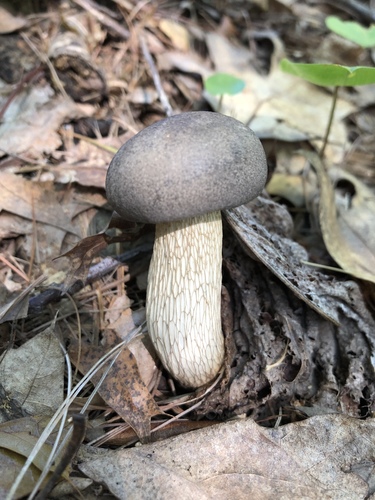
(c) Federico Calledda, some rights reserved (CC BY-NC), uploaded by Federico Calledda
iNaturalist· cc-by-sa
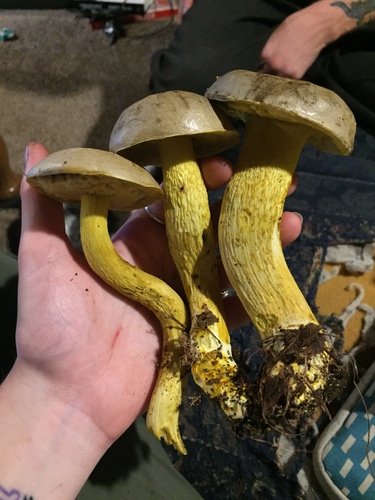
(c) Randi Hausken, some rights reserved (CC BY-SA)
iNaturalist· cc-by-nc
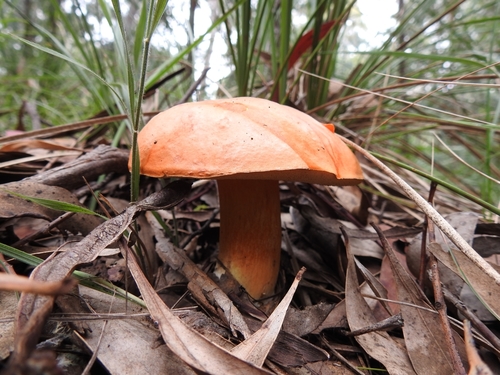
(c) Joe Holt, some rights reserved (CC BY-NC), uploaded by Joe Holt
Summary
Source: WikipediaLeccinum versipelle, also known as Boletus testaceoscaber, dark-stalked bolete, or orange birch bolete, is a common species of mushroom that may be edible when given the right preparation. It is found below birches from July through to November, and turns black when cooked.
Description
A temperate mushroom in the Boletaceae family.
This description is brief — help expand it
Edible Uses
The mushroom fruiting body is edible.
Distribution
It is a temperate plant.
Where It Grows
Europe, Finland, Romania, Russia, Scandinavia, Sweden,
Synonyms
Also Known As
Tegelrod bjorksopp, Tegelsopp
References (10)
- Dembitsky, V. M., et al, 2010, Amino and Fatty Acids of Wild Edible Mushrooms of the genus Boletus, Rec. Nat. Prod. 4:4 (2010) 218-223 (As Boletus versipellis)
- Hall, I. R., et al, 2003, Edible and Poisonous Mushrooms of the World. Timber Press. p 228
- Jordan, P., 2000, The Mushroom Guide and Identifier, Hermes House, p 71
- Kaufmann, B. et al, 1999, The Great Encyclopedia of Mushrooms. Konemann. p 22
- Kiple, K.F. & Ornelas, K.C., (eds), 2000, The Cambridge World History of Food. CUP p 322
Show all 10 references Hide references
- Luczaj, L., et al, 2015, Wild food plants and fungi used by Ukrainians in the western part of the Maramureş region in Romania. Acta Soc Bot Pol 84(3):339–346
- Pace, G., 1998, Mushrooms of the world. Firefly books. p 189 (As Boletus rufescens)
- Pelkonen, R., et al, 2008, Element Concentrations in Wild Edible Mushrooms in Finland. The Finnish Environment 25
- Svanberg, I., & Lindh, H., 2019, Mushroom hunting and consumption in twenty-first century post-industrial Sweden. Journal of Ethnobiology and Ethnomedicine (2019) 15:42
- Usher, 1974,