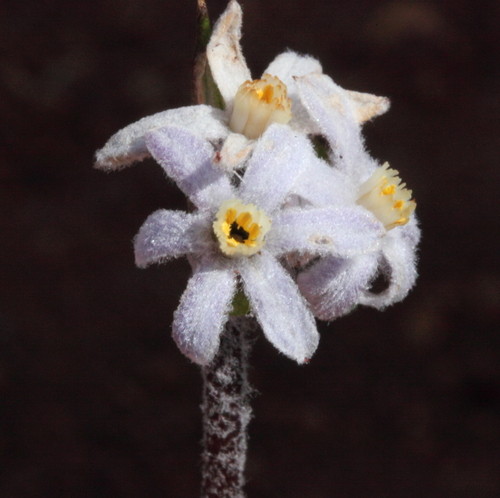
Haemodorum spicatum
R. Br.
Born, Blood roots
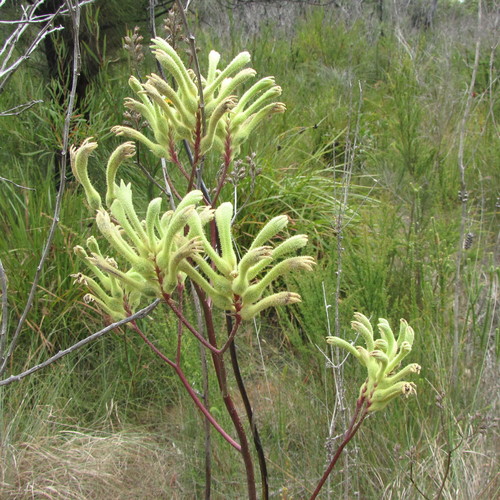
iNaturalist· cc-by-nc
(c) Loxley Fedec, some rights reserved (CC BY-NC), uploaded by Loxley Fedec
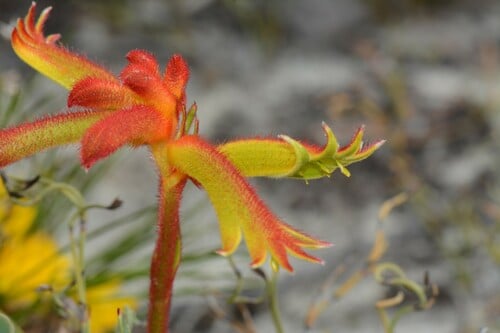
iNaturalist· cc-by-nc
(c) Loxley Fedec, some rights reserved (CC BY-NC)
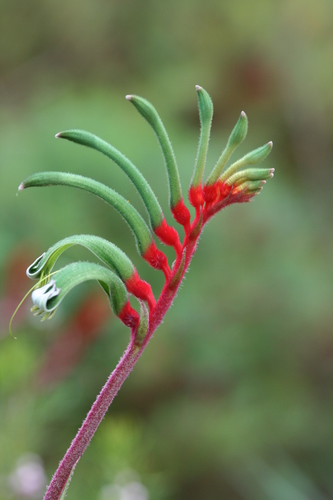
iNaturalist· cc-by-nd
(c) Kimberly Emerson, some rights reserved (CC BY-ND), uploaded by Kimberly Emerson
Summary
Source: WikipediaHaemodorum spicatum is a plant in the Haemodoraceae family native to south Western Australia.
Description
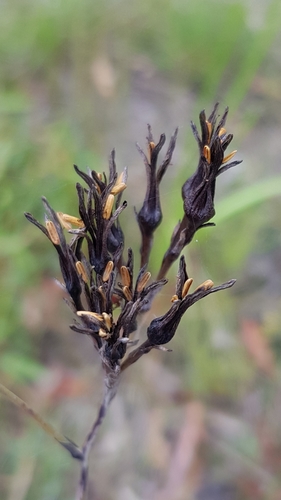
A herb which keeps growing from year to year. It forms a bulb. Plants grow to 2 m tall. There are 3-4 leaves. These are 20-30 cm long by 0.1-0.2 cm wide. They are cylindrical and dark green. Plants flower after fire. The flower are on long slender flowering stalks. These are branched and 30-80 cm long. The flowers are 0.5 cm long and grey-brown. The flowers never open. Flowers are pollinated by native bees.
Edible Uses
The bulbs are eaten raw or roasted and have a mild onion flavour. They are used as a spice and add colour to food.
Traditional Uses
The bulbs are eaten raw or roasted. They have a mild onion flavour. They add colour.
This uses section is brief — help expand it
Medicinal Uses
The bulbs are traditionally used for food purposes.
Distribution
It grows in Western Australia in a Mediterranean climate. It needs a well drained soil. It can tolerate light frosts. It can grow on poor sandysoils.
Where It Grows
Australia*,
Cultivation
Plants can be grown from seed or bulbils.
Notes
There are about 20 Haemodorum species. They are mostly in Australia.
Also Known As
Meen, Bohn, Mardja
References (5)
- Bonney, N., 2012, Edible Wild Native Plants for Southern Australia. p 110
- Daw, B., Walley, T. & Keighery, G., 2001, Bush Tucker. Plants of the South-West. Department of Conservation and Land Management. Western Australia. p 22
- Hibbert, M., 2002, The Aussie Plant Finder 2002, Florilegium. p 118
- Paczkowska, G. & Chapman, A.R., 2000, The Western Australian Flora. A Descriptive Catalogue. Western Australian Herbarium. p 67
- RIRDC, 2010, New Root Vegetables fo the Native Food Industry, Australian Government RIRDC Publication 9/161