Sapindus mukorossi
Gaertn.
Soap-nut tree of North India, Chinese soapberry
iNaturalist· cc0
no rights reserved, uploaded by 葉子
iNaturalist· cc-by-nc
(c) mtjadewu, some rights reserved (CC BY-NC)
iNaturalist· cc-by-nc
(c) 謝忠良, some rights reserved (CC BY-NC), uploaded by 謝忠良
Summary
Source: WikipediaSapindus mukorossi, commonly known as Indian soapberry, washnut, ritha or Chinese soapberry, is a species of tree in the family Sapindaceae. It is a deciduous tree that grows in the lower foothills and midhills of the Himalayas at altitudes of up to 1,200 metres (4,000 ft). It is also native to western coastal Karnataka, Maharashtra, and Goa in India; as well as Nepal Indochina, southern China, Japan and Taiwan as known by its many indigenous peoples. It is tolerant to reasonably poor soil, can be planted around farmers' homes, and one tree can produce 30 to 35 kilograms (66 to 77 lb) of fruit per year.
Description
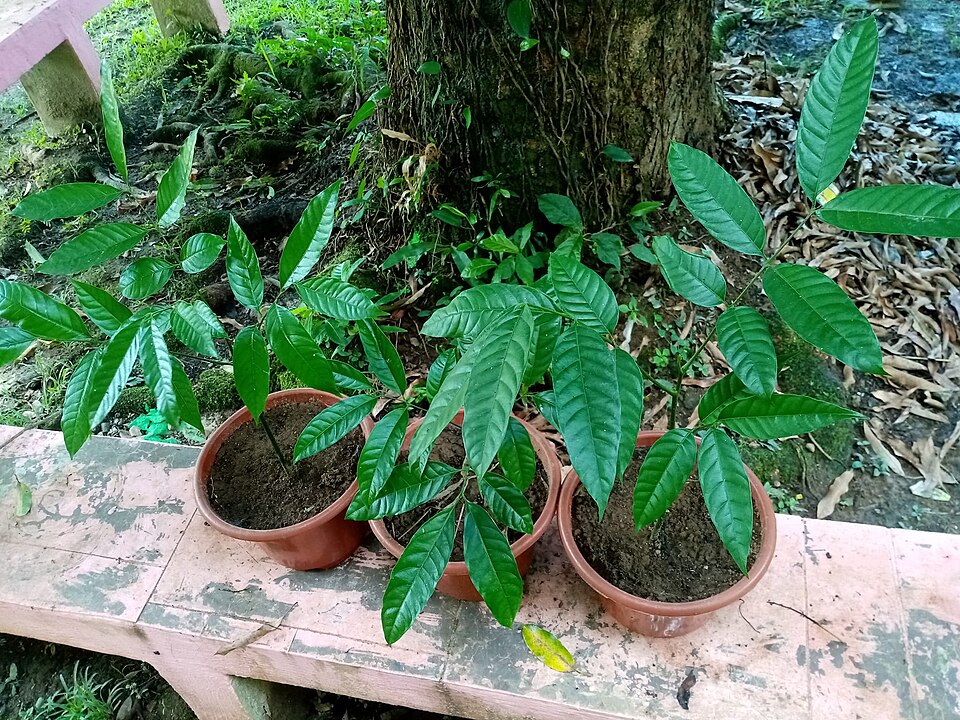
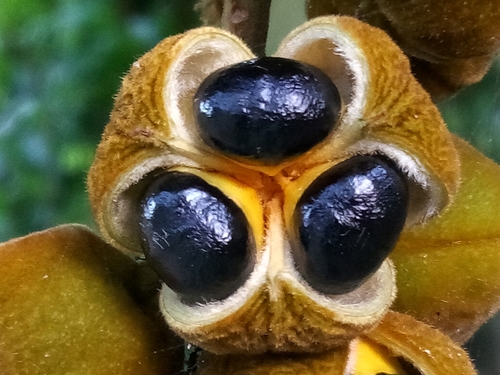
A deciduous tree. It grows 10-20 m high. The leaves are 40 cm long. There are 5-8 pairs of leaflets. The leaflets are 15 cm long. The leaf stalk has slight wings. The flowers are small and white and occur in large panicles. The fruit are smooth and yellow to orange and 2 cm across. They have a slight keel.
Edible Uses
The seeds are crushed and boiled to produce a liquid added to certain Indian milk sweets called rasgullas, giving the dessert a frothy quality. The seeds have also been used to bleach cardamom seeds, a treatment reported to improve both the flavour and colour of the spice.
Traditional Uses
CAUTION: The plants contain saponins. The seeds are poisonous. The seed kernels are put under running water for about a week and then dried and made into flour for bread. The seeds are crushed and boiled to make a liquid which is added to milk sweets which gives a frothy quality to the dessert.
Medicinal Uses
The fruit and seeds are regarded as a cure for epilepsy in northern India. A decoction of the fruit is used as an expectorant. A lather made from the fruit is applied to treat burns and is also used as a shampoo to rid hair of lice. The seeds are used in China to prevent dental caries. The fruit is considered to be haemolytic.
Known Hazards
The fruit pulp contains saponins and is used as a fish pioson. Although poisonous, saponins are poorly absorbed by the human body and so most pass through without harm. Saponins are quite bitter and can be found in many common foods such as some beans. They can be removed by carefully leaching in running water. Thorough cooking, and perhaps changing the cooking water once, will also normally remove most of them. However, it is not advisable to eat large quantities of raw foods that contain saponins. Saponins are much more toxic to some creatures, such as fish, and hunting tribes have traditionally put large quantities of them in streams, lakes etc in order to stupefy or kill the fish.(Parts of plant are poisonous if ingested)
Distribution
A subtropical plant. It is native from India to Japan. It suits hardiness zones 8-11.
Where It Grows
Africa, Asia, Australia, China*, East Africa, Himalayas, India, Indochina, Japan, Korea, Laos, Malaysia, Mozambique, Nepal, Northeastern India, NW India, Pakistan, SE Asia, Sikkim, Singapore,
Cultivation
A plant of the subtropical to the tropical zone, where it can be found at elevations up to 1,500 metres. It is found in areas where the mean annual rainfall is around 1,750mm. Succeeds in a sunny position in any well-drained soil. Prefers a deep, fertile, moist soil, but plants are very tolerant of a wide range of soils, including those that are dry, stony or nutrient deficient. A fast-growing tree. Flowering Time: Late Spring/Early Summer(early summer, mid summer, late summer). Bloom Color: Cream/Tan(white). Spacing: 9-12 in. (22-30 cm).
Propagation
Seed can remain viable for at least 2 years. Greenwood cuttings can also be used.
Other Uses
The tree has proved successful in reforesting eroded hill slopes at elevations below 900 metres in the western Himalayas. Seed kernels left over from oil extraction from the pericarp and shells can be used as fertilizer. The fruit is rich in saponins and serves as a soap substitute — squeezed, mixed with water, and used to clean clothes. It is particularly suited to natural fibres and delicate materials, and is also used to restore tarnished silverware, wash hair, control head lice, polish jewellery, and as an emulsifier in insecticides. A surfactant from the fruit pericarp has proved effective in remediating contaminated soils. The seeds are used to make rosaries and have insecticidal properties when powdered. The seeds contain 23% oil, of which 92% is triglycerides; the triglyceride fraction contains 30% oleopalmito-arachidin glyceride, 13.3% oleo-diarachidin glyceride, and 56.7% di-olein type glycerides including dioleopalmitin, dioleo-stearin, and dioleo-arachidin. The heartwood is yellowish grey and the sapwood yellowish white. The wood is moderately hard, compact, and close-grained, used for furniture, sawn boards, plywood, and general boarding. The wood is also used as fuel and for making charcoal.
Notes
The nuts are used in medicine. The fruit are used as soap. The seeds are used as beads.
Nutrition
| Part | Moisture | kJ | kcal | Protein | Vit A | Vit C | Iron | Zinc |
|---|---|---|---|---|---|---|---|---|
| Seeds | — | — | 31 | — | — | — | — | — |
Synonyms
Also Known As
Dodan, Dodani, Indian soapberry, Reetha, Reettha, Ritha, Soapnut, Thali
References (17)
- Ambasta S.P. (Ed.), 2000, The Useful Plants of India. CSIR India. p 547
- Aryal, K. P., et al, 2018, Diversity and use of wild and non-cultivated edible plants in the Western Himalaya. Journal of Ethnobiology and Ethnomedicine (2018) 14:10
- Barwick, M., 2004, Tropical and Subtropical Trees. A Worldwide Encyclopedic Guide. Thames and Hudson p 363
- Burkill, I.H., 1966, A Dictionary of the Economic Products of the Malay Peninsula. Ministry of Agriculture and Cooperatives, Kuala Lumpur, Malaysia. Vol 2 (I-Z) p 199
- Cundall, P., (ed.), 2004, Gardening Australia: flora: the gardener's bible. ABC Books. p 1311
Show all 17 references Hide references
- Facciola, S., 1998, Cornucopia 2: a Source Book of Edible Plants. Kampong Publications, p 226
- Flora of Pakistan. www.eFloras.org
- Fruct. sem. pl. 1:342, t. 70, fig. 3. 1788
- Hibbert, M., 2002, The Aussie Plant Finder 2002, Florilegium. p 286
- Khan, M. & Hussain, S., 2014, Diversity of wild edible plants and flowering phenology of district Poonch (J & K) in the northwest Himalaya. Indian Journal of Sci, Res. 9(1): 032-038
- Krishen P., 2006, Trees of Delhi, A Field Guide. DK Books. p 222
- Manju, S., and Sundriyal, R. C., 2001, Wild Edible Plants of the Sikkim Himalaya: Nutritive Values of Selected Species. Economic Botany 55(3): 377-390
- Phangchopi, U., et al, 2015, Diversity of wild edible plants in Marat Longri Wildlife Sanctuary, Assam. Indian Journal of Natural Products and Resources Vol. 6(4), December 2015 pp. 305-313
- Recher, P, 2001, Fruit Spirit Botanical Gardens Plant Index. www.nrg.com.au/~recher/ seedlist.html p 7
- Upreti, K., et al, 2010, Diversity and Distribution of Wild Edible Fruit Plants of Uttarakhand. Bioversity Potentials of the Himalaya. p 185
- World Checklist of Useful Plant Species 2020. Royal Botanic Gardens, Kew
- www.worldagroforestrycentre.org/treedb/