Hydnocarpus anthelminthicus
Pierre ex Lanessan
iNaturalist· cc-by-nc
(c) owen688, some rights reserved (CC BY-NC)
iNaturalist· cc-by-nc
(c) HP Lim, some rights reserved (CC BY-NC)
iNaturalist· cc-by-nc
(c) HP Lim, some rights reserved (CC BY-NC)
Description
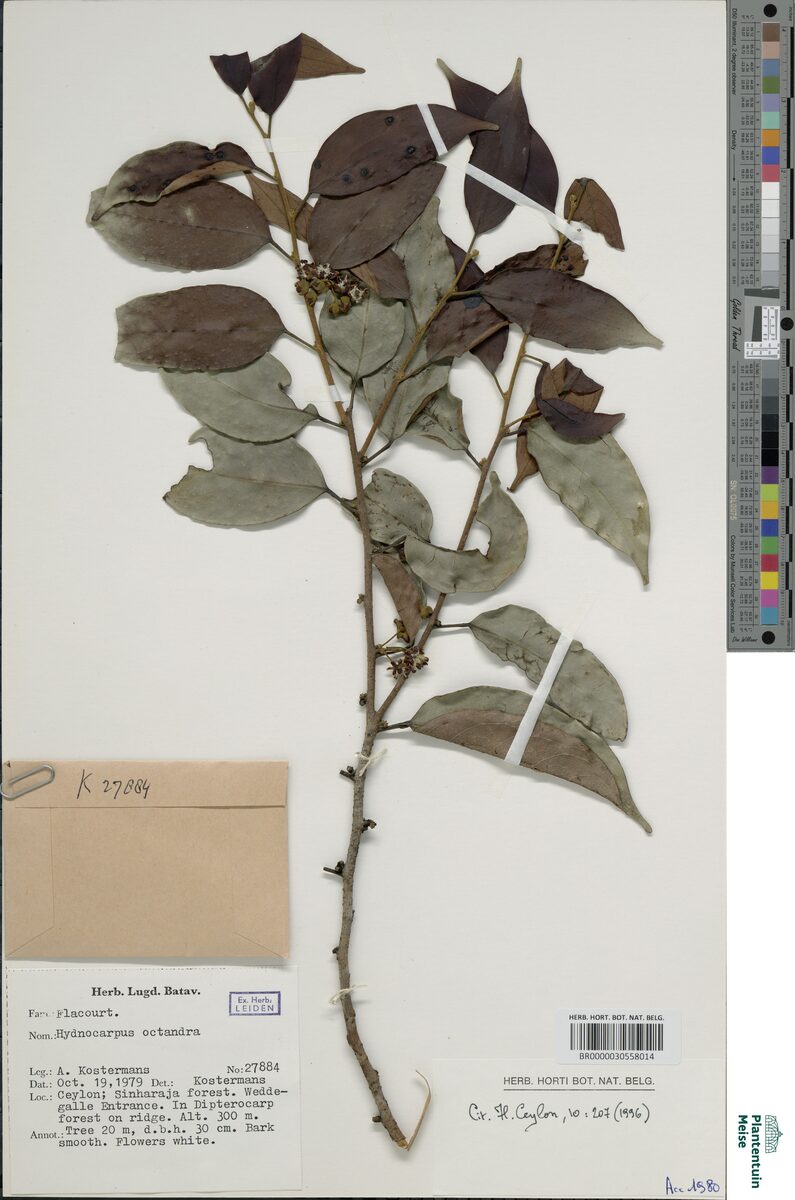
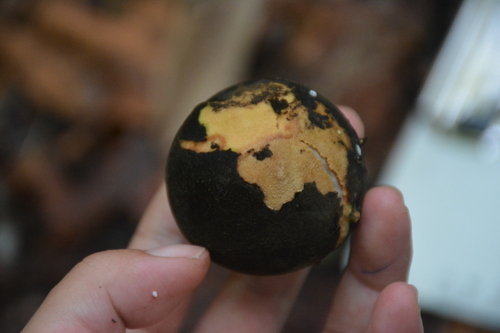
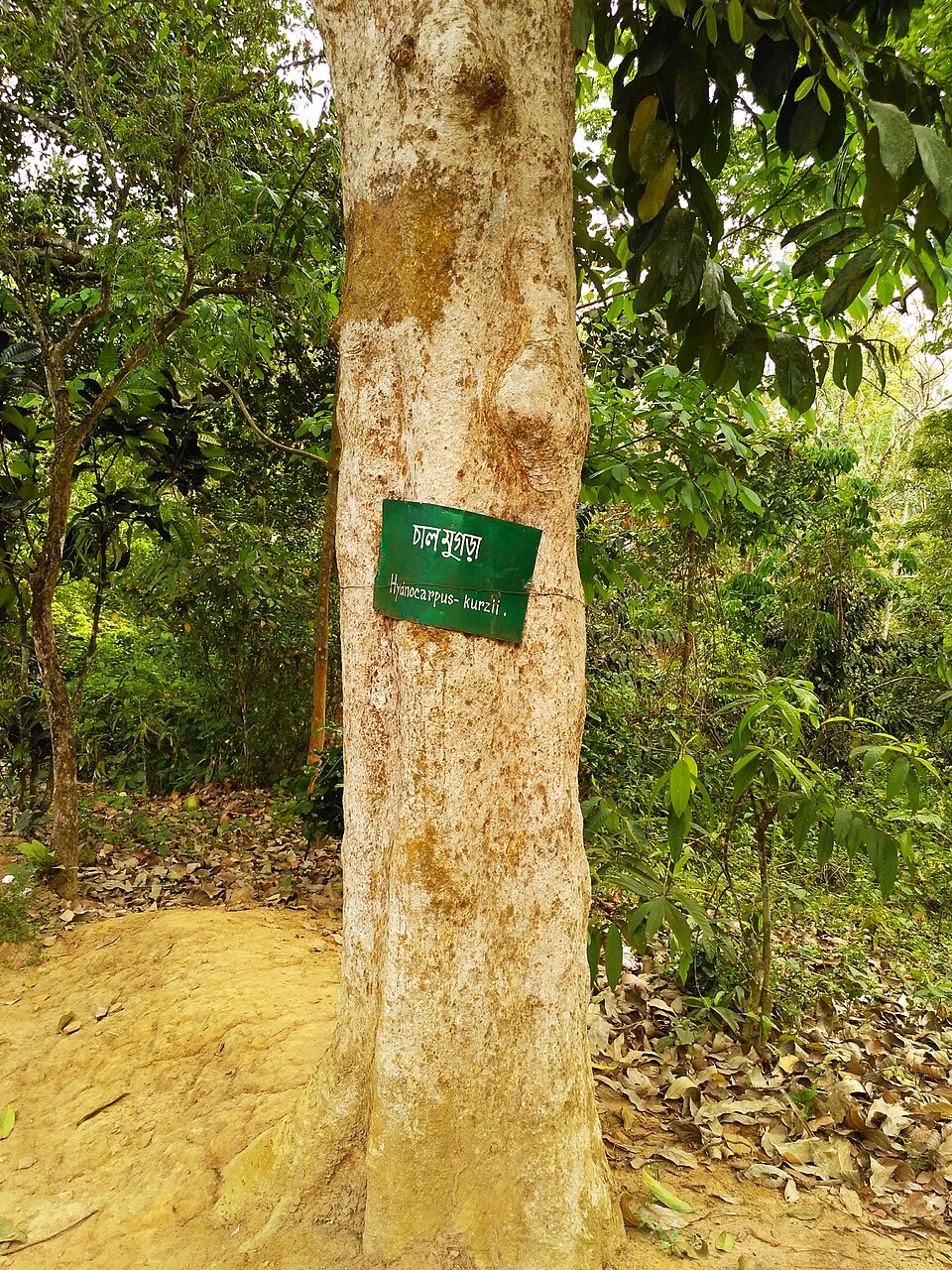
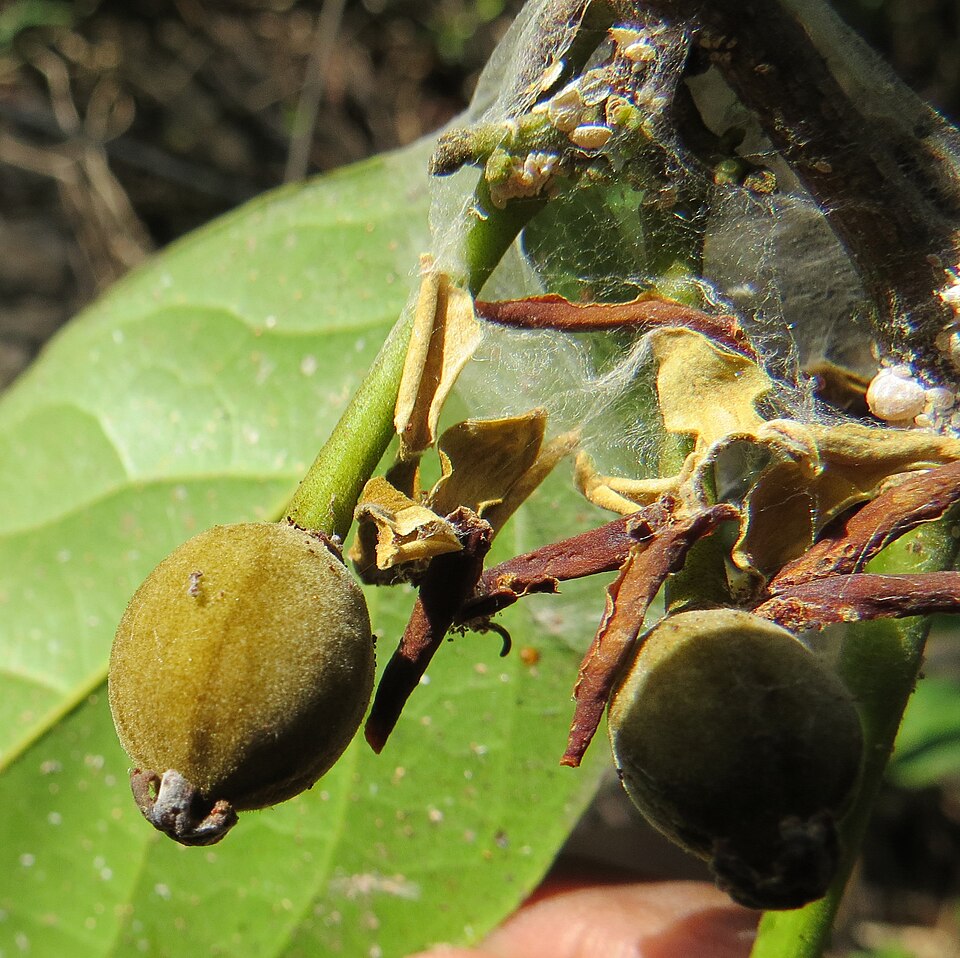
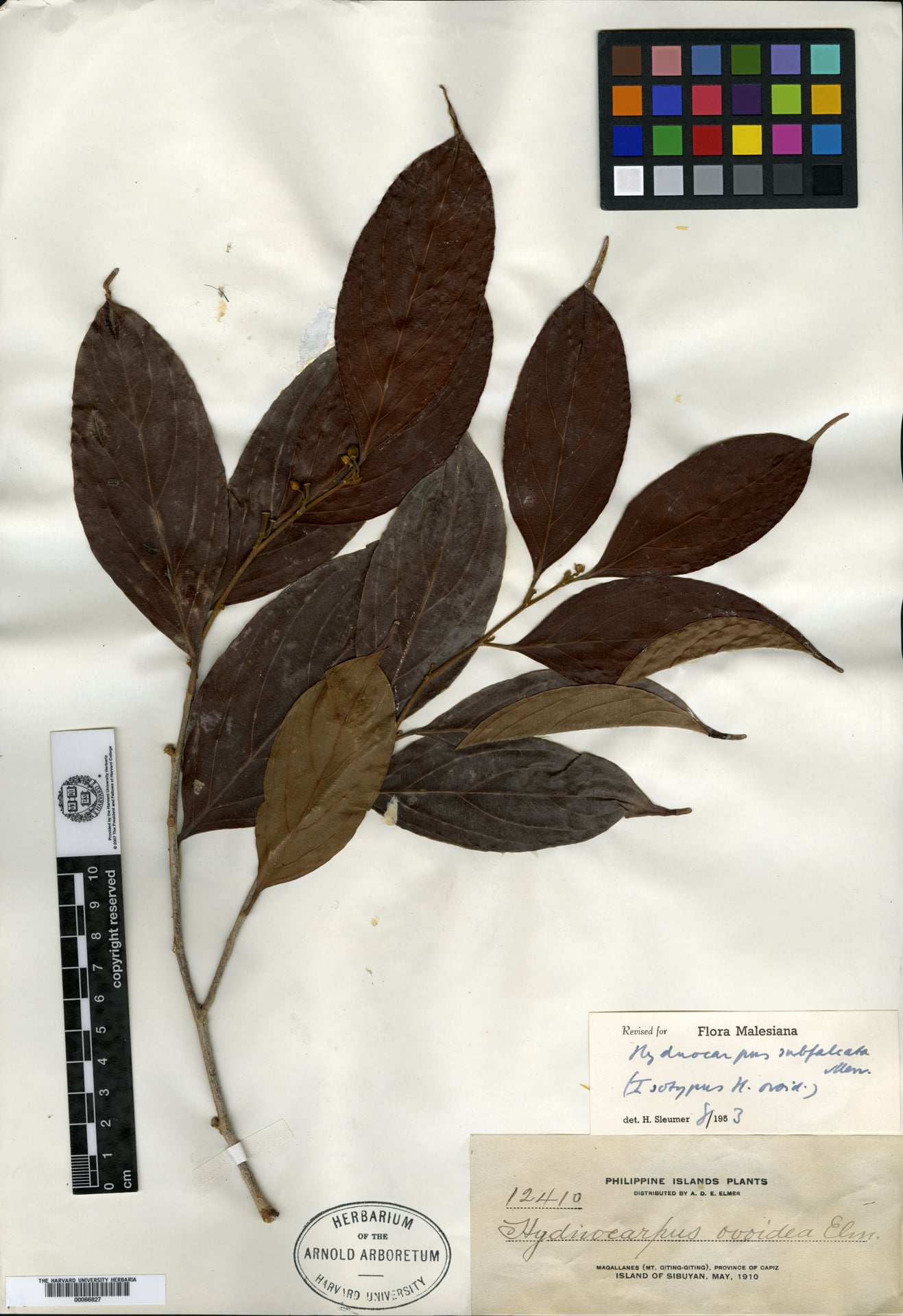
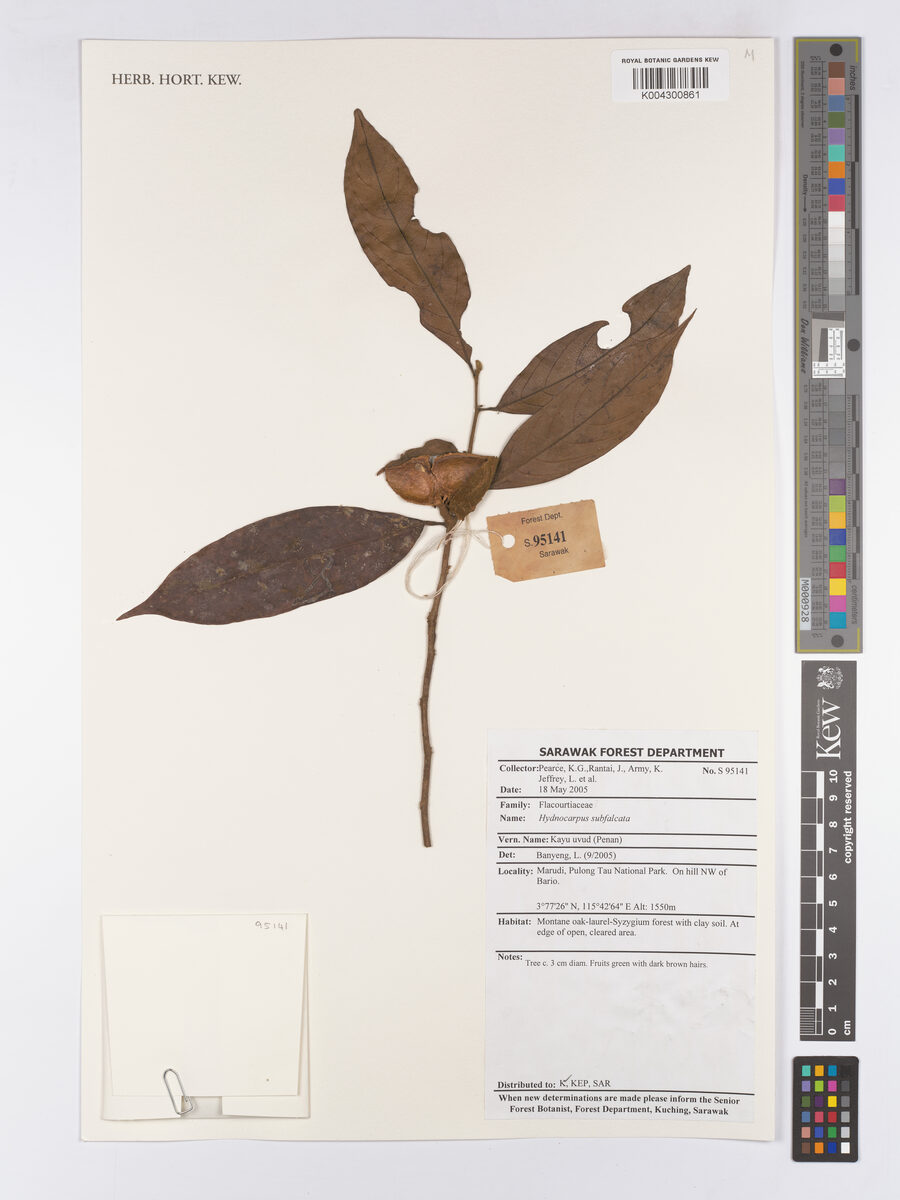
A tree. bIt grows 7-30 m tall. The leaves are almost entire and broadly sword shaped. They are 12-20 cm long and 3-5 cm wide. They are unequal sided at the base. The flowers are in clusters in the axils of leaves. They have a sweet scent. Trees are separately male and female. The fruit is woody and 10-12 cm across. It contains 30-50 seeds. They are hard and packed in pulp.
Edible Uses
The fruit is eaten.
Medicinal Uses
Also widely known under its name H. anthelminthicus, suggesting anthelmintic properties, the Vietnamese is lọ nồi (sometimes Ðại phong tử). It is one of the 50 fundamental herbs used in traditional Chinese medicine, where it may be called dà fēng zǐ 大风子 or 泰国大风子 tai guo da feng zi.
Known Hazards
The seeds contain cyanogenic glycosides. In very small quantities it has been used medicinally, having been shown to stimulate respiration and improve digestion, it is also claimed to be of benefit in the treatment of cancer. In excess, however, it can cause respiratory failure and even death.
Distribution
A tropical plant. It grows in dense forests on sandy and rocky soils near water. In southern China it grows in evergreen broad-leaved forests between 300-1,300 m above sea level. In Yunnan.
Where It Grows
Asia, Cambodia, China, Hawaii, Indochina, Indonesia, Laos, Malaysia, Myanmar, Pacific, SE Asia, Singapore, Taiwan, Thailand*, USA, Vietnam,
Cultivation
Plants are grown from seed.
Propagation
Seed - best sown as soon as it is ripe, when it will usually germinate quickly. Germination of stored seed can be slow, with some species in the genus taking up to 2 years. Sow the seed in a shaded position in a nursery seedbed and keep moist. Grow on the seedlings in shade until large enough to plant out.
Other Uses
The seeds are the source of a non-drying oil. It is used for illumination, to make soap and also medicinally. An extract of the seed is used as an ingredient in commercial cosmetic preparations as a skin conditioner. The fibrous bark is made into cordage,
Production
In China plants flower in September of one year and fruit November to June the next year.
Other Information
It is cultivated.
Notes
The oil has in the past been used as a treatment for leprosy. Also put in the Flacourtiaceae family.
Also Known As
Kalaw, Kalaw-pyu, Kalaw-wa, Krabau phlae thom, Krorbao, Lo-noi, Pohon setumpul antel, Setumpol
References (9)
- Ali, R. M., et al, (Eds.), 2010, ASEAN Herbal and Medicinal Plants. Forestry research Institute Malaysia. p 67
- Arora, R. K., 2014, Diversity in Underutilized Plant Species - An Asia-Pacific Perspective. Bioversity International. p 104
- Milow, P., et al, 2013, Malaysian species of plants with edible fruits or seeds and their evaluation. International Journal of Fruit Science. 14:1, 1-27
- Phon, P., 2000, Plants used in Cambodia. © Pauline Dy Phon, Phnom Penh, Cambodia. p 352
- Pl. util. col. franc 303. 1886
Show all 9 references Hide references
- Staples, G.W. and Herbst, D.R., 2005, A tropical Garden Flora. Bishop Museum Press, Honolulu, Hawaii. p 337
- Sukarya, D. G., (Ed.) 2013, 3,500 Plant Species of the Botanic Gardens of Indonesia. LIPI p 333
- Turreira Garcia, N., et al, 2017, Ethnobotanical knowledgeof the Kuy and Khmer people in Prey Lang, Cambodia. Cambodian Journal of Natural History 2017 (1): 76-101
- Zeven, A. C. & de West, J. M. J., 1982, Dictionary of cultivated plants and their regions of diversity. Wageningen. p 53