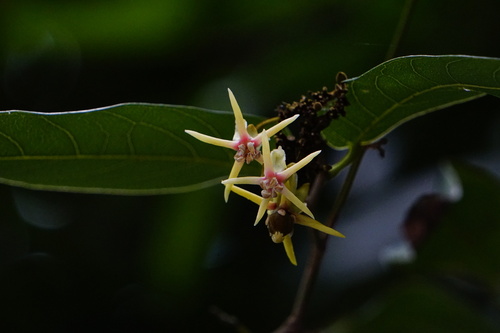
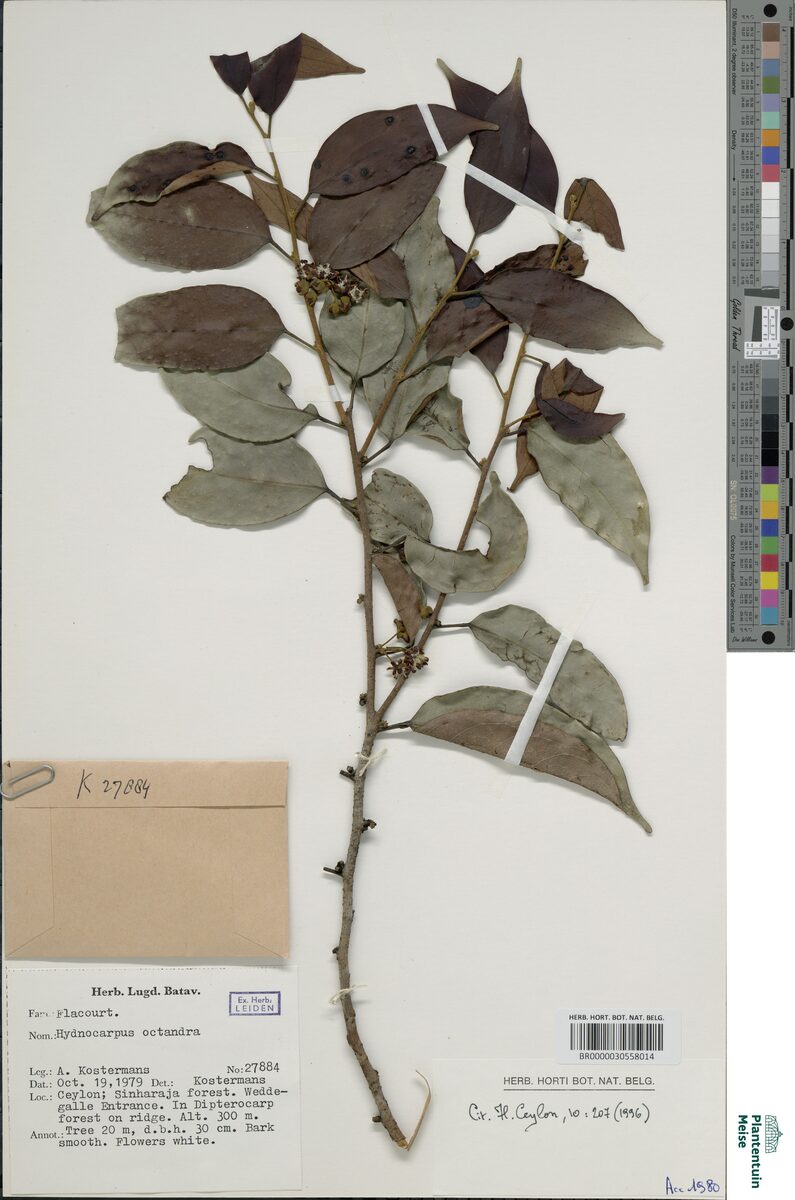
Hydnocarpus macrocarpus
Warb.
Inacrocarpa
wikimedia· cc-by-sa
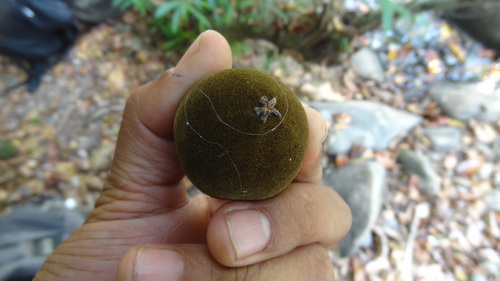
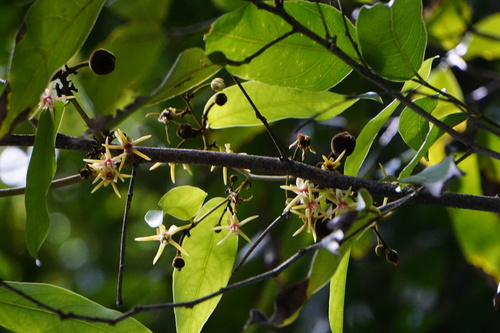
Wikimedia Commons - Vinayaraj
wikimedia· cc-by-sa
Wikimedia Commons - Vinayaraj
Description
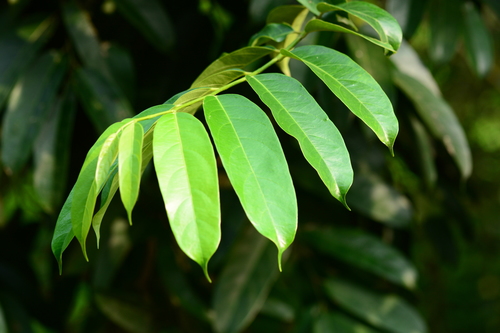
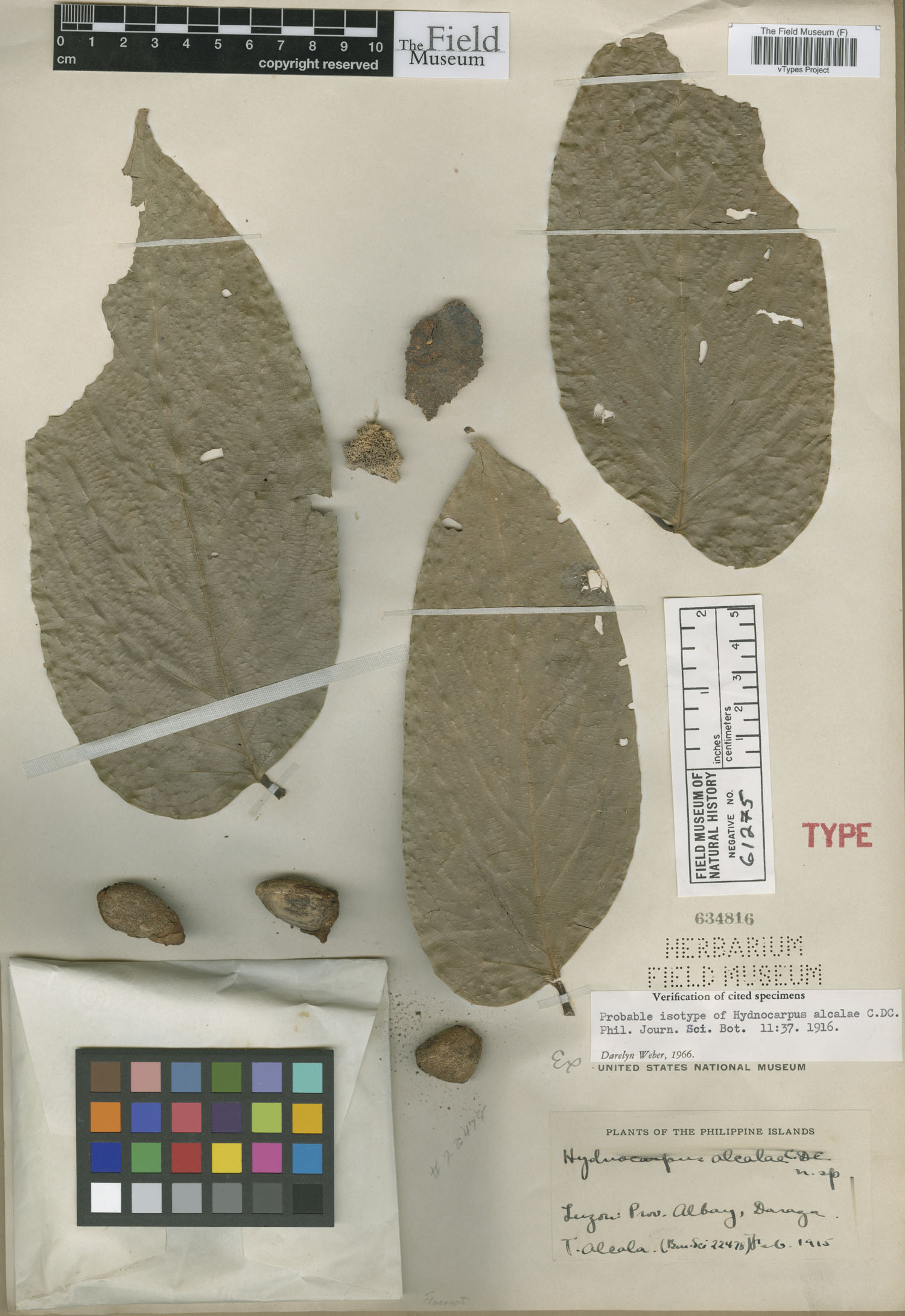
A large evergreen tree growing to 15 m tall, native to southwestern India and Indo-China. It has simple alternate leaves clustered at twig ends and greyish-brown bark with cream-colored blazes.
Edible Uses
Leaf extracts of Hydnocarpus macrocarpa have demonstrated significant pharmacological and antibacterial properties
Medicinal Uses
Leaf extracts have demonstrated significant pharmacological and antibacterial properties.
Known Hazards
Although we have seen no specific information for this species, the seeds of many members of this genus contain cyanogetic glycosides. In very small quantities this has been used medicinally, having been shown to stimulate respiration and improve digestion, it is also claimed to be of benefit in the treatment of cancer. In excess, however, it can cause respiratory failure and even death.
Distribution
It is a tropical plant.
Where It Grows
Amazon, Asia, India, Indochina, Myanmar, SE Asia, Vietnam,
Cultivation
Species in this genus generally require well-drained sandy or loamy silt soils and grow best along creek beds or on the banks of streams. Seeds tend to go rancid rather quickly. Therefore ripe fruits should be opened and the fruit pulp and aril removed from the seeds. Seeds are then washed and dried in the sun. Sun-dried seeds, either whole or broken, are cold-pressed or pressed under concurrent heating to extract the oil. The chemical composition of the end-product of these methods varies.
Propagation
Seed - best sown as soon as it is ripe, when it will usually germinate quickly. Germination of stored seed can be slow, with some species in the genus taking up to 2 years. Sow the seed in a shaded position in a nursery seedbed and keep moist. Grow on the seedlings in shade until large enough to plant out.
Notes
Also put in the Flacourtiaceae family.
Synonyms
Also Known As
Kalaw, Kalaw-ni, Lonoi trai-to