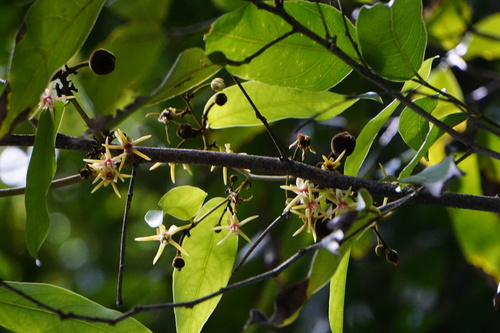
Xylotheca kraussiana
Hochst.
African dog-rose
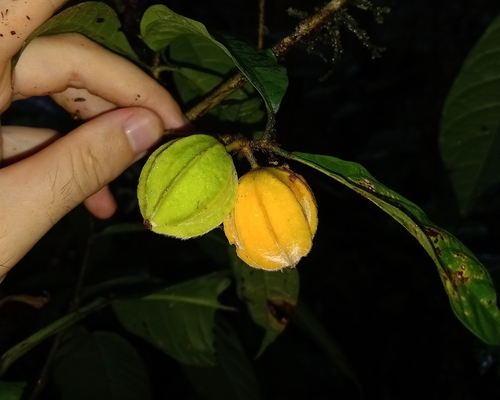
iNaturalist· cc-by-nc
(c) Ricky Taylor, some rights reserved (CC BY-NC), uploaded by Ricky Taylor
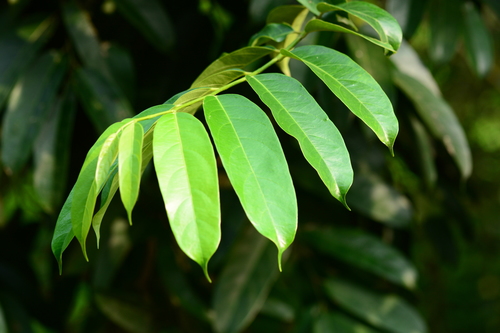
iNaturalist· cc-by-sa
(c) Rosemary Harrison, some rights reserved (CC BY-SA), uploaded by Rosemary Harrison
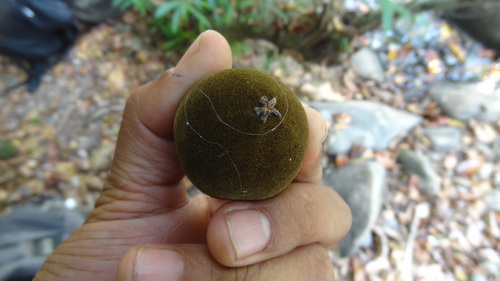
iNaturalist· cc-by-nc
(c) Sharon Louw, some rights reserved (CC BY-NC), uploaded by Sharon Louw
Summary
Source: WikipediaXylotheca kraussiana is an African shrub or small multi-stemmed tree in the family Achariaceae. It grows in the sandveld and is widely distributed throughout the eastern parts of Southern Africa, in particular the eastern Transvaal, coastal Natal and Mozambique, preferring the sandy soils of coastal bush and forest. 'Xylotheca' meaning 'woody case' and the species name honouring Dr C.F.F. Krauss (1812-1890), a German naturalist, who later became director of Stuttgart's Natural History Museum. Krauss came to the Cape in 1838, collected in Natal from 1839 to 1840. About 8 other species of Xylotheca are to be found in central Africa and Madagascar. Leaves are dull grey-green, alternate and covered in soft grey hairs. Flowers are white with a dense central cluster of yellow anthers and resembling a small white rose. The fruit is an ovoid woody capsule about 40 mm (1.6 in) long and distinctly ridged. Yellow when ripe, it partly splits into 5 sections revealing black seeds with a bright red aril. The pulp around the seeds is relished by birds. This plant used to belong to the family Flacourtiaceae, but was relocated to Achariaceae by the Angiosperm Phylogeny Group.
Description
A small shrub or tree up to 6 m high. The bark is light grey and rough. The crown has glossy evergreen leaves. The leaves are 2.5-10 cm long and 1.9-5 cm wide. They are oval or sword shaped. They are dark green above and paler underneath. There are 7-11 pairs of side veins which loop along the edge. The veins and midrib are slightly raised. The flowers are large and white. They occur either singly or as a few flowers together. These are in the axils of leaves or at the ends of branches. Flowers are 6 cm across. The fruit are round with a point. They are 5 cm across. They are hard and yellow or orange when ripe. They split into 4 sections showing black seeds with an orange aril.
Edible Uses
The bright red aril or layer surrounding the seeds is eaten, particularly by children. The fruits themselves are not eaten but are sometimes chewed and spat out.
Traditional Uses
The fruit are not eaten but are sometimes chewed and spat out. The bright red aril or layer around the seeds is eaten.
This uses section is brief — help expand it
Distribution
A tropical plant. It grows in coastal areas on the edge of forests and in bush and scrub.
Where It Grows
Africa, East Africa, Mozambique, South Africa, Southern Africa,
Cultivation
Plants can be grown from seeds.
Other Information
The fruit are eaten especially by children.
Notes
Also put in the Flacourtiaceae family.
Synonyms
Also Known As
Afrikaanse hondsroos, Balecane, Mubalecua, Uassate
References (9)
- Cunningham, 1985,
- Flora 26:69. 1843
- Joffe, P., 2007, Creative Gardening with Indigenous Plants. A South African Guide. Briza. p 247
- Palgrave, K.C., 1996, Trees of Southern Africa. Struik Publishers. p 625
- Palmer, E and Pitman, N., 1972, Trees of Southern Africa. Vol. 3. A.A. Balkema, Cape Town p 1538
Show all 9 references Hide references
- Peters, C. R., O'Brien, E. M., and Drummond, R.B., 1992, Edible Wild plants of Sub-saharan Africa. Kew. p 115
- Schmidt, E., Lotter, M., & McCleland, W., 2007, Trees and shrubs of Mpumalanga and Kruger National Park. Jacana Media p 440
- van Wyk, B, van Wyk, P, and van Wyk B., 2000, Photographic guide to Trees of Southern Africa. Briza. p 325
- Wilson, A. L. & Downs, C. T., 2012, Fruit nutritional composition and non-nutritive traits of indigenous South African tree species. South African Journal of Botany. 78:30-36