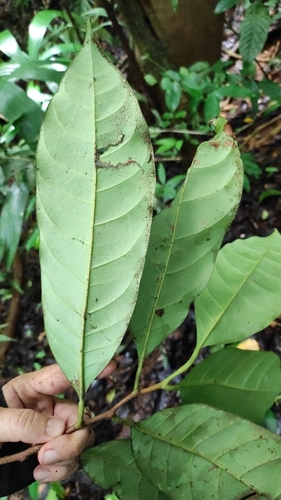
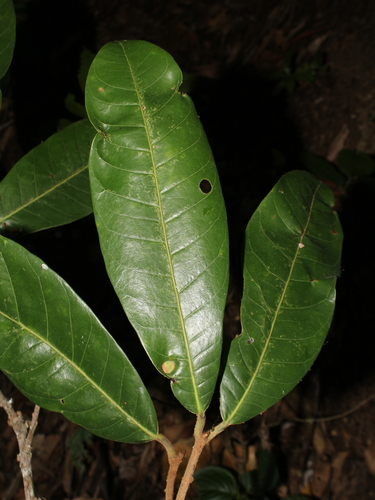
Pouteria macrocarpa
(Martius) Dietrich
Bigfruit pouteria
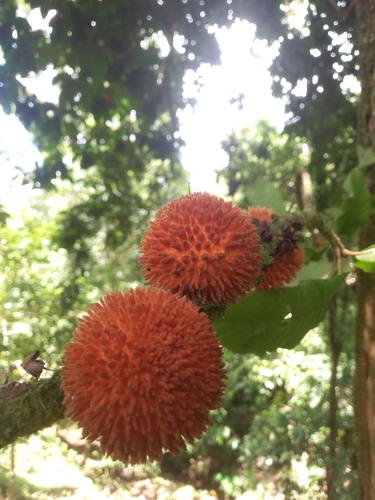
iNaturalist· cc-by-nc
(c) Nils Servientis - Bivouac Naturaliste, some rights reserved (CC BY-NC), uploaded by Nils Servientis - Bivouac Naturaliste
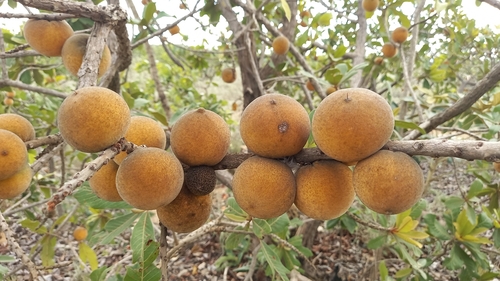
iNaturalist· cc-by-nc
(c) Nils Servientis - Bivouac Naturaliste, some rights reserved (CC BY-NC), uploaded by Nils Servientis - Bivouac Naturaliste
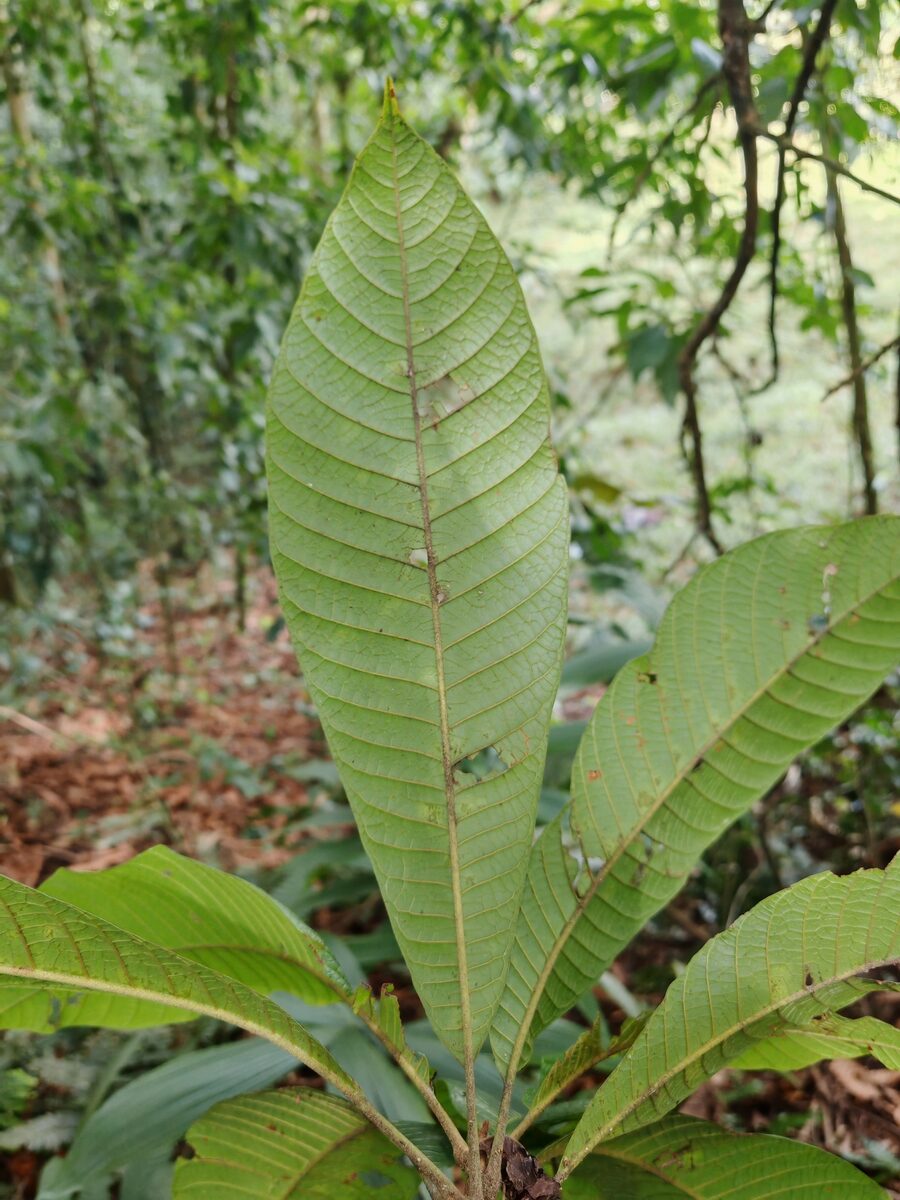
iNaturalist· cc-by-nc
(c) Nils Servientis - Bivouac Naturaliste, some rights reserved (CC BY-NC), uploaded by Nils Servientis - Bivouac Naturaliste
Summary
Source: WikipediaPouteria macrocarpa is a species of plant in the family Sapotaceae. It is found in Brazil, Colombia, and Costa Rica.
Description
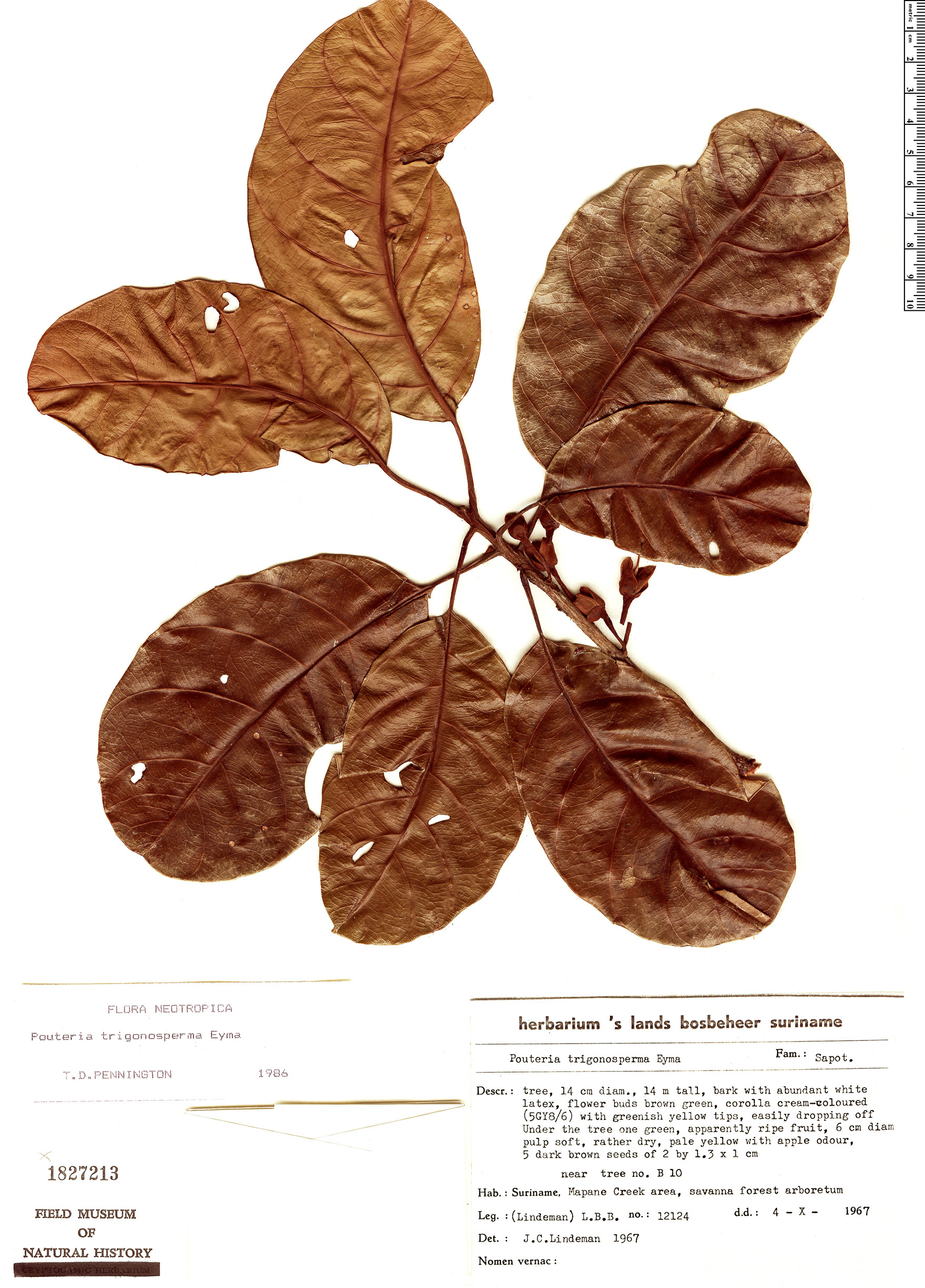
A tree. It grows 6-10 m high. It can be 30 m high. The trunk and branches are similar colour to guava. The leaves are simple and alternate. They are oval or sword shaped and 7-25 cm long by 5-8 cm wide. The flowers occur in fascicles of 3-7 between the leaves and the trunk. The fruit is round and 10 cm across.
Edible Uses
The fruit is eaten.
Distribution
It is a tropical plant. It grows naturally in regions with annual rainfall of 2,000-3,000 mm. The average temperature is 26°C. It needs good drainage.
Where It Grows
Amazon, Brazil, Central America, Colombia, Costa Rica, Ecuador, Guiana, Guyana, South America,
Cultivation
Plants are grown from seed.
Propagation
Seed - best sown as soon as it is ripe in a partially shaded position in individual containers. A generally low rate of germination can be expected, with the seed sprouting within 35 - 60 days.
Other Uses
The wood is fine-textured, straight-grained, moderately heavy, hard, slightly susceptible to wood-eating organisms. It is used for general construction, carpentry and turned objects.
Notes
There are about 150-320 Pouteria species. They grow in the tropics.
Synonyms
Also Known As
Abiu-grande, Abiurana, Cututi grande
References (11)
- Cavalcante, P. B., 1991, Frutas comestiveis da Amazonia, Edicoes CEJUP
- Grandtner, M. M., 2008, World Dictionary of Trees. Wood and Forest Science Department. Laval University, Quebec, Qc Canada. (Internet database http://www.wdt.qc.ca)
- Grandtner, M. M. & Chevrette, J., 2013, Dictionary of Trees, Volume 2: South America: Nomenclature, Taxonomy and Ecology. Academic Press p 527
- Hermandez Bermejo, J.E., and Leon, J. (Eds.), 1994, Neglected Crops. 1492 from a different perspective. FAO Plant Production and Protection Series No 26. FAO, Rome. p17
- Kermath, B. M., et al, 2014, Food Plants in the Americas: A survey of the domesticated, cultivated and wild plants used for Human food in North, Central and South America and the Caribbean. On line draft. p 691
Show all 11 references Hide references
- Paz, F. S., et al, 2021, Edible Fruit Plant Species in the Amazon Forest Rely Mostly on Bees and Beetles as Pollinators. Journal of Economic Entomology, XX(XX), 2021, 1–13
- Pennington, T.D., 1990, Sapotaceae in Flora Neotropica Monograph 52. New York Botanical Gardens. p 427
- Roa, J. A. G. & Boada, D. S. G., 2018, Fundación para el Fortalecimiento de la Fruticultura y Plantas Alimenticias no Convencionales en Colombia.
- Syn. pl. 1:431. 1839
- Van Roosmalen, M.G.M., & Garcia, O. M., 2000, Fruits of the Amazonian Forest. Part 2: Sapotaceae. Acta Amazonica 30(2): 187-290
- Villachica, H., (Ed.), 1996, Frutales Y hortalizas promisorios de la Amazonia. FAO, Lima. p 115